





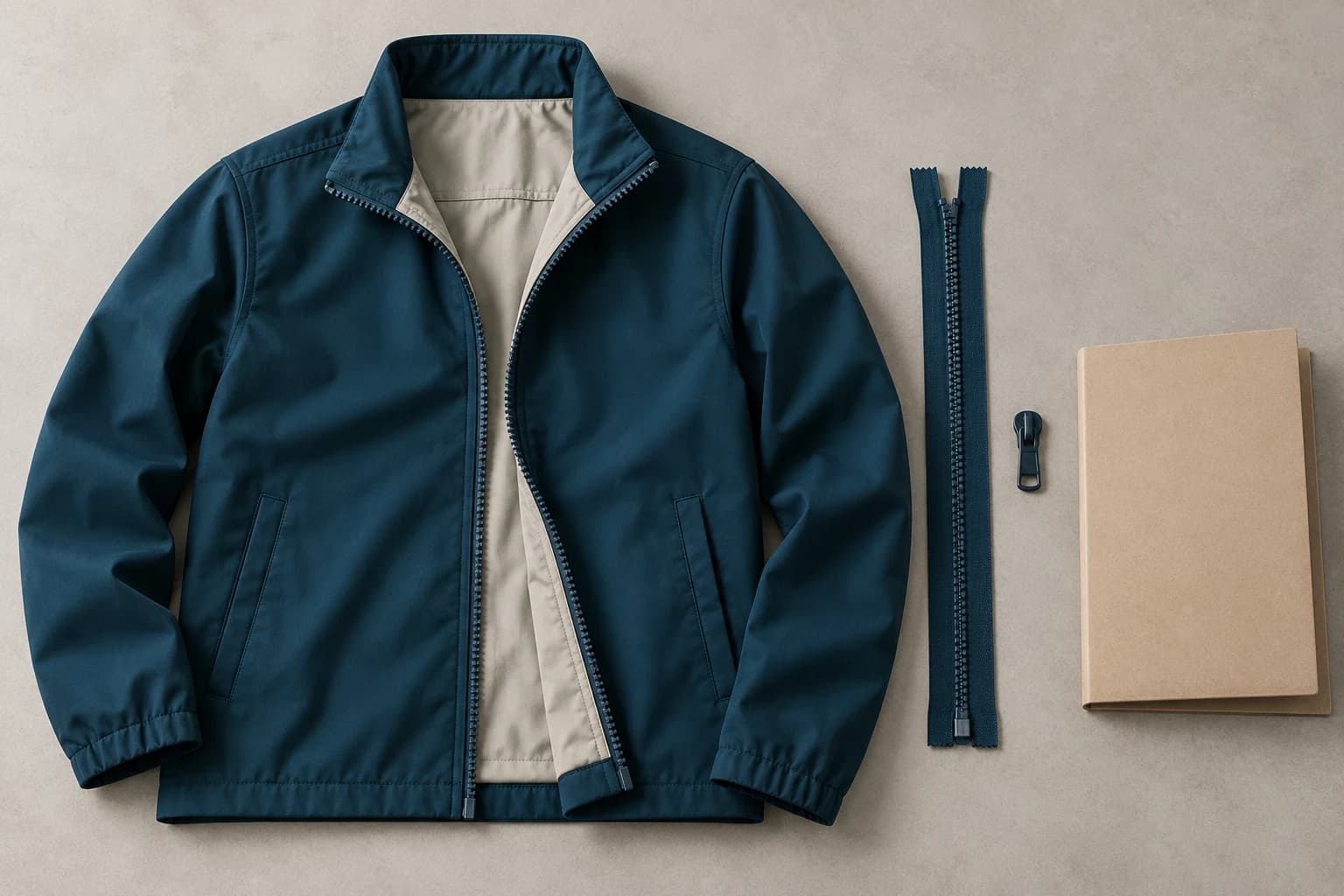
Zipper testing should answer the approval questions created by a particular jacket. A full-length front closure, a short neck opening and a zipped pocket have different functions in the garment. Before requesting a report, identify the component, how it is installed and what the buyer needs to decide. “Strong zipper” is too vague to serve as a purchasing specification.
An effective review connects component evidence with operation on the assembled sample. It also keeps the tested identity connected to the bulk order. This guide outlines a procurement workflow for choosing that evidence, checking its scope and handling revisions. It does not provide a laboratory recipe, set universal force limits or imply that a proposed jacket image represents a tested product.
01 · Decision record
Zipper testing begins with closure identity
Give each closure a location and reference on the current drawing. Record whether it separates at the bottom, remains closed at one end or uses another agreed configuration. Include the selected component supplier/reference, chain or element direction, tape color, slider and puller details, finished length and any buyer-specified features. Confirm the terminology with the component supplier when a sketch is ambiguous.
Keep front and pocket closures separate in the bill of materials even when they look similar. A report identifying one cannot automatically approve the other. For a full-zip fleece jacket, locate the front closure and pocket zips individually. Ask which identified components are represented by each sample submitted for assessment, and retain the answer with the drawing revision.
02 · Decision record
Separate strength from operability
ASTM D2061 covers strength assessments for zippers and their parts. Its public scope notes that methods are not suitable for every kind of zipper. ASTM D2062 addresses operability, including opening and closing, separator functioning and sticking at stops. Selecting a relevant strength assessment does not resolve every operation question.
Ask the testing provider to translate the garment brief into an appropriate scope and confirm the current method edition, applicability and specimen requirements. State the buyer’s concerns clearly: separation at the lower end, the puller’s attachment, closure operation or another identified issue. Do not convert a list of possible tests into a mandatory package for every style. Agree what each selected assessment is meant to support before comparing quotations.
03 · Decision record
Match the request to the jacket assembly
Review the material surrounding the closure: shell thickness, facing, lining, seam allowances, protective guards and nearby pocket construction. Mark where the zipper starts and ends, how the collar closes and how the lower edge is finished. These details help the development team understand the installation that the buyer will actually approve.
Use the stand-collar softshell jacket as a construction discussion reference, not as proof of a particular zipper specification. Ask to review the selected trim on the actual proposed assembly. If the material or facing changes, reconsider whether the earlier sample still represents the junction. Component evidence and garment observations should remain identifiable as separate parts of the approval, with neither silently replacing the other.
04 · Decision record
Write an assessment request the provider can use
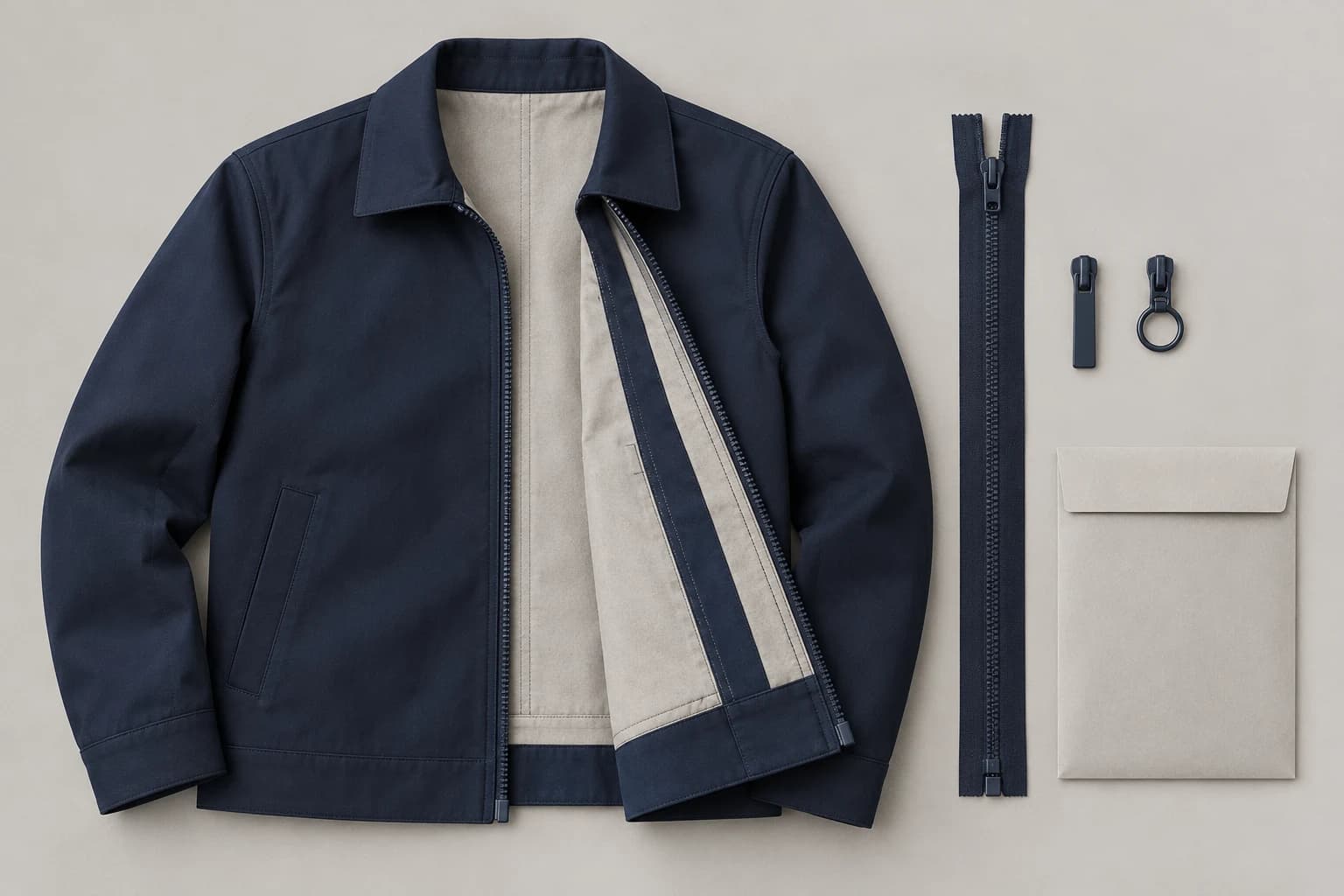
Include style and drawing revision, intended wearer and use, closure location, component identity, proposed care and the buyer’s acceptance requirements. Ask the provider which selected methods apply, whether the submission is sufficient and which limitations will appear on the report. Confirm who will supply specimens and how their identity will be recorded.
Do not invent force values, cycle counts or preparation conditions from a short online description. Have the buyer and qualified provider agree the relevant requirements before work begins. If a buyer specification names a different method or edition from the quotation, resolve the mismatch first. A report prepared to an unagreed scope may supply useful information, but it does not automatically answer the commercial approval question.
05 · Decision record
Use supplier information within its boundaries
A component supplier’s technical information can help explain the available checks. YKK’s testing overview illustrates several separate strength assessments, including chain, stops and slider-related checks. The useful purchasing lesson is to name the part and function under review. It is not a basis for assigning that supplier’s procedures or results to an unidentified trim.
When a report or data sheet is offered, ask which exact component reference it covers and whether its construction matches the proposed purchase. Clarify any relevant exceptions with the issuer. Keep a brand name out of the approved specification unless that identity is actually confirmed for the order. Neither a familiar logo nor a catalog description establishes that a different supplied component meets the buyer’s requirement.
06 · Decision record
Review operation on an identified garment
During sample review, operate each closure in the intended wearing position and record the observations. Check access to the puller, alignment of the two sides, clearance from the lining or facing and the appearance when closed. Review the collar and lower junctions with the selected construction, especially where several layers meet.
Treat these observations as garment-development checks, not as a replacement for the agreed laboratory assessments. If operation feels inconsistent, describe where and under what circumstances the issue appears, retain the sample identity and ask the development team to investigate. Avoid writing only “zip bad.” A precise location and repeatable observation give the team something concrete to examine without prematurely assigning blame to either the component or its installation.
08 · Decision record
Check the report against the submission
Start with issuer, report number, dates and specimen description. Match the listed component, color, configuration and sample reference to the request. Check the selected methods and editions, assessment conditions, reported results and any exclusions or deviations. If a required item is absent, obtain clarification before reducing the report to a single approval statement.
Compare each reported result with the buyer’s agreed criterion for that assessment. Do not combine a component test and a garment observation into a broader certified-performance claim. If information conflicts, retain both records and ask the relevant provider or supplier to resolve the specific discrepancy. The decision record should show who reviewed the evidence and exactly which component and scope were accepted, held or rejected.
09 · Decision record
Control substitutions and revised construction
A change of slider, puller, tape, chain, length, component source or installation detail should trigger a documented applicability review. Ask whether the previous evidence remains representative and what additional assessment, if any, is needed. Update the bill of materials and sample comments together, so the next production instruction does not mix an old component reference with a new drawing.
Keep the approved closure reference available for bulk comparison. If the component arrives before a pending decision is closed, identify the affected stock and hold instruction. Do not quietly replace the proposed item with a visually similar trim to maintain the schedule. Record the buyer’s revised decision and any resulting change to quotation, sampling or timing before releasing the affected work.
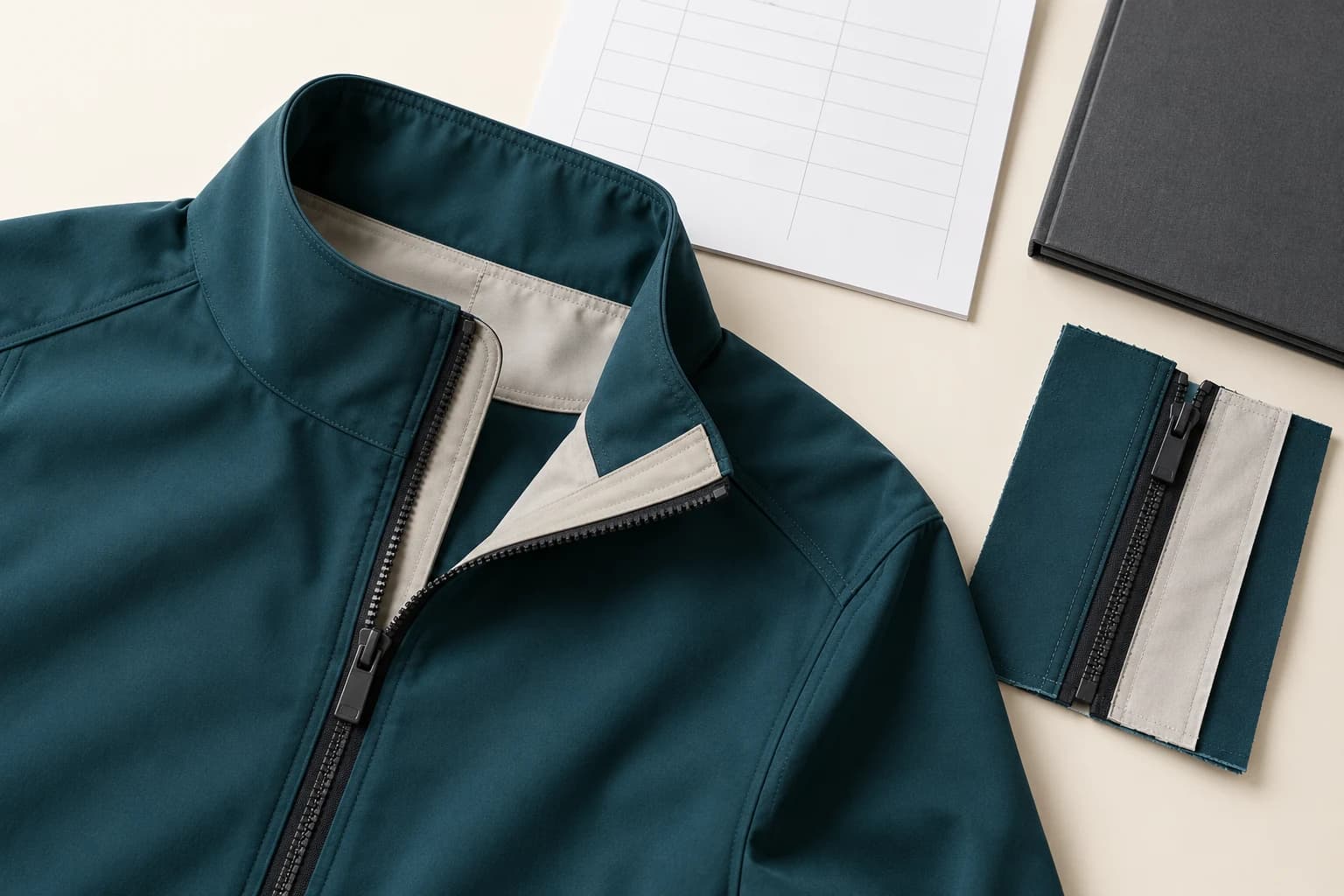
For competing component options, compare evidence on a common approval brief before choosing. One supplier may quote a closure with a different puller, separator or tape construction. Another may provide a report for a reference that is similar in appearance but different in identity. Put those differences beside the quoted price and mark what remains unverified. Ask for an updated component submission where the comparison cannot be made fairly.
Keep sample review comments equally specific. Record whether the issue concerns access to the puller, catching at a facing, alignment at the hem or a reported component result. Assign the next action to the person who can investigate that question. A changed seam allowance may call for a revised garment sample, while a changed supplied component may call for a separate evidence review. Agree the response from the actual finding, and preserve the reason for it in the revision record.
10 · Decision record
Prepare the bulk handover
Give production the approved drawing, closure references, placement details, accepted sample identity and remaining restrictions. Agree how received components will be identified and compared with the approved reference. Define the inspection responsibility and disposition route for an unexpected component or operation issue. An assessment report is easier to use when the factory can tell which delivered trim it concerns.
Connect closure findings with the garment bulk-release checklist, keeping component identity, garment inspection and buyer authorization visible. Record unresolved questions before shipment approval. The useful outcome is a traceable decision for the specified jacket and order, with a clear response if the component or construction changes. A longer test list alone does not provide that control.
11 · Decision record
Buyer questions
Does one strength result approve the whole zipper?
Only interpret it within the reported method, specimen and assessment scope. Ask which parts and functions were covered and which remain outside it. Confirm the garment’s requirements separately with the buyer and provider. Avoid presenting a result for one component feature as a complete end-use guarantee.
Can a smooth sample prove bulk consistency?
It provides an identified development reference. Bulk review still needs the confirmed component identity, current construction instructions and agreed inspection approach. Record any substitutions and obtain the required disposition. A sample that operates well does not document the identity or condition of every component later delivered for production.
What should an RFQ include?
Share the jacket drawing, closure locations, material brief, quantities by style/color/size, buyer requirements, artwork and packing details. Identify existing reports and open choices. Forthright’s MOQ is 300 pieces per style and color. Samples take 7–10 days after brief confirmation; bulk production takes 30–45 days after approval, subject to the confirmed brief. Contact Forthright to discuss the proposed jacket and the component decisions needed for sampling.