





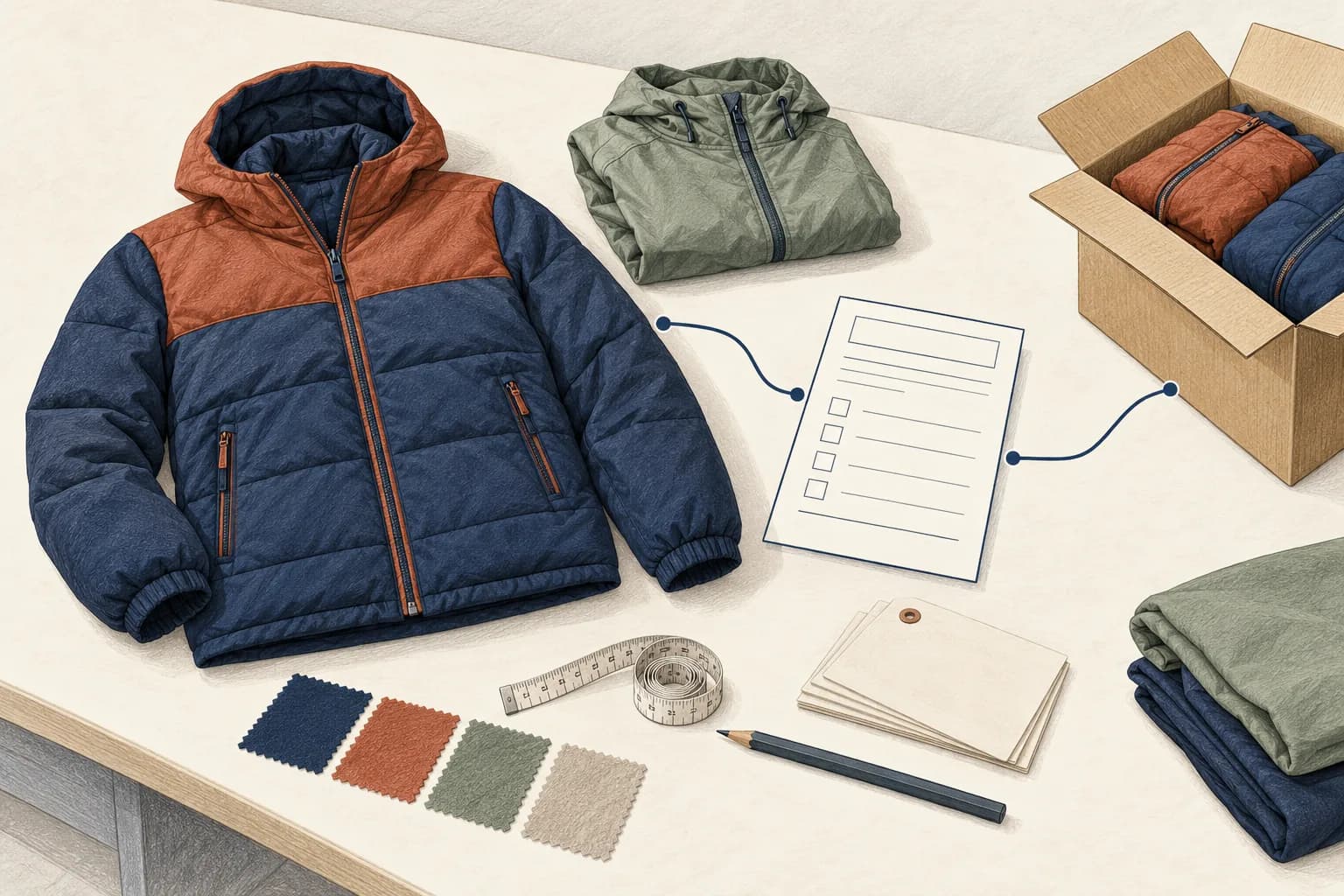
Garment quality control should end with a clear decision about identified goods. A laboratory report, a finished-garment inspection and a corrected sample can each be useful, but none automatically authorizes shipment. Apparel procurement teams need to know which order was checked, which problems remain and who may release the affected quantity.
This checklist addresses the gap between inspection and bulk release. It is for brands, importers and sourcing teams buying OEM or private label apparel. Use it after establishing the approved product specification, then connect physical findings, corrective work and packing evidence to the purchase order you are about to ship.
01 · Decision record
Why connected quality evidence is a current sourcing issue
On August 20, 2026, QIMA and Inspectorio announced an integration for laboratory test management. It connects test requests with product, purchase-order, supplier and test details, and returns test statuses, reports and structured results to Inspectorio. The announcement concerns lab testing; it does not establish an integration of finished-garment inspections or shipment-release decisions.
That development highlights a practical industry problem: a report is harder to use when its relationship to the order is unclear. It does not mean a software integration can approve a shipment, nor does it establish that Forthright uses either platform. Buyers can apply the same basic discipline with an organized order record and clearly assigned decisions.
The procurement question is simple: can another colleague follow the evidence from the approved requirement to the released goods? If the answer depends on private messages or an inspector's memory, the release record needs work.
02 · Decision record
1. Freeze the inspection basis before inspection
Identify the approved technical pack, sample revision, measurement chart, artwork and packing instructions. State which version controls if a drawing, sample and written comment disagree. Circulating a newer document without confirming who received it can create two different inspection standards.
List unresolved decisions separately. A comment such as adjust pocket opening needs a defined target and an approval record before it can become a reliable inspection requirement. The inspector should not have to invent the buyer's intended dimensions on the production floor.
For earlier development decisions, use the sample-to-bulk approval guide. This release checklist starts where that guide's approved reference becomes the basis for checking manufactured goods. Reopening development questions late in the order can change both the inspection scope and the shipping plan.
03 · Decision record
2. Identify the goods the result represents
The inspection request should name the purchase order, style, color, size range, order quantity and production location. Record the available finished and packed quantities at the time of inspection. Keep any incomplete or separately stored goods visible in the report.
Agree how lots or shipment groups are defined for the order. If production contains different material lots or a reworked group, ask whether the planned sample selection represents those groups. A convenient carton near the inspection table should not silently stand for an entire order.
Record exclusions explicitly. A report covering one color does not automatically cover another color produced later. If the buyer decides to release part of the order, identify the accepted group and keep the remaining goods under their own decision.
This approach matters for repeat styles too. A familiar pattern does not remove the need to identify the actual production and packing that were inspected.
04 · Decision record
3. Keep laboratory results and garment findings distinct
A material test answers a defined question about an identified specimen under a stated method. A garment inspection examines selected finished goods against agreed requirements. Review both where the order requires them, but do not let one substitute for the other.
Check that the test report identifies the relevant material or garment reference, test date, method and result. If a fabric finish, color or component changed, ask whether the existing report still applies. Do not infer that a passed fabric test confirms correct labels, pocket construction or carton assortment.
Likewise, an acceptable visual inspection does not prove a performance claim that requires separate testing. If a proposed windbreaker claim depends on a test, define that requirement with the testing provider and retain the result for the selected construction.
05 · Decision record
4. Turn the construction into inspection checkpoints
Choose checkpoints that follow the garment's actual design. For the contrast-side-panel hooded puffer, review the transition from body-side to underarm panels, quilting junctions, pocket access and hood opening. A general neat-sewing comment is too broad to explain a defect at a prominent contrast seam.
For the back-vent full-zip windbreaker, check the covered opening at rest and during the agreed movement review, zipper alignment and clearance between pocket bags and the lightweight shell. These are development-specific examples; final acceptance criteria belong in the approved brief.
Measure the agreed critical points using the documented method and tolerances. Record actual readings where required. Avoid reporting fit approved when only a visual check was performed or when the measurement chart belongs to an older sample revision.
Include labels, decoration and packaging checks in the inspection scope. A correctly sewn garment can still arrive with the wrong size identification or artwork version.
06 · Decision record
5. Agree the sampling and defect rules
Before inspection, agree the applicable sampling plan, inspection level where relevant, defect categories and acceptance criteria with the buyer and inspection provider. Describe how observed problems will be classified and how results will affect the release decision.
Do not interpret an AQL value as permission to ship that percentage of defective garments. A sampling decision depends on the agreed plan and its rules; it does not establish that every uninspected garment is defect-free.
Provide defect examples relevant to this order. A misplaced contrast boundary, a blocked vent, a nonfunctioning zipper and a packing discrepancy may need different descriptions and responses. The team should be able to distinguish an appearance concern from a functional or identification problem without improvising.
Where an issue raises a separate safety or compliance question, obtain the appropriate assessment. Do not downgrade a concern merely to make a numerical inspection result look acceptable.
07 · Decision record
6. Record a failed finding so it can be corrected
A useful finding identifies its location, observed condition, affected reference and required next decision. Photographs should show both context and detail, with an order or sample identifier that connects the image to the report.
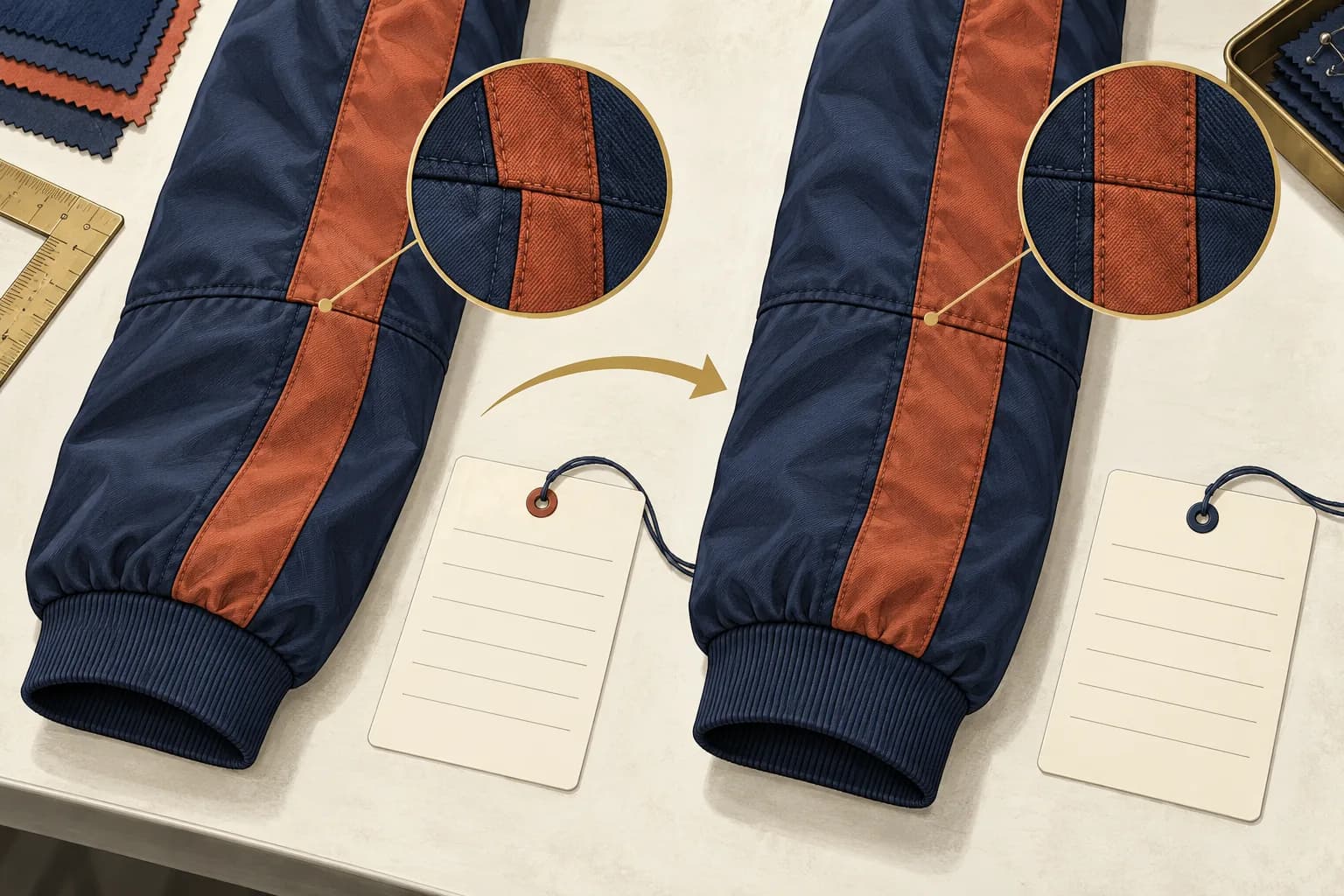
Compare these two instructions: fix panel alignment, and review the contrast-panel junction at the left underarm against the approved sample revision, then identify affected units. The second gives the production team something concrete to investigate without inventing a tolerance.
Ask whether the issue is isolated, repeated across inspected pieces or connected to a particular operation or material group. Keep that investigation distinct from the original observation. A guessed root cause should not become a recorded fact just because it sounds plausible.
Assign an owner and target date for the corrective response. If replacement material or another sample is needed, update the order schedule before promising a shipment date.
08 · Decision record
7. Separate correction, reinspection and acceptance
Correction is work performed on goods. Reinspection checks whether the relevant requirement is now met. Acceptance is the buyer's decision under the agreed authority. Keep all three steps visible.
For a hypothetical puffer order with inconsistent panel junctions, first identify and segregate the affected units. Agree a workable correction, retain evidence of what changed and check the repaired areas. Also review whether the work created another problem, such as visible needle marks or a distorted adjacent seam.
Define the scope of reinspection with the inspection provider. Do not assume that a photograph of one corrected garment establishes the condition of every affected carton. Record which quantity or group the follow-up result represents.
If the buyer accepts a specific deviation, identify its scope and retain the written decision. Do not alter the master specification so an exceptional acceptance quietly becomes the standard for the next production order.
09 · Decision record
8. Reconcile packing after quality work
Rework can disturb an otherwise accurate packing plan. Garments may leave cartons, receive replacement labels or move between size groups. Recheck the relevant assortment and identification after corrective work, especially where the affected units are repacked separately.
Match the released quantity to the final packing list and carton references. Keep held quantities clearly separated from released goods. A shipment instruction should not accidentally include cartons that were awaiting a second decision.
Use the packing-list and carton-label guide for the detailed identity checks. Here, the important connection is between the quality disposition and the cartons actually authorized to leave.
Retain a record of any split release, including what remains outstanding. Otherwise, the next person reviewing the order may mistake partial acceptance for completion of the entire purchase order.
10 · Decision record
9. Create a concise buyer release record
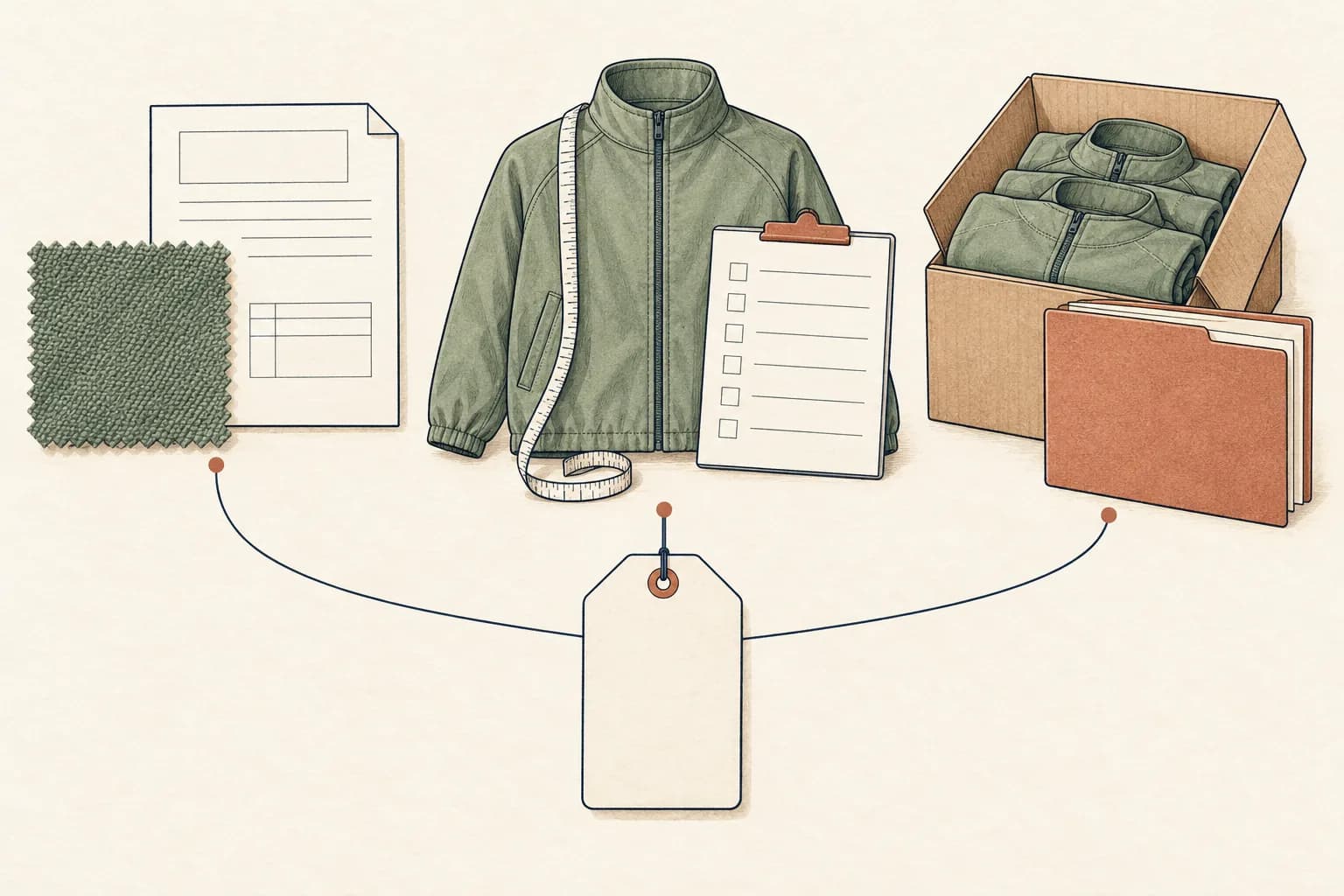
The release record should let someone outside the inspection conversation understand the decision. Include the controlling specification, inspected scope, report references, unresolved findings, corrective-work evidence and final buyer instruction.
Use clear statuses such as awaiting evidence, held for correction, accepted for an identified partial shipment or accepted for the stated quantity. Define the person authorized to change the status. A general production update saying ready should not override a quality hold.
Before authorizing shipment, ask:
- Do the reports identify the correct order, styles, colors and relevant quantities?
- Are the approved sample and technical-pack revisions consistent?
- Have required tests and inspection findings been reviewed by the responsible people?
- Is the corrective-work and reinspection scope clear?
- Are accepted deviations written and limited to the intended goods?
- Does the packing list match the quantity being released?
- Can the logistics team identify any cartons that remain on hold?
Keep this record with the order rather than only in an email thread. It provides a useful starting point for a reorder, claim investigation or handover to a new sourcing colleague.
11 · Decision record
FAQ for bulk apparel buyers
Can a laboratory pass replace garment quality control inspection?
No. Review what the laboratory tested and what the order requires. A material result does not establish correct sewing, measurements, labeling or packing across a finished shipment. Use each form of evidence for the question it actually answers.
Does reworking a failed garment automatically release the order?
No. Identify the affected goods, check the correction through the agreed follow-up process and record the authorized decision. The release scope may be narrower than the full order, especially when other colors or cartons remain unresolved.
What should a buyer send before arranging final inspection?
Send the current technical pack, approved sample reference, measurement criteria, artwork, packing instructions, order breakdown and any required test reports. Include open issues and the people responsible for deciding them so inspection findings reach the right owner.
12 · Decision record
Discuss the checks before bulk production
Forthright's standard MOQ is 300 pieces per style and color. Samples take 7–10 days after brief confirmation; bulk production takes 30–45 days after approval. Agree the inspection, testing and release schedule for your program before treating the production window as a confirmed shipment date.
Send Forthright your garment brief with the design, quantity by color and size, intended market and required quality checks. The inquiry should identify unresolved acceptance criteria early, while there is time to plan samples, evidence and correction responsibilities.