





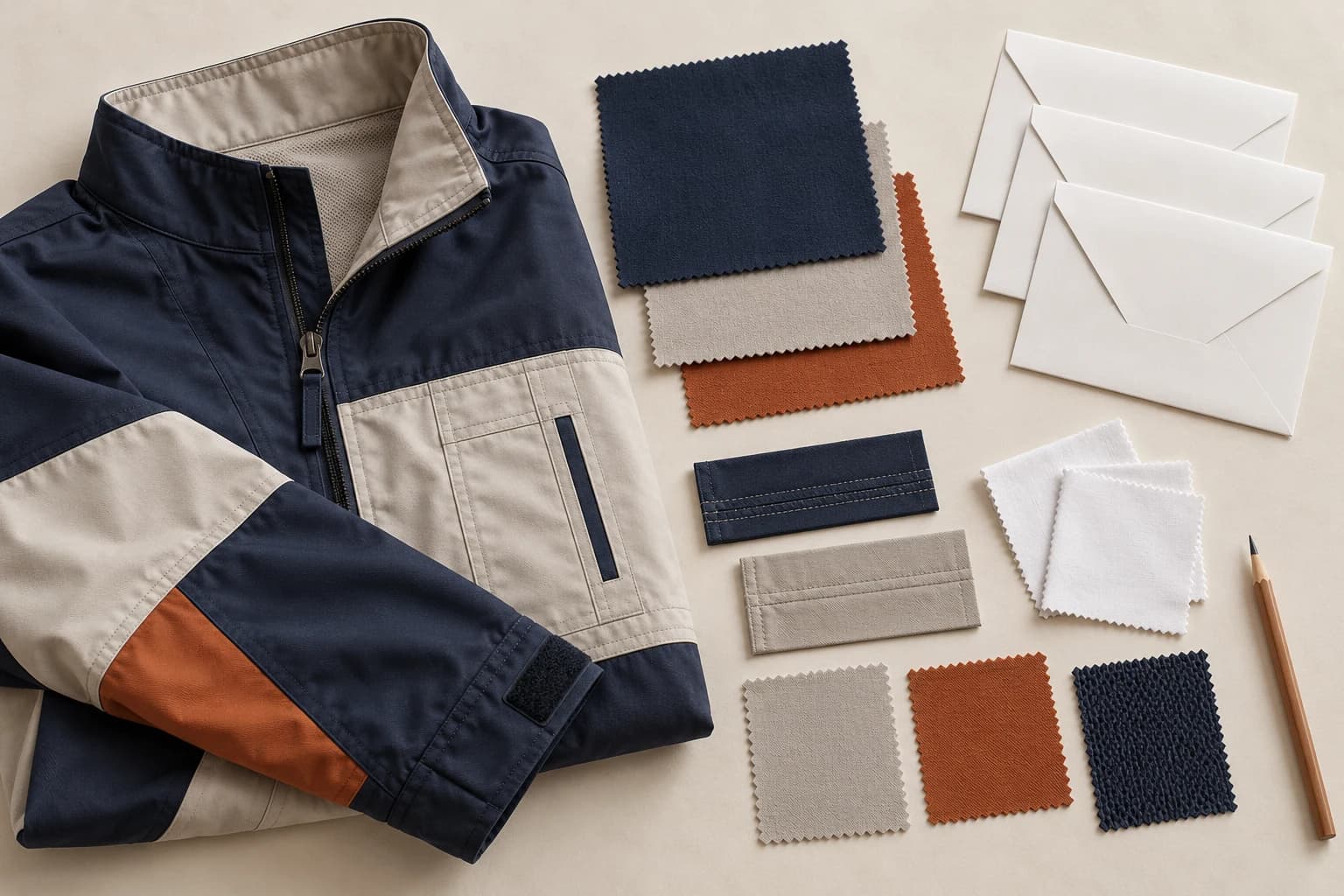
Colorfastness testing helps an apparel buyer decide whether the selected colors and components have suitable evidence for the garment’s intended use. For a contrast jacket, the procurement question is specific: what might happen when a dark body, pale sleeves, rib trims and lining meet the agreed wear and care conditions? Approving the appearance of an unwashed sample does not answer that question.
Start with the actual construction, identify the materials to be assessed and agree the acceptance basis with the buyer and testing provider. This guide explains how to build that request, review the resulting evidence and record a release decision. It does not prescribe a universal passing grade, reproduce a laboratory procedure or establish that any illustrated garment has been tested.
01 · Decision record
Colorfastness testing starts with the garment brief
Write down the intended user, likely wear conditions, proposed care instructions and color arrangement. A club jacket with pale sleeves beside a dark body presents a different review brief from a single-color training layer. Identify contact areas, including cuffs against the body, pocket bags against the shell and decoration beside a contrasting panel. Ask which visible changes would be unacceptable to the buyer.
Separate initial shade approval from resistance to later exposure. A fabric can match the approved color reference while its response to rubbing or laundering remains unverified. The existing reorder color guide addresses consistency against a reference. Here, the decision concerns what evidence is needed when the approved materials encounter specified conditions. Keep both decisions in the approval record.
02 · Decision record
Select exposures before requesting a quotation
Avoid a request that says only “test colorfastness.” State the exposure being investigated and let the qualified testing provider confirm an appropriate method and edition. AATCC TM8 addresses color transfer caused by rubbing and includes dry and wet procedures. AATCC TM61 concerns accelerated laundering. These are different assessment questions; a result for one should not be presented as evidence for the other.
Consider additional exposures only when the end use warrants them. For a program with outdoor wear or sustained skin contact, ask the provider whether light or perspiration assessments belong in the plan. Identify the relevant method rather than borrowing a grade from a different test. Have the buyer approve the scope before samples are dispatched, so the quotation, specimen preparation and decision criteria refer to the same request.
03 · Decision record
Map components and color combinations
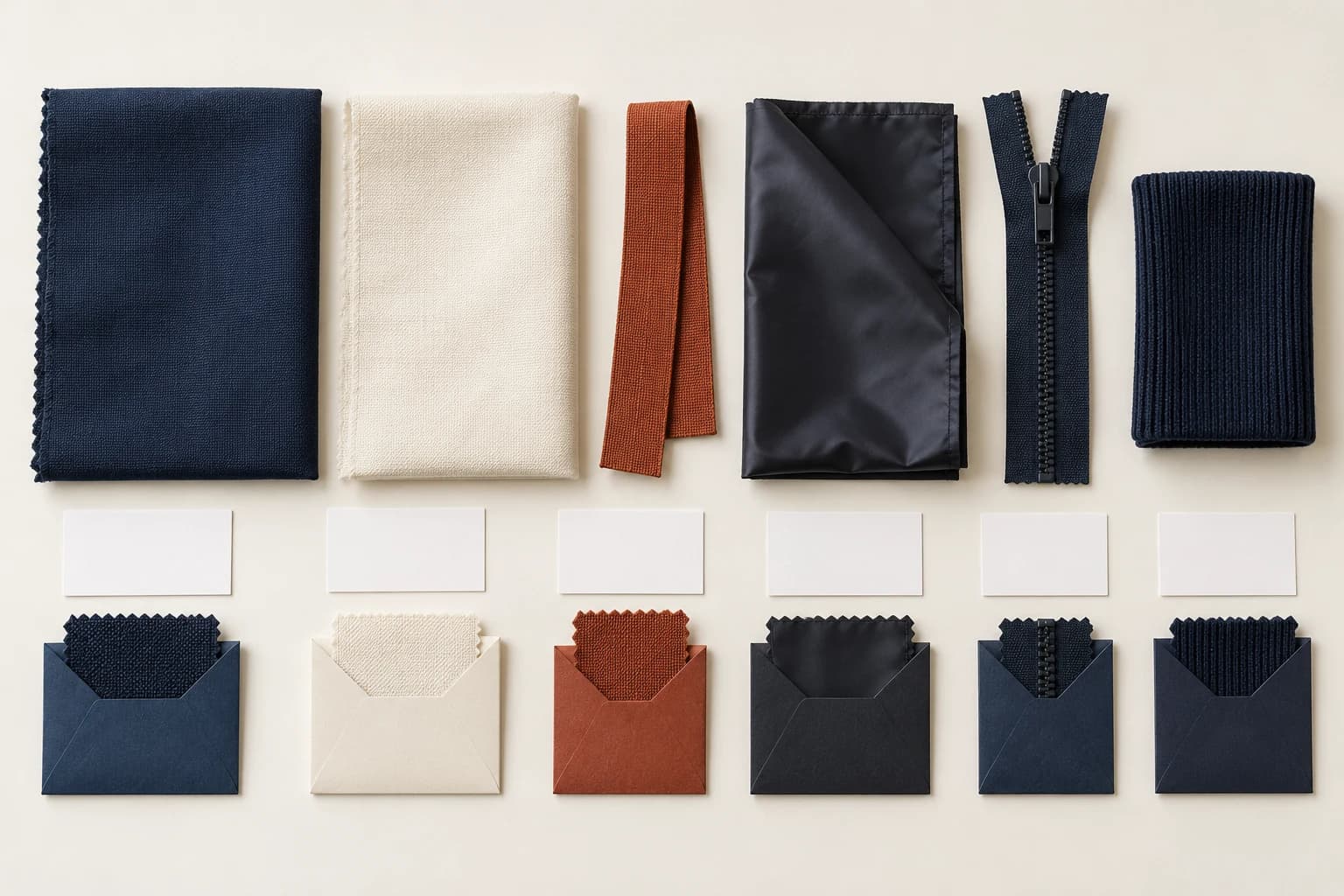
List the shell body, contrast sleeves or panels, rib, lining, pocketing, zipper tape and applied decoration where present. Give each a material reference, color reference and proposed supplier or source identity. Mark which components touch each other in the finished garment. Do not assume a report headed “navy fabric” covers every navy material in the design.
For the proposed contrast-sleeve varsity jacket, a practical planning discussion includes the dark body, pale textile sleeves and striped rib. Ask the provider how to assess relevant combinations and whether assembled-garment review is also appropriate. Component coverage should follow the actual approved construction; it need not grow into an unrelated catalog of tests. Record why each item is included, excluded or awaiting confirmation.
04 · Decision record
Distinguish color change from staining
When discussing laundering evidence, ask the provider to distinguish a change in the assessed material’s own appearance from staining of adjacent material. The public scope of ISO 105-C06 covers resistance to domestic and commercial laundering. Use the full agreed method and report to establish what was assessed, which observations apply and how the result should be interpreted for the order.
A dark panel that still looks acceptable is not enough information if a pale adjoining area is the buyer’s concern. Conversely, a comment about staining should not be silently converted into a general statement about every color’s appearance. Ask for the reported assessment categories to remain separate. Clarify unfamiliar notation with the provider before the commercial team writes an approval email or prepares a product claim.
05 · Decision record
Connect the specimen to the order
A useful submission identifies the style, drawing revision, material reference, color, lot where available and component location. Tell the provider whether the specimen is development yardage, an approved sample component or material intended for bulk production. Keep the submitted item distinguishable from a loose swatch retained for appearance approval.
If the bulk lot is not available during development, describe that limitation explicitly. Decide what evidence is needed when the actual material arrives and who will authorize its use. Do not relabel an earlier development report as a bulk-lot report. Photographs and retained specimens can support identification, but a photograph alone does not establish exposure conditions or a test result. Keep the laboratory submission details with the purchase and material records.
06 · Decision record
Agree acceptance criteria before testing
The buyer should specify or approve the required criteria for the intended market, use and care brief, with technical advice from the testing provider when needed. Record the test method, edition, selected conditions, assessment categories and agreed acceptance requirements. Ask the provider what sample quantity and preparation are required; do not invent those details from a short online summary.
If two quotations use different conditions, make the difference visible before choosing between them. A lower price may cover a narrower question. Clarify which decisions remain outside the quoted scope and whether any buyer requirement is unresolved. Where no acceptance criterion has been agreed, label the work as information gathering. Receiving a numerical result does not automatically grant permission to cut or release the order.
07 · Decision record
Review assembled details where they matter
Component evidence belongs alongside garment development review. Ask whether the actual seam arrangement, lining, trim application or decoration introduces a question that the submitted component specimens do not answer. Review the pale and dark junctions on an identified garment under the separately agreed assessment plan. Keep garment observations distinct from standardized laboratory results.
For custom coach jackets, the relevant items may include shell, facing, pocketing and any later artwork choice. A plain design reference does not approve a future print or embroidery. If decoration is added after material testing, assess whether the earlier scope still covers the revised assembly. Record the provider’s recommendation and the buyer’s resulting decision rather than assuming that every addition requires the same response.
08 · Decision record
Read the report as a traceable record
Check the report identity, issuing provider, specimen description, dates and requested methods against the submission. Confirm that all selected components and exposures appear, and identify any deviations, limitations or unperformed items. Ask for clarification if the report describes a different material or color. Resolve identity questions before interpreting the outcome as an order approval.
Review each result against the agreed criterion for that assessment. Avoid summarizing a mixed set of observations as “all colors passed” when the evidence covers fewer components or conditions. A supplier’s broad assurance may be useful context, but it cannot fill missing report scope. Retain the complete record with the approved brief so another buyer or inspector can understand the decision without reconstructing it from separate chat messages.
09 · Decision record
Handle gaps and changes before release
Use clear dispositions: accepted for the specified scope, held pending clarification, revised for further assessment or rejected against the agreed requirement. State the affected material and order quantity, the responsible person and the next action. If the buyer accepts a documented limitation, preserve that decision with its boundaries; do not rewrite the underlying result.
After a dye source, finish, material, color combination or decoration changes, ask whether the prior evidence remains applicable. Update the revision record and agree any additional assessment before releasing affected work. A successful check on the earlier construction should not disappear, but it also should not be copied onto a materially different submission without review. Keep superseded references available so the factory can identify which version governs production.
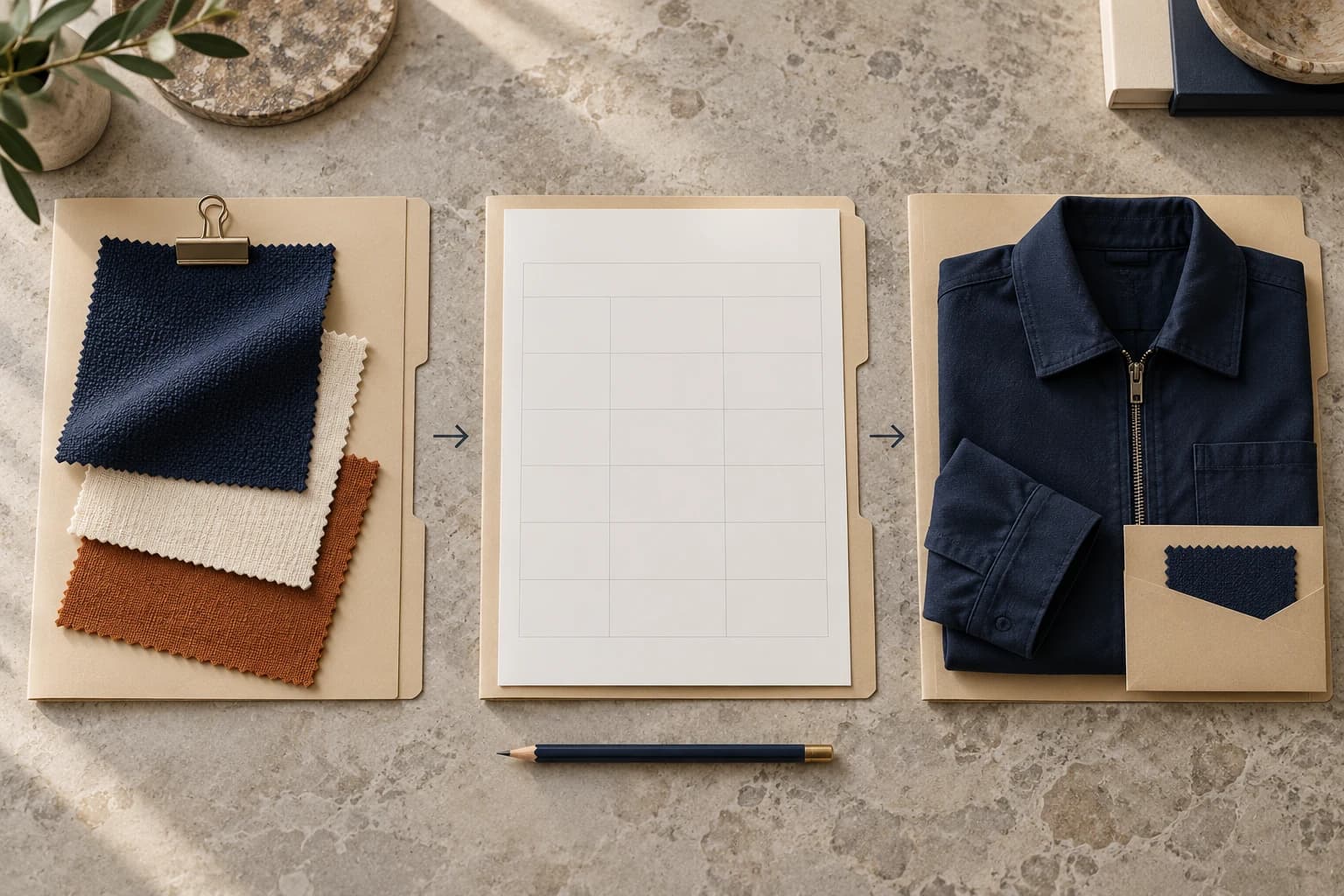
When comparing component proposals, use a simple coverage matrix with one row per material and exposure. Record the specimen reference, report reference, assessment status and buyer disposition in separate columns. A blank cell means the issue remains open; it should not inherit the result from the row above. This makes a limited report useful without overstating it. Ask the reviewer to close each required row before signing the material release, and retain any agreed exclusions alongside that sign-off.
10 · Decision record
Use a short handover checklist
Before cutting approval, bring the material list, color arrangement, agreed methods, buyer criteria, specimen identities and complete reports into one review. Identify the person authorized to close open questions. Give production the approved revision and any specific hold instructions. If part of the scope is still pending, name the affected material rather than leaving a general warning that nobody can act on.
Color evidence is one part of garment approval. The fabric shrinkage guide addresses dimensional change, while the bulk-release checklist organizes later inspection and disposition. Keep those records connected without treating one as a substitute for another. The goal is a usable procurement decision for the actual garment, with enough information to explain both its approval and its limits.
11 · Decision record
Buyer questions
Does one colorfastness report cover every colorway?
Only use it within its documented scope. Compare the listed specimens, materials, colors and conditions with the order, then ask the testing provider how proposed grouping or additional coverage should be handled. Record the buyer’s decision for any untested combination. Similar appearance is not a documented technical basis for extending a result.
Can a matching swatch replace exposure evidence?
A matching swatch establishes an appearance reference for the agreed viewing and approval process. It does not, by itself, show how the material responds to rubbing or care. Keep the shade reference and the assessment submission linked by identity, with separate approvals where the buyer needs both.
What should we send with an inquiry?
Share drawings, intended use, proposed care, quantities by style and color, material references and the specific assessment questions. Identify any existing reports and their limitations. Forthright’s MOQ is 300 pieces per style and color. Samples take 7–10 days after brief confirmation and bulk production takes 30–45 days after approval, subject to the confirmed brief. Contact Forthright to discuss the development request and the evidence still required before approval.