





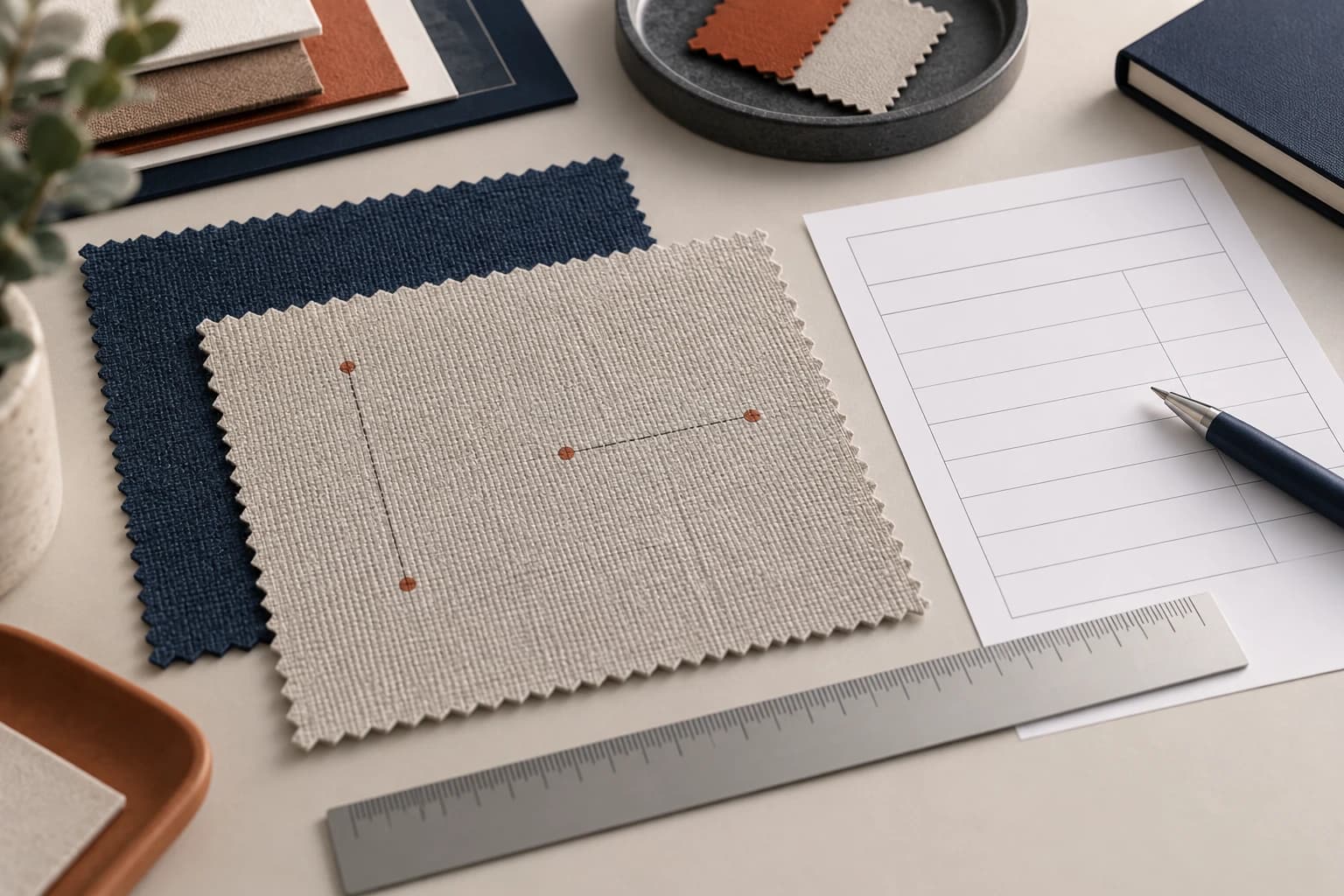
A fabric shrinkage test is useful to an apparel buyer only when the result represents an identifiable material and an agreed care procedure. A percentage copied into a message does not show which lot was tested, how the specimen was handled or whether the finding meets the order's requirement.
Before cutting, the purchasing decision is whether the proposed material can proceed under the agreed specification, needs more evidence or requires a change. That decision connects the fabric supplier, garment technical team and buyer. It should not depend on an unexplained “pass” or a generic promise that a fabric will keep its size.
This guide sets out a proposed procurement record, not a laboratory instruction. Select the actual method, edition, conditions and acceptance criteria with the buyer and testing laboratory. No universal shrinkage allowance or Forthright test result is implied.
01 · Decision record
1. Define what the test must help you approve
Separate the material decision from the finished-garment decision. A fabric result can inform sourcing and development, but it does not automatically establish how an assembled jacket will behave. Closures, facings, seams and combinations of components belong to the actual product brief and may require their own assessment.
Write the question before requesting the test: are you evaluating a development swatch, the proposed bulk material, a replacement lot or the finished garment? State the intended care process and the decision owner. The same report title can otherwise be used to support several different claims that were never assessed.
For the new fleece jacket manufacturer reference, identify the fleece and the construction being considered. For the softshell jacket manufacturer reference, identify the proposed face/backing combination. Neither rendering is a tested fabric or an approved sample.
02 · Decision record
2. Make the tested material traceable
Give the request a style or development reference and identify the material supplier, fabric reference, color, lot or batch information available, finish and approval stage. Attach the actual swatch identification rather than relying only on a photograph or a broad name such as “grey fleece.”
Ask the supplier to explain which material the specimen represents. A test on an early reference should not silently become evidence for a changed composition, finish or bulk source. Record unresolved identity questions before the result is used to authorize cutting. Keep the specimen and report references linked to the purchasing record.
Where more than one material or lot is involved, agree the coverage with the buyer and laboratory. This guide does not prescribe a universal sampling percentage. The point is to avoid presenting a result from one identified specimen as proof of every unexamined material in an order.
03 · Decision record
3. Choose a fabric shrinkage test with the correct scope
The public scope of AATCC TM135 concerns dimensional changes in fabrics after home laundering. AATCC TM150 concerns garments and includes an applicability warning for some stretch fabrics. The distinction matters when asking what has actually been assessed; a fabric method and a garment method are not interchangeable labels.
ISO 5077 addresses dimensional change after specified washing and drying procedures. ISO 3759 addresses preparation, marking and measurement, while ISO 6330 addresses domestic washing and drying procedures. These titles describe different parts of a testing framework rather than a single unexplained “ISO shrinkage test.”
Use the method and edition required for the actual product and care brief. Ask the laboratory to confirm scope and any limitation. The sources listed here are public summaries and abstracts, not the complete standards, and this article should not be used to recreate a detailed test procedure from them.
04 · Decision record
4. Agree conditions before comparing numbers
A test request should identify the agreed washing and drying procedure, relevant cycle information, measurement condition and reporting requirements. Have the laboratory resolve the method-specific details, including specimen preparation, marking, equipment, detergent and any necessary conditioning. Keep these decisions attached to the request instead of assuming a familiar method number answers every question.
ISO 6330's public abstract notes that washing-machine, detergent and drying parameters can affect results. This supports a practical comparison rule: investigate whether two results were produced under comparable conditions before treating the different percentages as a material-quality ranking.
For example, two supplier reports may name the same broad fabric category but use different drying procedures. This is an illustrative purchasing issue, not a factory case. Ask what changed and whether another assessment is needed. Do not select the more attractive number without checking whether it answers the buyer's intended care question.
05 · Decision record
5. Keep direction, original measurements and result conventions visible
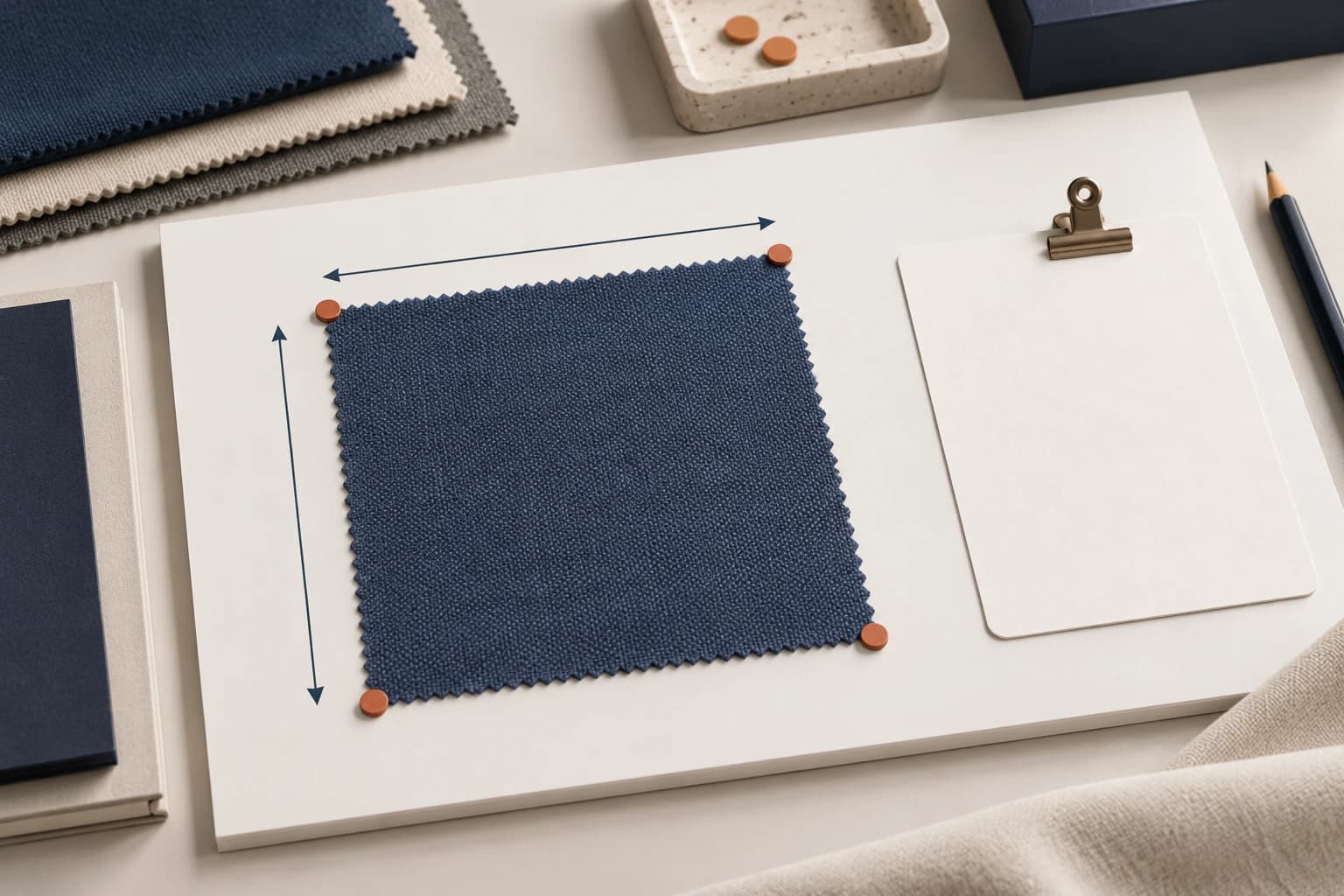
Ask for the directions and measurement references relevant to the chosen method, with the original and final measurements retained in the report. Length and width results should be understandable separately. A single unlabeled percentage is difficult to relate to garment length, width or a particular approval requirement.
Agree how dimensional change is expressed. A report may use a signed change, a reduction stated as shrinkage or another method-defined convention. Check the definition before copying a value into an acceptance sheet. Preserve the laboratory's terminology and identify any buyer calculation separately.
A simple arithmetic illustration can help a purchasing team read a result: a marked distance changing from 100 units to 97 units has reduced by 3 percent of the original distance. That example is not a specimen dimension, a prescribed calculation from a particular standard or an acceptable limit. It only demonstrates why the starting measurement and convention must be clear.
06 · Decision record
6. Compare results with an agreed acceptance decision
Define the acceptance criteria for the actual material, garment and care brief before interpreting a report. Record who can accept the result, request another check or authorize a change. Do not let a laboratory method number stand in for the buyer's product requirement.
Review how the report identifies specimens and presents findings. Ask about unclear variation or missing information instead of allowing a convenient average or summary label to conceal the question being approved. Where the buyer needs a particular reporting detail, agree it in the request rather than trying to reconstruct it after testing.
Use a short disposition record: material reference, test report, agreed criterion, observed finding, decision and responsible reviewer. “Pending clarification” can be a valid current status. It is more useful than labeling an incomplete record as passed so that the cutting schedule appears ready.
07 · Decision record
7. Respond to a problem without hiding the original evidence
If the result does not meet the agreed requirement, identify the proposed action with the supplier and technical team. Options may include reviewing the material, sourcing another option, revisiting a process or reassessing the design. Which response is suitable depends on the actual finding and the order.
Do not automatically enlarge every pattern measurement by one reported percentage. The result needs to be understood in its directions, test conditions and relationship to the construction. Any pattern or material change should be reviewed by the responsible technical team and connected to a new approval decision where needed.
Retain the first report, the explanation of the change and the evidence used for re-evaluation. A replacement result should not erase the history of what was tested. Confirm whether the new specimen represents the material actually proposed for cutting, especially when a source, finish or lot has changed.
08 · Decision record
8. Connect the approved result to cutting and sampling
Before material release, check that the current purchase brief, swatch identity, report and decision refer to the same approved material. Identify the drawing and size-specification revision that the technical team is using. Keep any conditional approval visible to the people preparing the next stage.
A change can reopen this connection. A similar color or surface appearance does not establish the same material identity or test basis. Agree how replacement fabric, changed finishing or a different component arrangement will be assessed, and record who needs to approve it before the changed material proceeds.
The garment size grading guide covers a separate approval problem: relationships across the ordered size range. The garment sampling guide covers stage-level handoffs. Keep those records coordinated without claiming that any one of them replaces the others.
09 · Decision record
A useful supplier request checklist
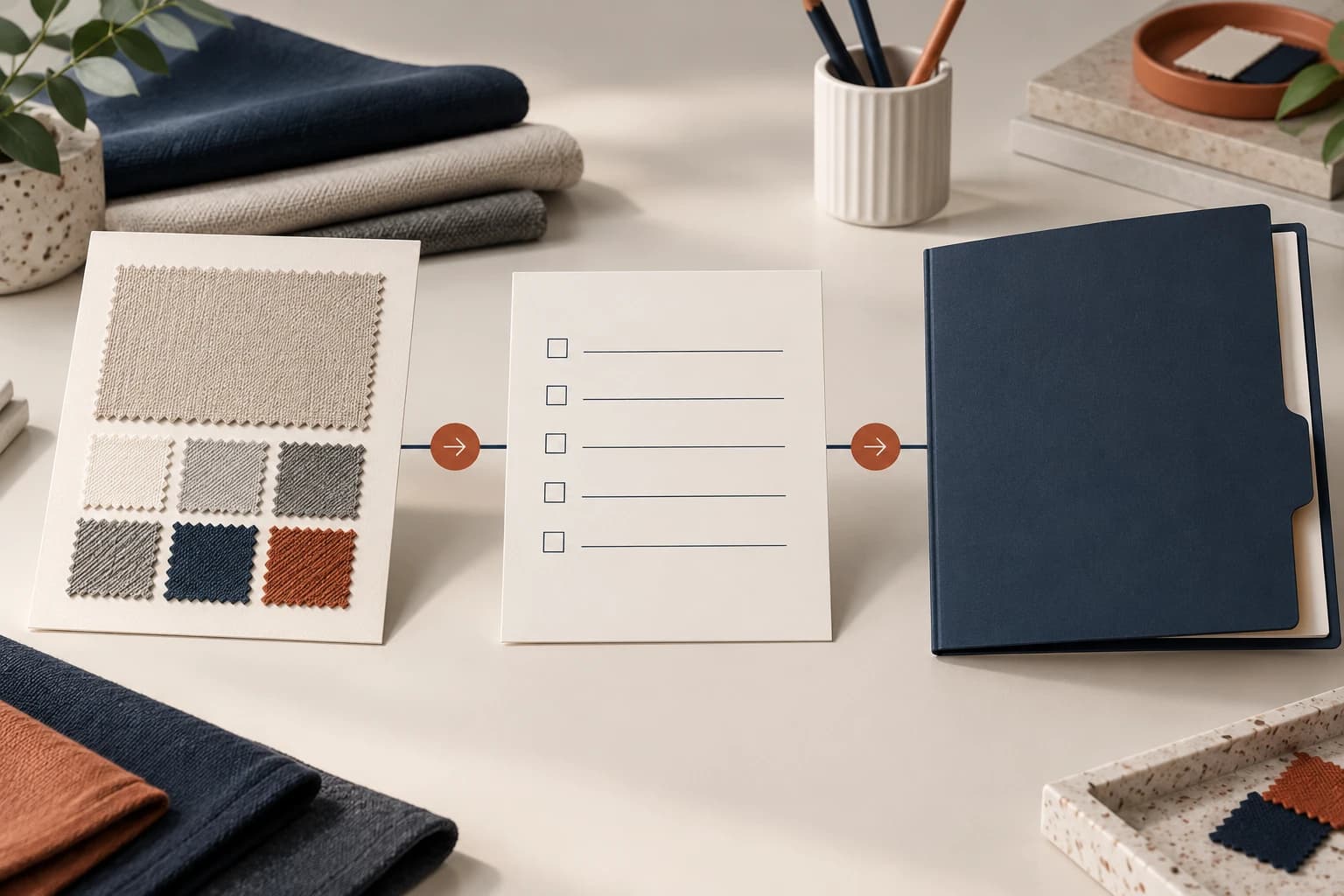
Before sending the request, confirm that it states the material and available lot identity, development stage, intended care process and decision being made. Identify the buyer and technical contact who can resolve open method or acceptance questions.
Ask the laboratory to confirm the suitable method and edition, required specimen preparation, reporting directions, relevant conditions and scope limitations. Request an identifiable report and keep its findings connected to the actual material rather than an unrelated marketing description.
Finally, record the buyer's criterion and the next approval step. This is a proposed procurement checklist, not a universal test standard. Its value is that missing information becomes visible before a number is used as permission to cut.
10 · Decision record
Questions apparel buyers ask
Can one fabric shrinkage test cover every color and lot?
Do not assume that coverage. Agree what the specimen represents and what further evidence the buyer requires. If a color, lot, material source or finish changes, review whether the previous result is still applicable. An untested color or lot has no measured shrinkage result.
Does a fabric pass prove the finished jacket will keep its fit?
No automatic conclusion follows. The material and assembled garment are different assessment subjects. Choose the relevant review with the buyer and laboratory, including the actual construction and intended care process. Keep test evidence separate from fitting observations.
Should we accept a supplier's standard shrinkage allowance?
Ask what the allowance describes, which method and conditions support it, and whether it matches the order's requirement. An unexplained supplier default is not the same as a buyer-approved criterion. Resolve that difference before using it in the material-release record.
11 · Decision record
Send an identifiable material brief
Share your garment reference, material options, quantities by color and size, care expectations and required assessments with Forthright. MOQ is 300 pieces per style and color. Discuss the material approval brief so quotation, sampling and the proposed cutting decision use the same identified requirements.