





01 · Decision record
Private Label Apparel Supplier: Preventing Reorder Color Mismatch
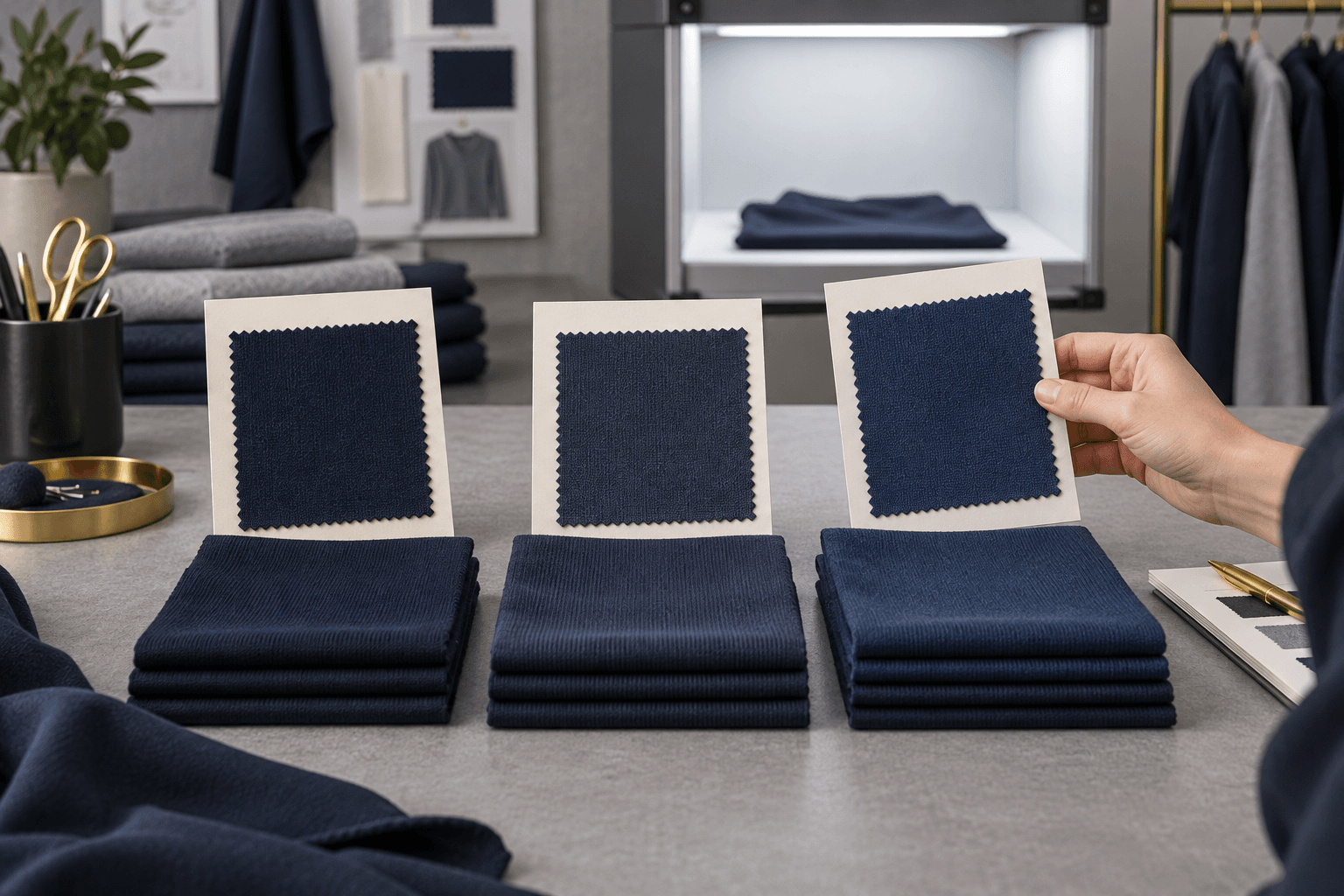
A repeat order is supposed to reduce uncertainty. The pattern is approved, the fit is familiar, and the previous delivery established a reference. Yet the next shipment arrives with a slightly different navy. The new garments look acceptable alone, but the difference becomes obvious beside the remaining stock from the first order.
For a private label apparel supplier, repeat-order color consistency requires more than reusing a color name. Buyers need an identified reference, agreed viewing conditions, and a way to connect approved material to the garments being shipped. This guide explains how procurement teams can control that process without pretending that a phone photograph or one universal color tolerance can resolve every textile decision.
02 · Decision record
1. Find out which difference you are trying to prevent
Separate three problems before asking the supplier for a solution. First, the new dye lot may differ from the approved target. Second, rolls within one delivery may vary. Third, panels or trims within one garment may not match even when each component looks reasonable on its own.
These problems need different controls. Comparing one swatch with last season's garment will not reveal how rolls were allocated to cutting. Inspecting one completed jacket will not establish consistency across every incoming fabric lot.
Define the commercial requirement clearly. Will old and new inventory be displayed together? Are matching tops and bottoms ordered separately? Does a contrasting trim need to coordinate rather than match exactly? Tell the supplier how the garments will be grouped so the review reflects the actual B2B order.
03 · Decision record
2. Establish an identified master color reference
Choose the physical reference that the buyer and supplier will use for approval. Give it a reference code and record its material, finish, approval date, and intended use. If a color standard is part of the brief, identify the exact reference rather than describing it only as “midnight blue.”
Retain a protected master and agreed working references. Record which item controls the decision when the master, an old garment, and a digital file look different. A worn or repeatedly washed garment can be useful context, but it should not silently replace the approved target.
A fabric reference also needs its context. The same color direction on a smooth shell, textured knit, and rib trim may appear different because the surfaces differ. Agree how the components should look together in the finished garment, not just whether their labels share a color code.
Ask the supplier to identify any material-source or finish changes since the previous order. A reorder is not technically identical if an important input has changed.
04 · Decision record
3. Agree viewing conditions with the OEM apparel supplier
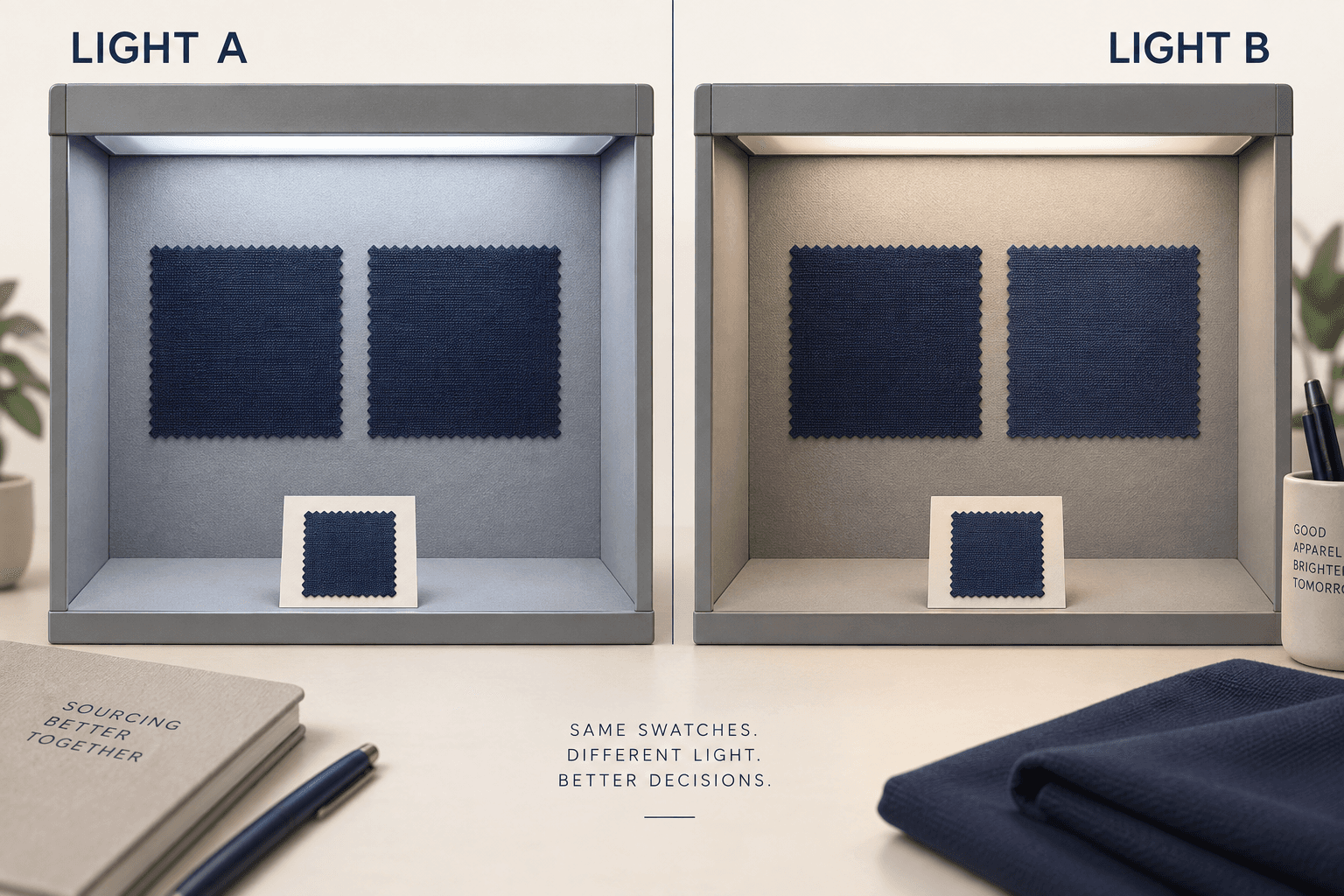
X-Rite's guidance on visual evaluation explains that colors may match under one light source and differ under another, a phenomenon called metamerism. Its guidance also emphasizes controlled viewing conditions. These points explain why approving textiles under unrelated office lighting can produce conflicting decisions.
For OEM apparel supplier color approval, agree the lighting conditions that reflect the buyer's evaluation needs. Use the same approved reference and comparable viewing conditions on both sides. Record the selected conditions in the approval record rather than relying on a vague instruction to inspect under “normal light.”
A photograph is useful for locating a problem or showing the arrangement of samples. It is not a dependable substitute for the agreed physical comparison: camera settings, lighting, compression, and screens can change appearance. Avoid approving a close color match solely because two phone photographs look similar.
05 · Decision record
4. Make instrument results usable rather than decorative
If the program uses instrumental color measurement, agree the method with the supplier or testing provider before interpreting results. A reported color-difference number needs an identified reference and a stated measurement setup. Results produced under different conditions may not answer the same question.
Ask what was measured, how samples were prepared, which settings were used, and which agreed acceptance criteria apply. Keep these details with the submission. Do not select a universal numerical threshold from an unrelated product and assume it is appropriate for every fabric, shade, or surface.
Use instrumental results alongside the agreed visual assessment. If one indicates acceptance and the other raises a concern, investigate the reason instead of choosing whichever result is more convenient. The objective is a reproducible approval decision, not a report that looks technical but cannot be repeated.
06 · Decision record
5. Approve each relevant material submission
For bulk garment manufacturer dye lot control, distinguish a development color submission from production material. A small development swatch may establish the direction, while the actual production lot still needs review against the agreed reference.
Request an identified submission from each lot that requires approval under the order plan. Include the material reference, lot identifier, submission date, and the quantity or rolls represented. If the supplier combines several sample sets into one parcel, each piece needs an unambiguous label.
Record decisions separately for each submission. “Color approved” is too broad when the parcel contains shell fabric, rib, binding, and zipper tape. State which components are accepted, which need review, and whether the assembled combination has been assessed.
Where a component is intentionally different, document the intended contrast. Otherwise, the factory may spend time trying to eliminate a difference that the design actually requires.
07 · Decision record
6. Keep approved lots connected to cutting and sewing
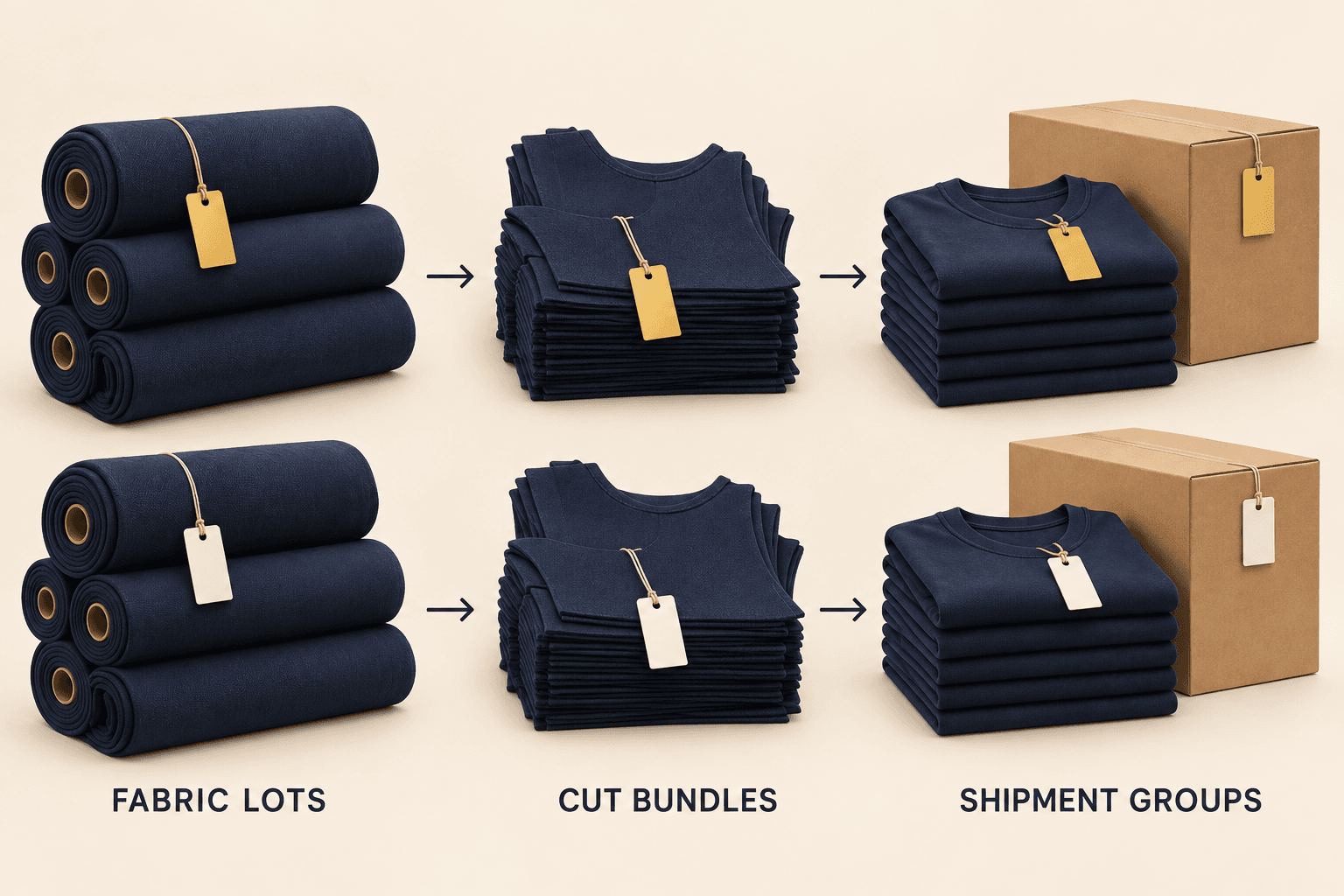
Approval loses value when the accepted swatch cannot be linked to production. Ask how incoming rolls retain their lot identity, how material is released to cutting, and how cut bundles preserve the information needed for traceability.
For private label clothing manufacturer shade management, agree how components belonging to one garment or coordinated set will be allocated. Where shade grouping is necessary, the cutting plan should respect those groups rather than mixing material indiscriminately to consume stock.
The supplier should also have a method for handling replacement panels. If a panel is recut after damage, its material source still needs to be compatible with the rest of the garment. A repair that solves a sewing defect can create a visible shade issue if the replacement comes from an unsuitable roll.
Avoid assuming that carton sorting can correct every upstream problem. Keeping the relevant material identity through production is usually more practical than reconstructing it from finished garments.
08 · Decision record
7. Compare the assembled garment with the reorder requirement
Review the components together, especially when they come from different sources. Shell, lining, rib, binding, embroidery thread, and zipper tape can create a mismatch that is not obvious when examined separately.
For a coordinated activewear order, inspect the intended set rather than approving a top and bottom in isolation. If the two styles use different fabrics, state whether the buyer expects a close match or a deliberate tonal relationship. That decision should appear in the approval brief.
Include a comparison with protected first-order references when matching existing inventory is important. The supplier needs to know this before production, not after receiving a complaint that the new delivery looks different beside old stock.
09 · Decision record
8. Use a defined response when a lot misses the target
Consider an illustrative repeat order of navy training tops. One incoming material lot is acceptable against the agreed reference, while another has a visibly different undertone under one of the agreed lighting conditions. This is a planning example, not a claim about a Forthright customer order.
First, identify and separate the affected material. Ask the supplier which rolls and planned garments are involved, whether cutting has begun, and which other materials share the lot. Review evidence under the agreed conditions before discussing a disposition.
Possible next steps include a replacement submission, an agreed production adjustment, or buyer acceptance of a specifically identified deviation. The right choice depends on the order. Do not relabel an unapproved shade as approved simply because the shipping date is close.
If the buyer accepts a deviation, identify its scope and how the goods will be allocated. Keep the decision separate from the master standard so an exceptional acceptance does not quietly become the target for every future reorder.
10 · Decision record
9. Build a reusable reorder color brief
A strong private label apparel supplier brief explains what must remain consistent and what has changed since the previous order. Reuse verified information, but ask the supplier to reconfirm assumptions that depend on material availability.
Include these details in the request:
- Previous style and order references, plus the new quantity by color and size.
- Master color reference identifiers and the location of retained samples.
- Fabric, finish, and trim references, including known source changes.
- Agreed visual conditions and any applicable instrumental evaluation method.
- Required lot sample sets, approval responsibilities, and unresolved decisions.
- Matching requirements for coordinated styles or remaining warehouse stock.
- Traceability expectations and the procedure for reporting a shade concern.
Ask for a material and approval schedule as well as a sewing schedule. If a new lot needs review, include time for submission, evaluation, and any required correction. A repeat style can still require new material decisions.
Forthright's standard MOQ is 300 pieces per style and color. Samples take 7–10 days after brief confirmation, and bulk production takes 30–45 days after approval. Discuss the actual material situation during the inquiry; do not assume that a previous color approval automatically releases a new production lot.
11 · Decision record
FAQ for B2B repeat-order buyers
Can a private label apparel supplier guarantee identical color from a photograph?
A photograph should not be the sole acceptance reference for close textile matching. Use an identified physical standard and agreed assessment conditions. Photographs remain useful for communicating which component or area needs review, provided both teams understand their limitations.
Should a wholesale apparel supplier use one tolerance for every material?
Acceptance criteria should be agreed for the actual program. Different surfaces, constructions, and component relationships can require different evaluation approaches. If instrumental tolerances are used, document the method and reference rather than circulating an unexplained number.
What should a B2B activewear manufacturer retain for the next reorder?
Retain the agreed color and material references, approval decisions, relevant lot identifiers, evaluation conditions, and records of accepted exceptions. Keep exceptional deviations distinguishable from the master target. That record gives the next procurement team a reliable starting point instead of a color name with no production history.
12 · Decision record
Keep color references with the garment brief
For puffer jacket repeat orders, retain the approved shell, lining and trim references separately. For private label fitness wear, identify each approved fabric component and color standard in the reorder brief. Review new material swatches against those references rather than relying on a photograph or the previous style name alone.