


Three-button partial placket
Confirm all three positions, opening extent and alignment with the detail drawing. Compare button/buttonhole placement and the reinforced base on the sample; reject contradictory trim instructions.
With your permission, we use Google Analytics for sanitized page-path measurement. Inquiry forms and WhatsApp work without analytics consent.
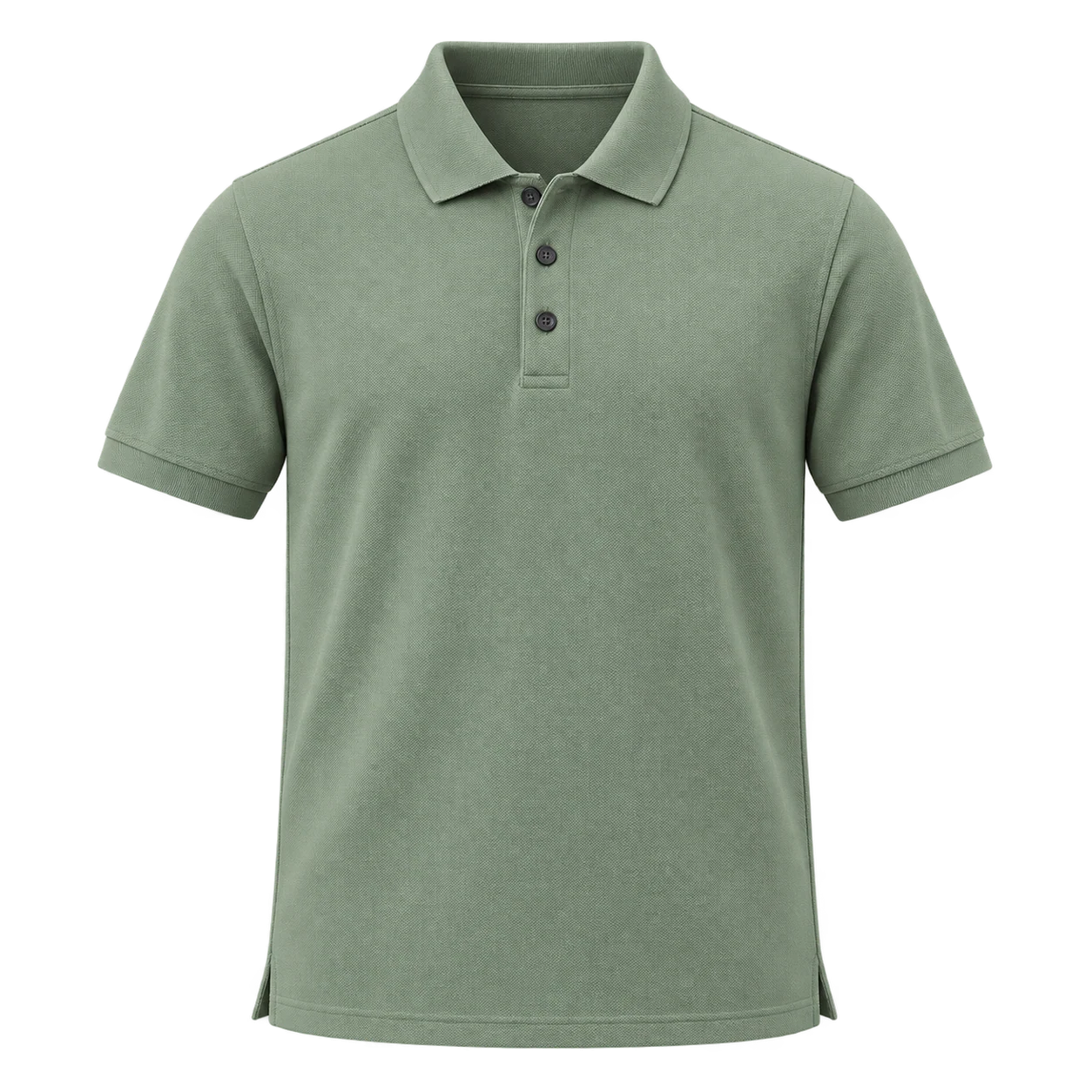
Three-Button Piqué Team Polo · proposed development artwork
OEM / ODM TEAMWEAR DEVELOPMENT
Polo shirt manufacturer development reference: three-button partial placket, turn-down collar, set-in sleeves and side vents. MOQ 300 per style/color.
MOQ is 300 pieces per style and color. Physical samples usually take 7–10 days after a clear brief; additional construction or sourcing development can take longer. Bulk planning is usually 30–45 days after sample approval, order confirmation and material readiness. Send the collar/body references, placket/button instructions, finished measurements, size range, artwork, color/size quantities, packing, destination and delivery target for technical feasibility review.
PRODUCT-SPECIFIC DEVELOPMENT
This three-button piqué team polo is a proposed OEM/ODM development reference for teamwear brands and professional sourcing teams. The sage concept has a separate turn-down collar, a short three-button partial placket, set-in short sleeves, narrow cuff directions and short side vents at a straight hem. The illustrations show one possible build, not stocked goods or an approved physical sample.
A polo shirt manufacturer brief needs to connect the body knit with the collar, cuffs and placket assembly. Piqué is a proposed visual/material direction; composition, weight, finish, collar source and component compatibility remain buyer-confirmed. Nothing here establishes in-house collar knitting, a particular buttonhole machine, a past polo order or a tested performance specification.
Review all three button positions, their relationship to placket length, buttonholes and the reinforced base. Compare collar attachment, cuff proportions, set-in sleeve shape and side-vent finishing on the actual development sample. Confirm decoration with the chosen knit rather than assuming a logo method will behave the same on every material.
CONSTRUCTION DOSSIER
Matching development views explain the proposed build. They are not an approved sample or fixed production specification.
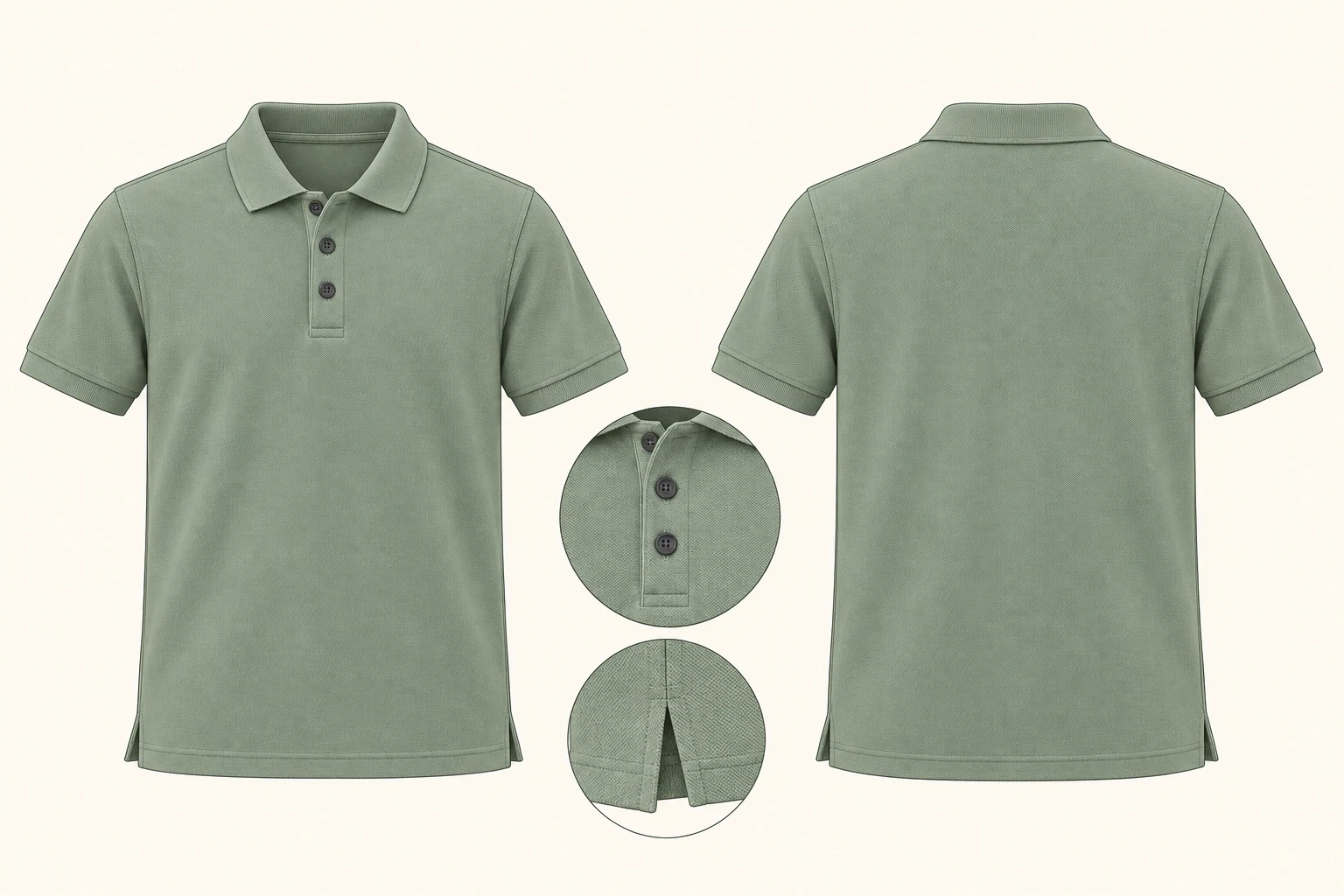
Confirm all three positions, opening extent and alignment with the detail drawing. Compare button/buttonhole placement and the reinforced base on the sample; reject contradictory trim instructions.
Agree collar shape, attachment and seam finish with the actual selected collar/body combination. The drawn knit texture does not establish a fixed supply specification.
Review the armhole/sleeve relationship, cuff proportions and attachment rather than applying a raglan-jersey pattern assumption.
Confirm vent position, opening direction, corner finish and front/back hem relationship. Keep these details consistent across the front view, construction sheet and sample.
Identify intended artwork scale, placement and application method. Assess its interaction with the chosen knit and placket; no durability result is supplied.
Record finished measurements and component references before the first sample. Keep unresolved choices visible and obtain buyer decisions before treating them as fixed production requirements.
CONSTRUCTION AND MATERIAL CHOICES
The close-up illustrates the collar attachment, exactly three button positions, placket base, cuff and vent directions. It establishes visible construction only; select and assess actual cloth, collar and components separately.
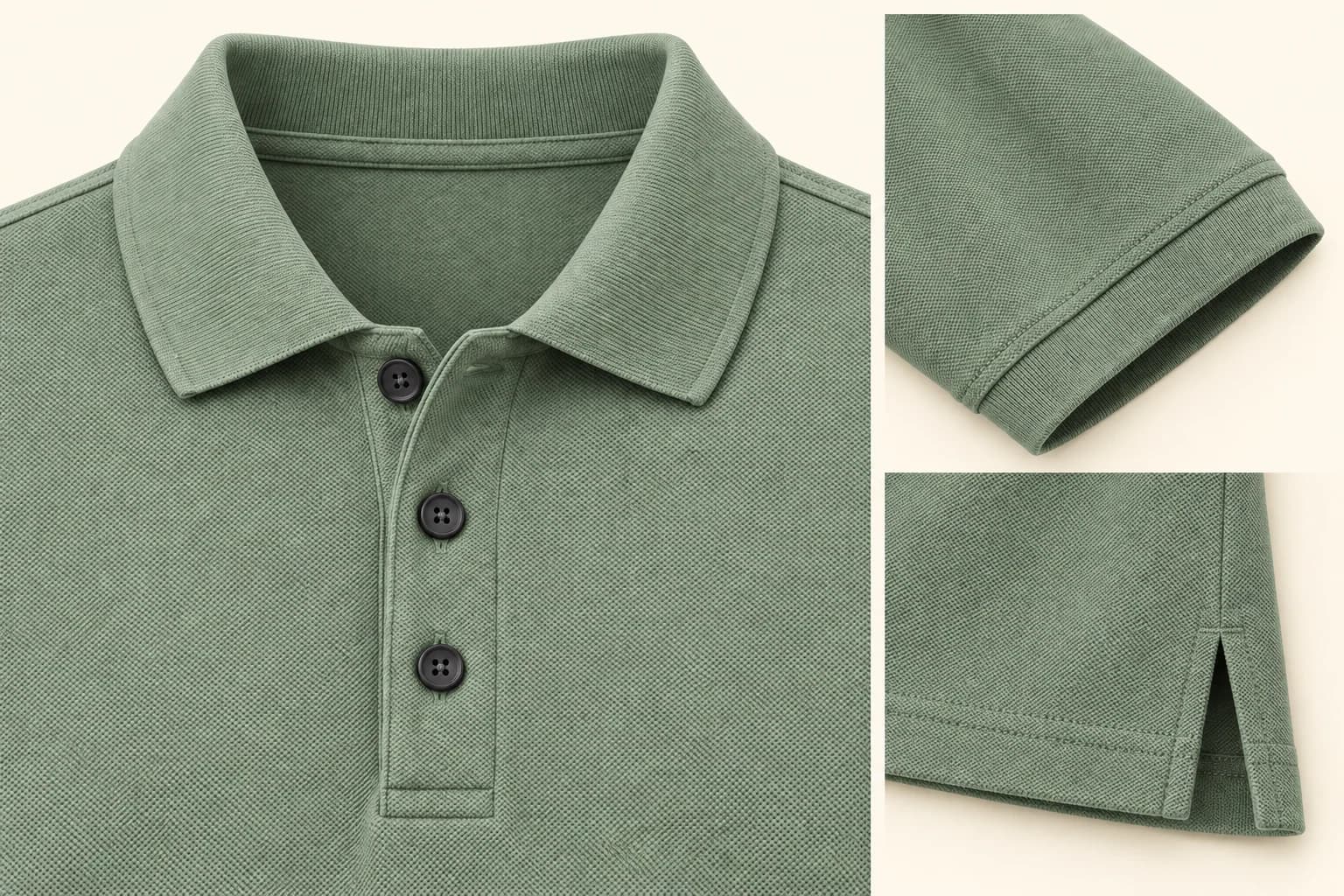
Consider a piqué-knit direction for this proposed body. Confirm actual composition, weight, handfeel, color, finish and care before quotation or sample approval; the illustration does not verify any of them.
Review separately sourced collar/cuff directions against the chosen body knit for attachment, proportions and agreed care behavior. No in-house knitting or guaranteed recovery is claimed.
Agree reinforcement direction, buttons, buttonholes and thread with the intended placket. Review decoration backing or other components on the selected material; do not infer a test result from the detail image.
CUSTOMIZATION MATRIX
Each item becomes a recorded approval point so sampling decisions move cleanly into bulk production.
Buyer-approved count, position, opening extent and reinforcement govern the proposed partial placket; a different count requires a coherent updated drawing/component brief.
Choose the form, proportions and compatible material source through feasibility and sampling, not an assumed in-house knit service.
Agree the straight hem, short side vents and corner finishing on the actual development sample.
Provide the intended wearer/fit reference and finished-garment measurement instructions; confirm set-in sleeve shape separately from the visual rendering.
Send artwork files, placement and label requirements. Review the selected application and backing on the actual material.
List quantities by style, color and size. MOQ remains 300 pieces per style and color; available shades or production slots are not implied.
Review chest, body length, shoulder, sleeve, armhole, collar/opening and hem/vent relationships on an identified sample. No universal fit follows from the image.
Use buyer-approved grading increments and size coverage. Check collar, placket and cuff relationships across the ordered sizes; dimensions are not pre-filled.
Agree garment POMs, units, measurement condition and tolerances in the technical brief, with a clear reference for each value.
STYLE-SPECIFIC WORKFLOW
Start with a coherent technical brief, then review feasibility and an identified physical sample. Proposed artwork establishes no production history or performance result.
Reconcile three drawn button positions with the component instructions; identify collar, placket, cuff and vent references.
Consider a piqué-knit direction for this proposed body. Confirm actual composition, weight, handfeel, color, finish and care before quotation or sample approval; the illustration does not verify any of them. Review separately sourced collar/cuff directions against the chosen body knit for attachment, proportions and agreed care behavior. No in-house knitting or guaranteed recovery is claimed. Agree reinforcement direction, buttons, buttonholes and thread with the intended placket. Review decoration backing or other components on the selected material; do not infer a test result from the detail image.
Agree what the first sample should demonstrate, including the identified construction details and unresolved choices. A render cannot establish assembly feasibility.
Review chest, body length, shoulder, sleeve, armhole, collar/opening and hem/vent relationships on an identified sample. No universal fit follows from the image.
Identify the accepted material/component and construction references, finished measurements and required evidence before order commitment and bulk release.
Confirm labeling, folding, bagging and whether collar/placket presentation needs protection in the intended pack. Identify style/color/size quantities, carton marks and required packing list details. No standard carton quantity or shipping price is promised. Compare labels, assortment and appearance after unpacking with the buyer-approved packing direction before shipment release.
PRODUCT QUALITY PLAN
Use the actual selected materials, components, construction references and buyer-agreed checks. Appearance alone does not establish a test result.
Separate turn-down collarAgree collar shape, attachment and seam finish with the actual selected collar/body combination. The drawn knit texture does not establish a fixed supply specification.
Set-in sleeves and cuffsReview the armhole/sleeve relationship, cuff proportions and attachment rather than applying a raglan-jersey pattern assumption.
Straight hem and short side ventsConfirm vent position, opening direction, corner finish and front/back hem relationship. Keep these details consistent across the front view, construction sheet and sample.
Decoration zoneIdentify intended artwork scale, placement and application method. Assess its interaction with the chosen knit and placket; no durability result is supplied.
Base-size and component reviewRecord finished measurements and component references before the first sample. Keep unresolved choices visible and obtain buyer decisions before treating them as fixed production requirements.
BUYER QUESTIONS
A proposed development reference for brand and sourcing teams; materials, fit and assembly need technical review and sampling.
Prepare the garment spec sheet input check and discuss the 4 point system fabric inspection brief for identified incoming cloth.
No. This is proposed development artwork for a buyer-led OEM/ODM brief. Exact materials, components, construction feasibility and fit need review and sampling; no previous order or test result is claimed.
Buyer-approved count, position, opening extent and reinforcement govern the proposed partial placket; a different count requires a coherent updated drawing/component brief.
Consider a piqué-knit direction for this proposed body. Confirm actual composition, weight, handfeel, color, finish and care before quotation or sample approval; the illustration does not verify any of them. Review separately sourced collar/cuff directions against the chosen body knit for attachment, proportions and agreed care behavior. No in-house knitting or guaranteed recovery is claimed.
Review chest, body length, shoulder, sleeve, armhole, collar/opening and hem/vent relationships on an identified sample. No universal fit follows from the image. Use buyer-approved grading increments and size coverage. Check collar, placket and cuff relationships across the ordered sizes; dimensions are not pre-filled.
MOQ is 300 pieces per style and color. Physical samples usually take 7–10 days after a clear brief; additional construction or sourcing development can take longer. Bulk planning is usually 30–45 days after sample approval, order confirmation and material readiness. Send the collar/body references, placket/button instructions, finished measurements, size range, artwork, color/size quantities, packing, destination and delivery target for technical feasibility review.
FACTORY RFQ
MOQ is 300 pieces per style and color. Physical samples usually take 7–10 days after a clear brief; additional construction or sourcing development can take longer. Bulk planning is usually 30–45 days after sample approval, order confirmation and material readiness. Send the collar/body references, placket/button instructions, finished measurements, size range, artwork, color/size quantities, packing, destination and delivery target for technical feasibility review. Our factory team will review the brief for sampling and bulk production.