





01 · Decision record
OEM Apparel Manufacturer: Preventing Sample-to-Bulk Mismatch
Your approved jacket sample has a clean zipper, balanced sleeves, and the right fabric handle. The first production cartons arrive with a different zipper tape, inconsistent sleeve lengths, and a stiffer shell. The order followed the sample's appearance, but the factory and buyer did not share one complete production reference.
An OEM apparel manufacturer needs more than a message saying “approved.” Procurement teams need to specify what was approved, which materials were used, and which unresolved details still block production. This guide provides a practical approval and release process for B2B apparel orders. The objective is to make differences visible before they spread across the order, rather than debating them after shipment.
02 · Decision record
1. Identify what the sample actually proves
A development sample can demonstrate silhouette while using substitute fabric. A fit sample can establish measurements without confirming final trims. A pre-production sample should represent the intended bulk specification, but its label alone does not prove that it uses the booked materials or the intended production method.
Ask the supplier to identify the purpose of each submission. Record whether it is for design review, fit, material confirmation, or production release. A photograph of a convincing garment is insufficient when its composition, finishing route, or zipper supplier differs from the planned order.
Separate sample comments into three outcomes: approved, correction required, and not evaluated. “Not evaluated” matters. If you did not assess wash performance, do not allow the approval record to imply that you did. Each unresolved item needs an owner and a clear next submission.
03 · Decision record
2. Create one release pack for the OEM apparel manufacturer
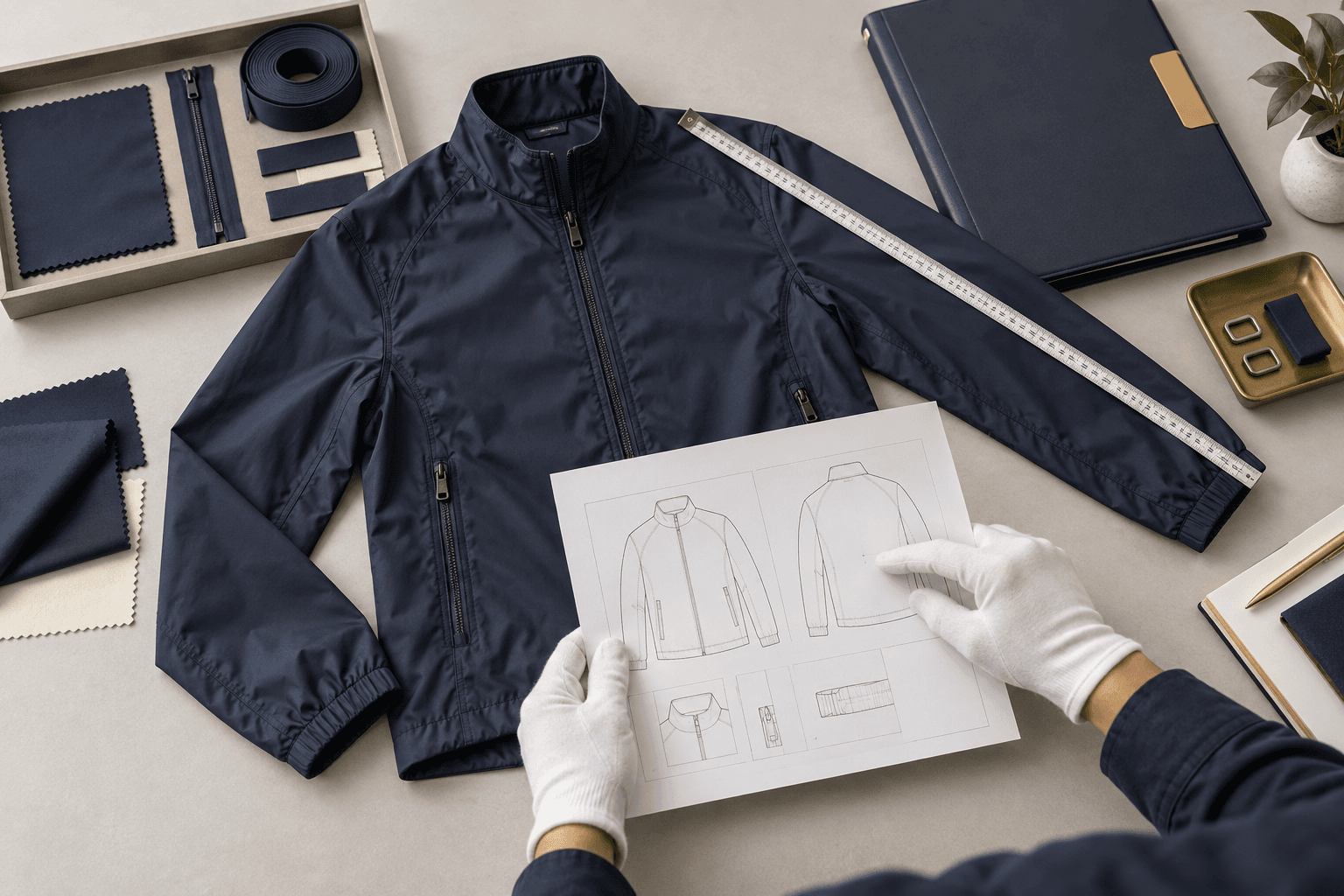
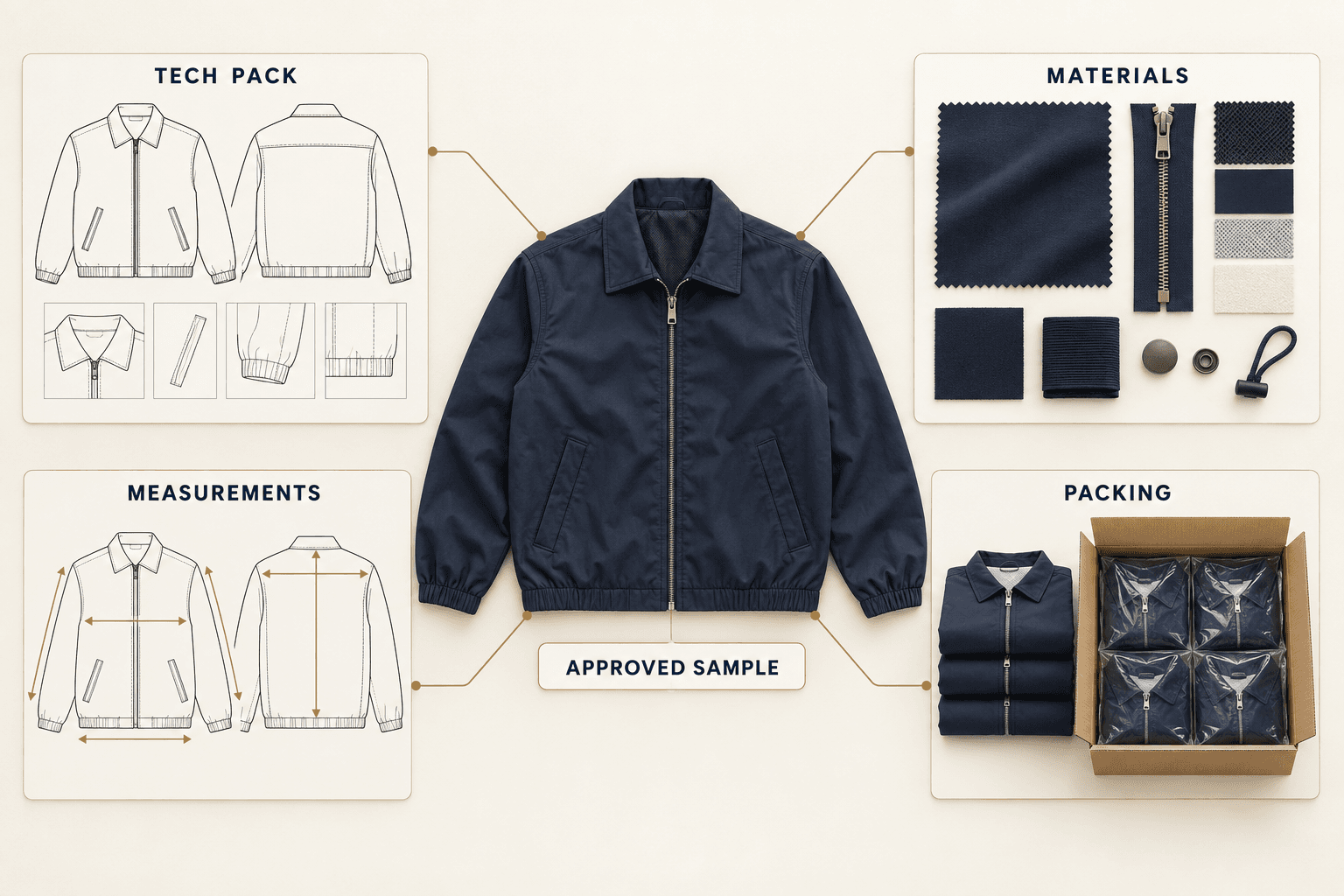
Combine the current technical pack, measurement chart, bill of materials, artwork, packing instructions, and approval record into one identified release pack. Give it a style code, revision, date, and responsible buyer. Include a list of superseded files so production staff can distinguish the current instruction from an older attachment.
Use physical references where appearance or handfeel matters. Retain a sealed garment and identified material swatches, with matching references available to the supplier. Photos help explain comments, but they should support rather than replace the physical reference for decisions that depend on texture or color.
Avoid treating different documents as interchangeable. The garment demonstrates the intended result; the measurement chart defines measurable requirements; the bill of materials identifies components. If the documents disagree, resolve the conflict before release. Do not ask an operator to choose between a drawing and a comment buried in an email.
04 · Decision record
3. Freeze materials before authorizing bulk cutting
For private label garment supplier sample approval, identify each visible and functional component separately. “Navy zipper” leaves room for different tape, teeth, pullers, and lengths. “Same fabric” leaves room for changes in source, construction, finish, or weight.
Use a material list that includes the buyer's reference, supplier reference, intended location, and approval status. Ask the manufacturer to confirm which materials are already booked and which remain provisional. Where a substitute was used in sampling, request the relevant final-material review before that component enters bulk production.
A material substitution should trigger a specific review, not an automatic restart of every discussion. A changed zipper may require appearance and operation checks. A changed fabric may also affect fit, shrinkage, seam behavior, or decoration compatibility. Define the checks around the actual change and record the decision.
Keep the purchase quantity separate from material approval. Receiving enough fabric does not mean that the fabric is released for cutting. The person confirming inventory and the person approving technical conformity may be different.
05 · Decision record
4. Turn comments into measurable acceptance criteria
“Make the sleeve better” is not an executable instruction. A useful comment identifies the location, observed problem, required result, verification method, and affected sizes. Attach a marked photograph when the issue is difficult to describe.
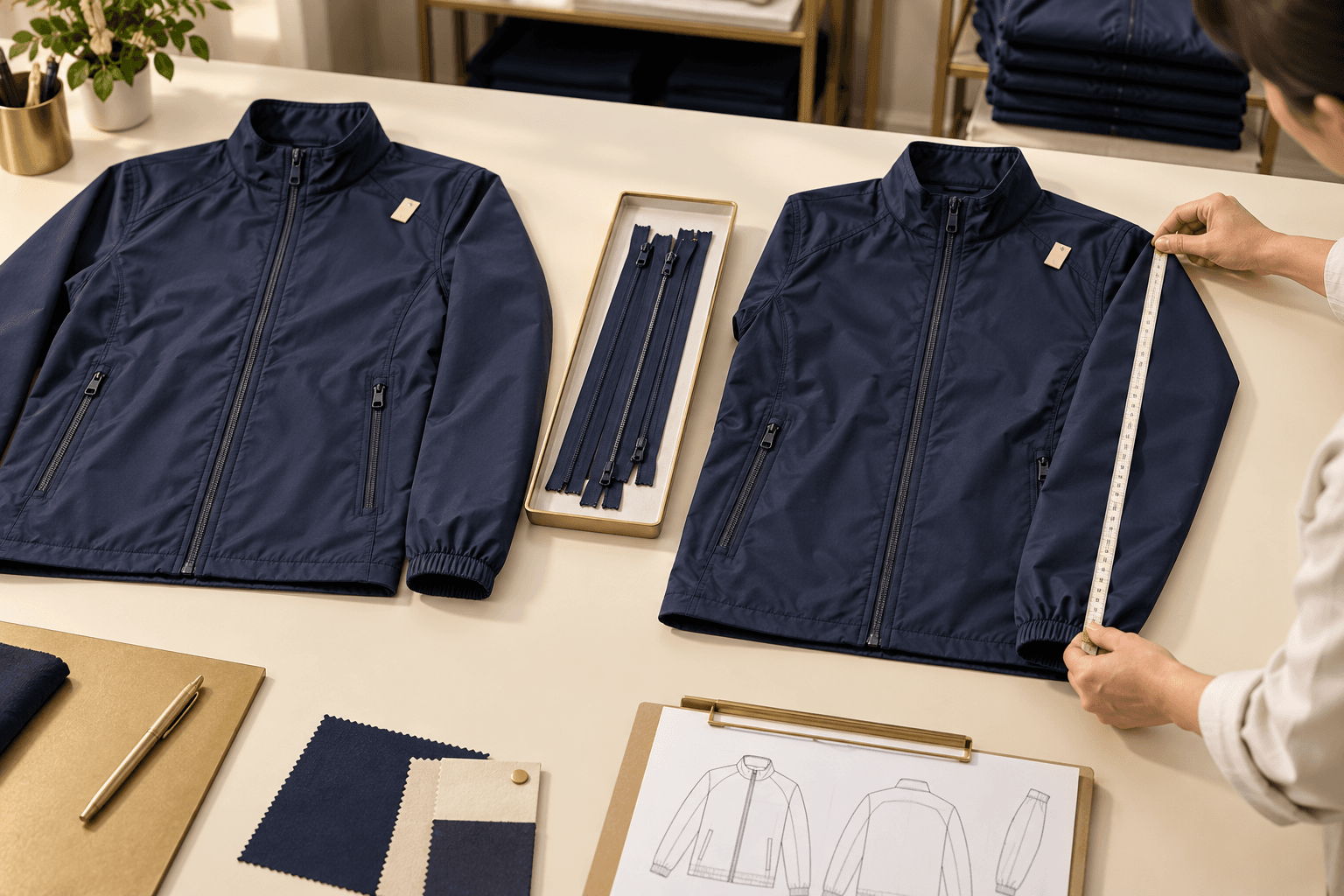
For measurements, agree the garment state and measuring method. Specify whether the piece is laid flat, relaxed, fastened, or measured after an agreed treatment. Otherwise, the buyer and factory may report different results from the same garment. Apply tolerances to individual measurement points rather than using one blanket tolerance for everything.
For appearance, use an agreed reference or defect photograph. Identify whether an issue concerns function, durability, alignment, or visual presentation. The priority should reflect the intended product and buyer requirements, not whichever comment arrived last.
Use this minimum comment format:
- Reference: style, sample version, size, color, and photograph number.
- Observation: the actual discrepancy and its location.
- Requirement: the agreed measurement or reference appearance.
- Verification: who checks it and what evidence closes the comment.
- Status: open, corrected for review, or accepted.
06 · Decision record
5. Review size coverage before multiplying an error
One approved base-size sample does not establish every size. For OEM clothing factory bulk production control, review how key measurements change across the ordered range. Concentrate on measurements that affect fit or construction rather than checking only the easiest points.
For example, a jacket program might prioritize chest, sleeve length, armhole, cuff opening, and zipper length. A fitness wear program may need different priorities, including waistband behavior or rise. Select the review points according to the actual product rather than copying an unrelated checklist.
Ask for the agreed size-set evidence before the release decision when size coverage is part of the development plan. If the buyer chooses a narrower review, document what was and was not evaluated. Do not silently extend approval from one size to the whole range.
07 · Decision record
6. Check first production output against the same reference
SGS describes pre-production, initial-production, and during-production checks as distinct inspection stages. Its guidance also explains why an approved reference sample helps compare the production batch with the order. The practical implication is to connect sample approval to early production evidence instead of relying solely on a final inspection.
For your order, agree a first-output checkpoint with the supplier. Select pieces representing the operations and variations that carry the most risk. Review material identity, critical measurements, seam construction, trim attachment, artwork position, and the closure of sample comments.
Record findings against the same release-pack version. If an issue appears, identify the affected operation and production scope. Agree whether work can continue on unaffected operations or whether the relevant output needs to pause. This decision should be explicit, with a responsible person assigned.
08 · Decision record
7. Control changes after approval
A rushed change can undo a careful sample process. The purchasing team approves one trim, merchandising requests another color, and the factory receives both instructions. A change log prevents those messages from becoming competing production standards.
Record the requested change, reason, affected materials, affected documents, and current production stage. Ask the supplier to describe the implications for work already completed and for the agreed schedule. Then issue one written decision and update the release pack.
Do not accept “we will fix it in bulk” as a closed sample comment. Ask how the correction will be demonstrated and who will approve the evidence. Where the change cannot be verified in the original sample, use a revised sample, component trial, or other agreed verification appropriate to the issue.
09 · Decision record
8. Use a clear hold-and-release decision
Consider an illustrative order of 600 lightweight jackets in two colors. The approved sample uses one zipper, but the available bulk zipper has a different tape width. This example is a workflow illustration, not a Forthright production case or a promised outcome.
The buyer first identifies which color and quantities are affected. The supplier provides the replacement specification and a sewn trial showing the actual installation. The buyer checks appearance, operation, and the relevant finished measurements. Only after that review does the buyer accept the replacement or request the original component.
If the replacement is accepted, update the material reference and record the affected quantity. If it is rejected, agree the revised production sequence and timing. The important control is the traceable decision: neither a photograph alone nor a verbal reassurance should silently change the production standard.
A final random inspection can then compare finished goods with that agreed reference. It remains a separate check; it does not retroactively resolve missing approvals or prove that every uninspected garment is identical.
10 · Decision record
9. Send a production-ready approval request
A useful OEM apparel manufacturer approval request includes the style reference, current technical pack, order quantities by size and color, material status, and consolidated sample comments. State which decisions you want from the supplier and which decisions remain with your team.
Use a short release note: “Revision C is the current production reference. The attached comments are closed except items four and seven. Cutting remains pending confirmation of those items.” Adapt the note to the actual order; do not use a release statement that contradicts an unresolved requirement.
Forthright's sitewide starting MOQ is 300 pieces per style and color. Sample timing is 7–10 days after brief confirmation, and bulk production is 30–45 days after approval. Keep approval work visible in the sourcing calendar rather than assuming it is included in a period that starts after approval.
11 · Decision record
FAQ for B2B apparel sourcing teams
What should a bulk apparel supplier do when the approved sample differs from the technical pack?
The buyer and supplier should identify the conflict and agree the governing requirement before the affected work proceeds. Update both the comment record and the relevant document. An approved sample should not become a reason to ignore a known discrepancy in the written specification.
Can an OEM garment manufacturer use a substitute component without another full sample?
The appropriate evidence depends on what changes. An isolated component trial may answer a narrow appearance question, while a fabric change may require broader fit and construction review. Agree the evidence and approval responsibility before accepting the substitution; do not assume that all substitutions have the same risk.
What is the most useful first step for a private label apparel buyer?
Gather the current files and list every unresolved approval in one place. Ask the supplier to confirm that the sample room, purchasing team, and production team hold the same revision. This simple reconciliation creates a usable starting point for the next sample review or production-release discussion.
12 · Decision record
Start with a defined reference style
For a private label activewear order, compare the fitness wear sampling requirements with the curved-panel zip training layer. Record panel alignment, collar fit and zipper decisions on that sample; do not assume approval of another garment also approves this construction.