





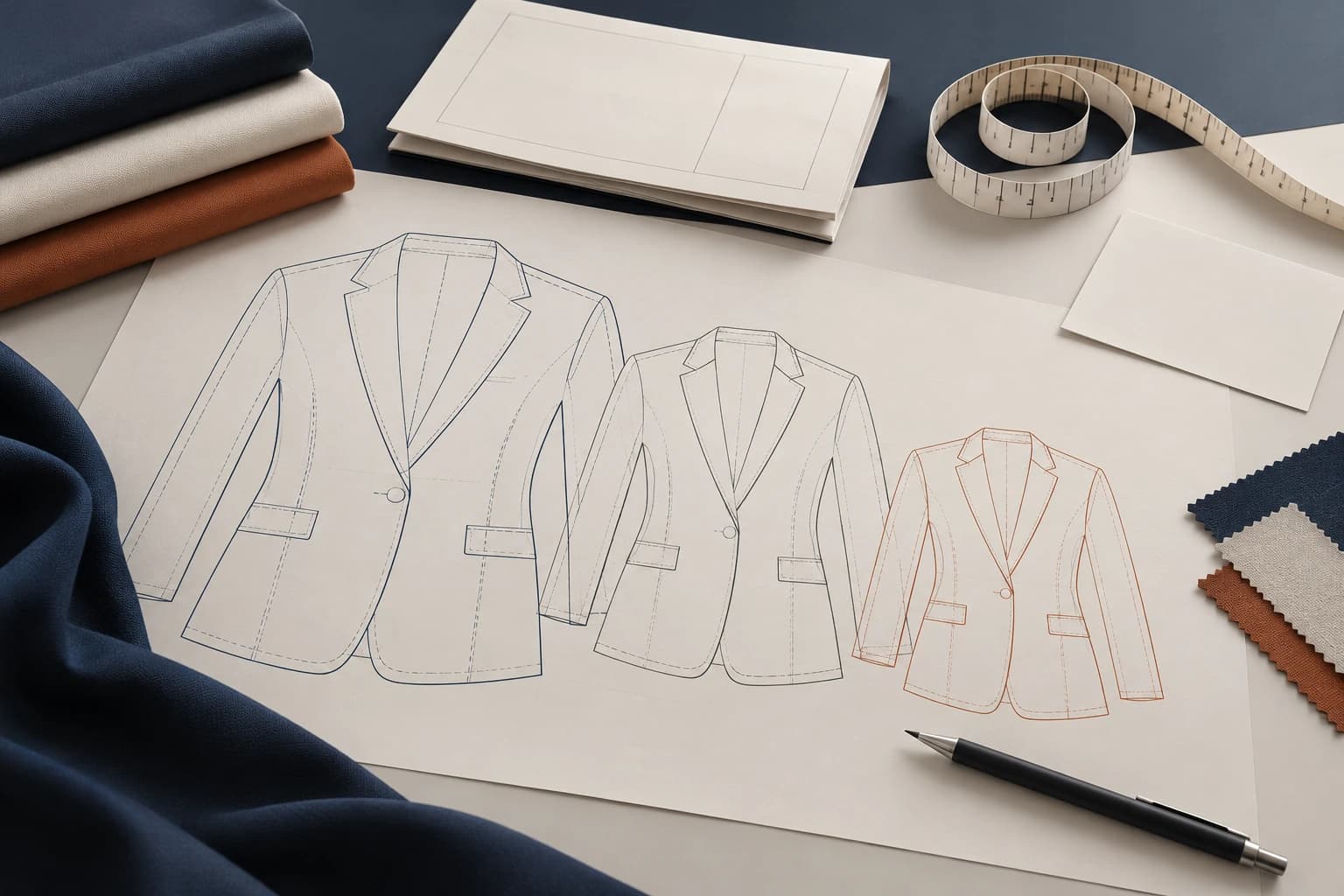
An approved medium sample answers an important question: does this version work in the reviewed size? It does not resolve every dimension, construction relationship or fitting decision in the ordered range. Garment size grading needs its own approval record, especially when a buyer is coordinating a new outerwear style across several sizes.
The practical task is to connect the base garment, measurement definitions, grade rules and size-set findings. A supplier should be able to identify which drawing, material and measurement revision each approval refers to. A buyer should be able to distinguish an accepted size from one that still needs correction.
This guide proposes a purchasing workflow for brand technical teams, merchandisers and sourcing managers. It does not prescribe universal increments or tolerances. Those values depend on the actual garment, target fit and buyer requirements.
01 · Decision record
1. Define the size range and the fit reference
Start with the sizes being ordered, the intended wearer and the garment's use. Name the base size and the reference used to approve its fit. For a jacket, identify the layer worn underneath during review. Otherwise, two technically careful reviewers can reach different conclusions about the same chest measurement or sleeve allowance.
Keep body measurements and finished-garment measurements separate. A body chart helps describe the intended wearer; a garment specification describes the product being made. Neither can silently replace the other. State units, measurement condition and the reference drawing wherever the measurement sheet is shared.
Techpacker's first-party grading documentation requires a defined size range and selected sample size before its grading function is used. This supports a useful handoff principle: establish the range and reference before calculating other sizes. It does not mean that using a software feature approves the resulting fit.
02 · Decision record
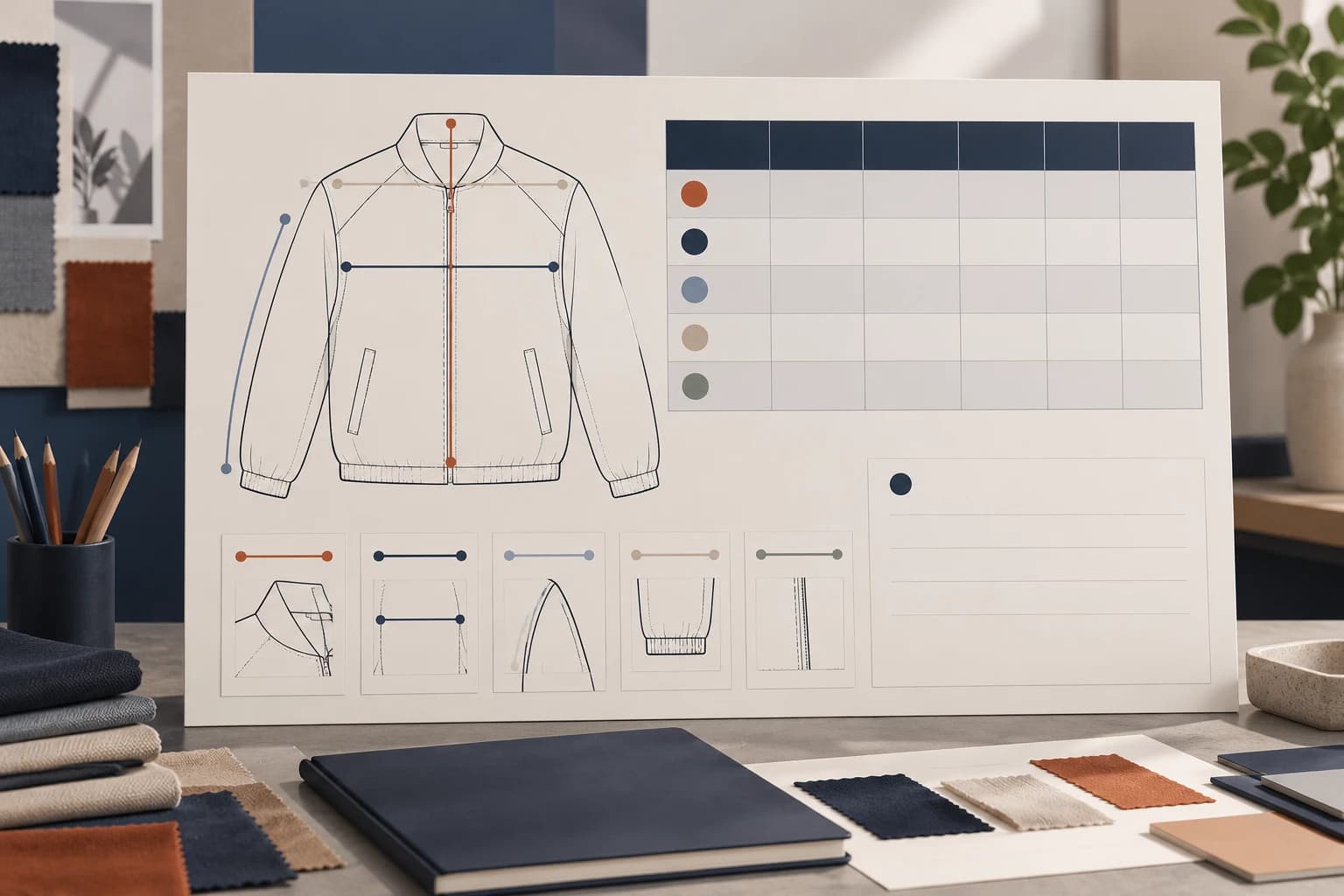
2. Make every point of measure repeatable
A measurement name alone is often insufficient. Add a clear diagram or written method showing the start and end points, whether the garment is closed, and how it is positioned. Clarify whether a width is measured flat or represents a circumference. Keep the same convention throughout the chart.
Choose the points that affect the purchasing decision. On a proposed softshell jacket, chest, sleeve reach, collar opening and hem relate to layering and movement. Pocket opening and placement also deserve review when changing sizes moves them closer to seams or adjustment components.
Assign an owner to unresolved definitions. A sample should not be rejected against one method while the factory has been measuring another. Resolve the method first, then decide whether the product or the recorded result needs correction. Keep photos or marked drawings with the measurement revision.
03 · Decision record
3. Set a garment size grading rule for each measurement
Grade rules describe how a pattern or measurement changes across sizes. Record the approved relationship at each relevant point rather than telling the supplier to enlarge everything uniformly. A change in body width need not imply the same change in collar height, pocket opening or zipper length.
Distinguish the intended value from the permitted variation. The grade rule sets the relationship between sizes; the tolerance defines what variation the buyer accepts against a specified measurement. Expanding a tolerance does not correct an unsuitable grade rule. Keep those decisions in separate fields with clear approval ownership.
CLO's grading documentation distinguishes distances from a base size and offsets between sizes. That distinction is a reminder to identify how your table expresses changes. If adjacent steps differ, write them explicitly and check the resulting measurements. Do not assume every recipient interprets a cumulative value as an increment.
04 · Decision record
4. Agree what the size set must demonstrate
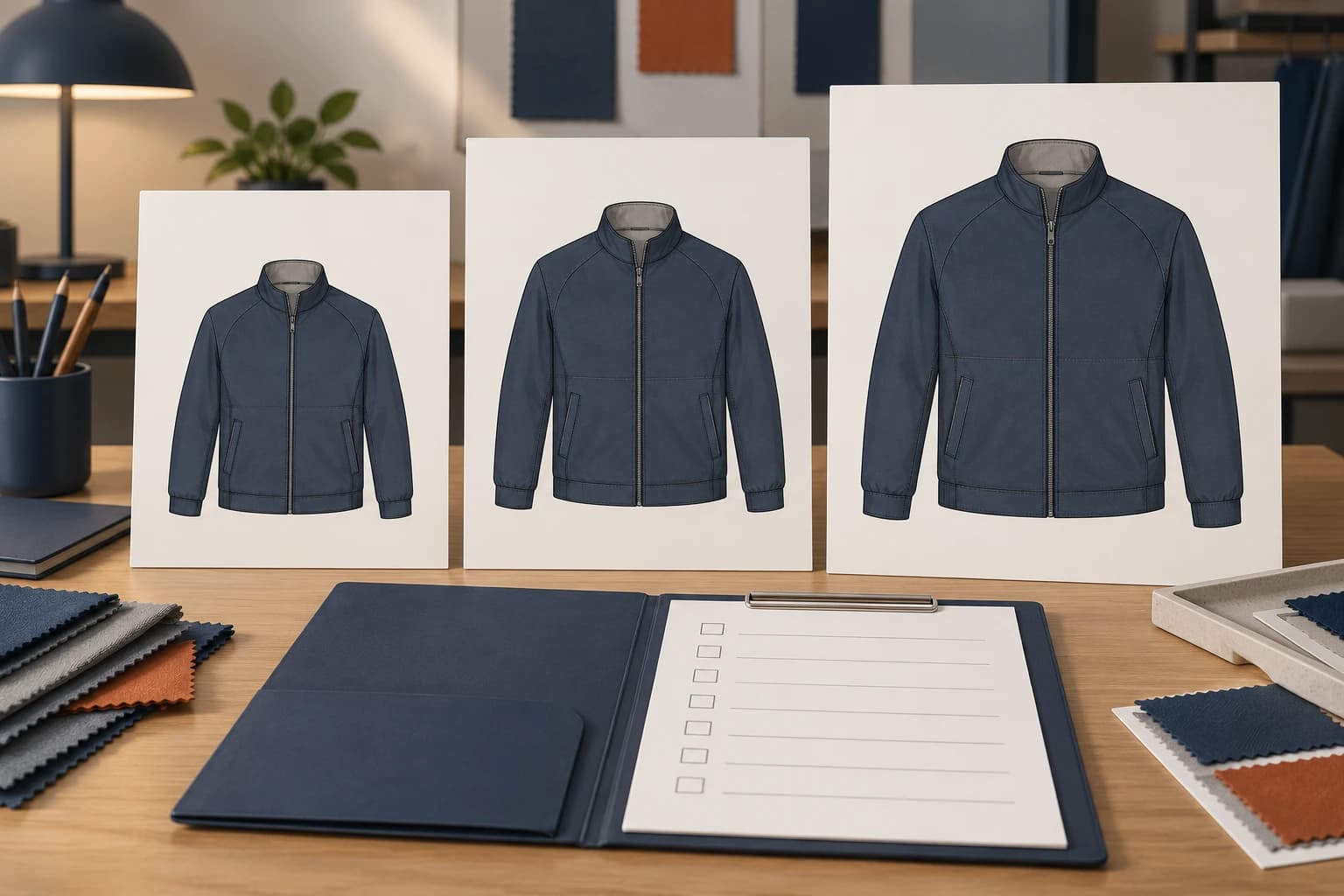
There is no sample count established by this guide. Agree the review coverage with the supplier according to the range, construction and outstanding fit questions. Identify which sizes need physical fitting, which need measurement checks, and which details need closer inspection. State what evidence is required before each size can be accepted.
Consider where the construction may behave differently. A collar, armhole or pocket can remain visually tidy in the base size but need adjustment elsewhere. A bulky material junction may also deserve attention when proportions change. These are reasons to define review questions, not assumptions that a particular size will fail.
Use the material and trim combination intended for approval. The softshell jacket manufacturer reference and fleece jacket manufacturer reference describe different development decisions. A smooth shell and a fleece body should not share an approval simply because their outside dimensions appear similar.
05 · Decision record
5. Review measurements and fit as separate evidence
Prepare a review sheet with style, size, sample identifier, drawing revision, material reference and reviewer. For each relevant point, record the intended measurement, agreed tolerance, actual result, difference and disposition. Keep the original values visible after comments are added so another team can understand the decision.
Use a separate space for fitting observations. The sleeve can measure correctly while the wearer cannot reach comfortably; an acceptable chest width does not settle collar comfort. Describe the observed problem and the review condition instead of replacing a measurement with a vague comment such as “make it better.”
Compare the actual sample with the agreed reference, not a different photograph found later. If a reference has changed, identify the new revision and reopen the affected decision. The existing garment sampling approval guide covers stage-level handoffs; this size-set record supplies the size-specific detail behind them.
06 · Decision record
6. Investigate the pattern of a problem before changing it
Ask whether a finding occurs in one measurement, several measurements or only part of the size range. Then check measurement method, transcription, sample identity and the grade-rule revision before asking for a pattern correction. This reduces the risk of changing a garment to compensate for a recording error.
For example, a buyer might find that a pocket opening is acceptable in the base size but poorly positioned in another reviewed size. This is an illustrative development issue, not a customer case. The correction discussion should identify the pocket relationship and affected pattern pieces, rather than increasing the entire garment.
Ask the technical team to explain the proposed correction and which other dimensions it changes. Record whether another sample, measurement check or fitting review is needed. Approval should describe what was actually reviewed; it should not imply that every unexamined relationship has passed.
07 · Decision record
7. Control the revised size set
A corrected base size, changed grade rule or substituted material can invalidate an earlier approval. Keep a revision list that identifies the change, reason, affected sizes and required follow-up. Replace ambiguous filenames with a consistent style-and-revision reference that both buyer and supplier can recognize.
When a revised sample arrives, compare it with the current approved specification and the specific correction request. Check whether the requested change created another issue. Record accepted points, remaining findings and any conditional decision separately. A message saying “looks fine” is difficult to use if it does not identify the sample.
Lectra presents grading as part of pattern industrialization and production preparation. That professional workflow supports treating the approved pattern set as a controlled input to manufacturing. It does not establish that a digital pattern or simulation replaces every physical check required by the buyer.
08 · Decision record
Keep a size-by-size decision register
An illustrative review register can give each finding a reference, the size concerned, the point or construction relationship, the observed issue, proposed action and next evidence required. This avoids a long email chain in which a comment about one size is mistaken for a change to the entire range.
Keep the decision narrow. A reviewer may accept a corrected sleeve measurement while leaving collar comfort open. Another finding may require the technical team to revise a pattern relationship and explain the effect on adjacent sizes. Record those different outcomes rather than assigning one broad approval label to every item discussed in the meeting.
Close an item only when the responsible reviewer has identified the evidence that answers it. Keep the accepted revision and date alongside the finding. If the buyer later changes the brief, the register shows which approvals need to be reconsidered without discarding still-valid work. This is a proposed coordination tool, not a claim that a particular factory or customer already uses this form.
09 · Decision record
8. Release a concise, usable approval package
Before bulk cutting, identify the current drawing, material and trim references, base-size approval, grade-rule chart, reviewed size-set findings and authorized decisions. Keep outstanding items visible with an owner and next action. Where a decision is conditional, explain the condition rather than allowing silence to become approval.
Check that the purchase order's size and color breakdown matches the range being approved. An extra size added after review needs its own decision about grading and evidence. A replacement fabric or changed decoration placement can also reopen fit or construction questions, even when the style code stays the same.
The package should be short enough to use at handoff and complete enough to prevent competing versions. This is a proposed record structure, not a certification. Agree the factory's production reference and the buyer's approval responsibility before treating the file as a release instruction.
10 · Decision record
Questions buyers ask about size-set approval
Is garment size grading the same as fitting a sample?
No. Grading defines relationships across sizes; fitting evaluates how a garment works against the intended fit reference. They inform each other, but a correct calculation does not settle the experience of wearing the garment. Record what each review actually demonstrated.
Can we use one increment for every size?
Only where the buyer's approved specification calls for that relationship. Document different steps explicitly when needed. Do not use a convenient spreadsheet formula as a substitute for a technical decision about the ordered range.
What happens if the material changes after approval?
Identify the change and assess which measurements, construction details or fit findings it could affect. Agree the necessary rechecks with the supplier. Keep the new material identity attached to the revised decision rather than relying on the original approval without review.
11 · Decision record
Prepare a size-specific manufacturing brief
Send Forthright your drawing revision, material direction, size breakdown, points of measure and open grading questions. MOQ is 300 pieces per style and color. Use the outerwear category to identify the development family, then discuss the size-set approval brief before sampling and production decisions are finalized.