





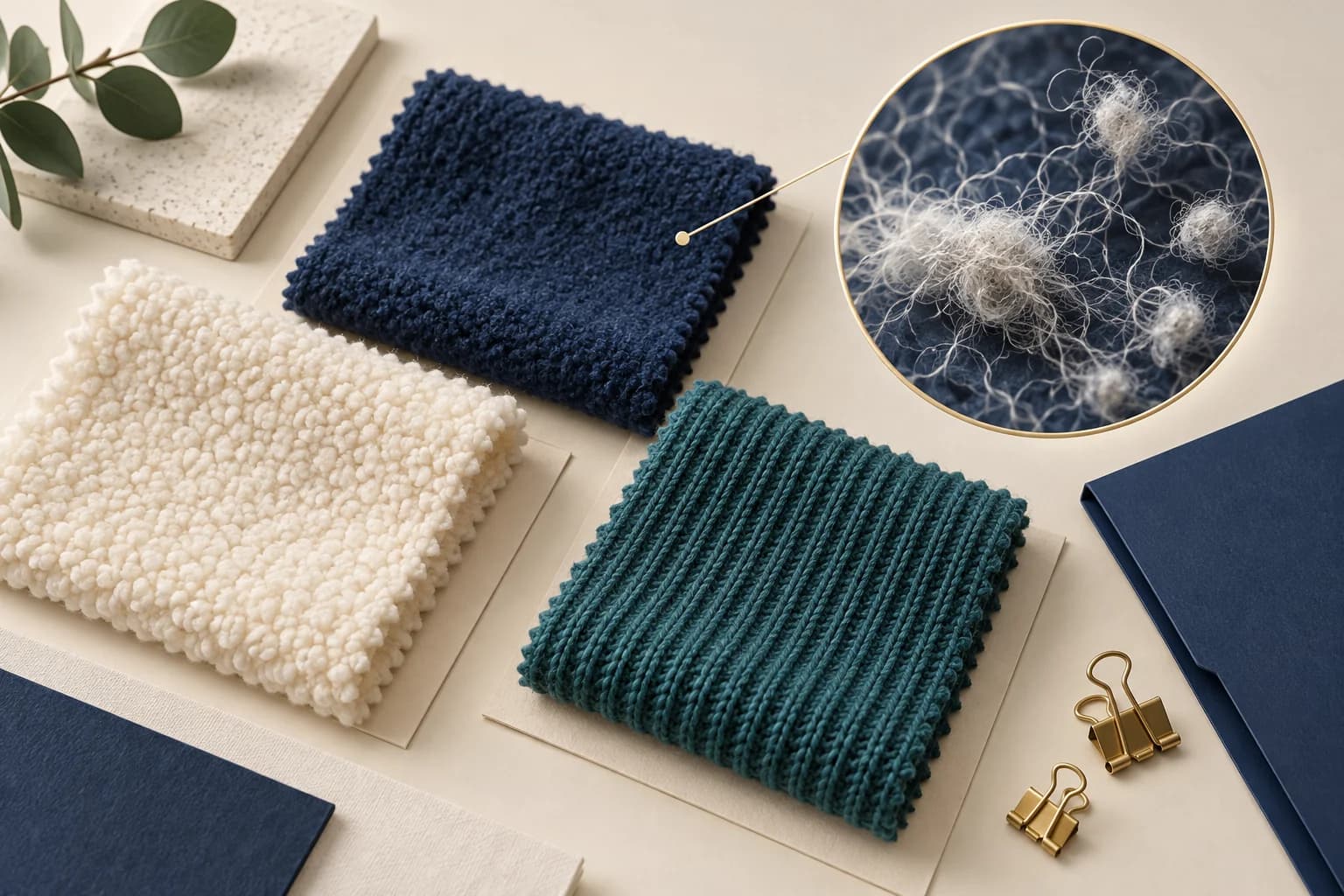
A fabric pilling test should help an apparel buyer make a specific material decision. It cannot choose the desired surface for the collection, identify an unnamed swatch, or promise how every finished garment will look after use. Before paying for an assessment, agree what material is being reviewed, which appearance question matters and what evidence will support approval.
This guide uses a proposed fleece layer as the purchasing context. The example is an editorial planning exercise, not a Forthright test result or a claim that a particular fabric has passed. The same decision structure can support other identified knit materials, provided a qualified provider confirms the assessment scope.
01 · Decision record
Start with the surface problem you need to answer
Pilling and snagging should not become interchangeable words in an RFQ. TVF's fabric resource describes pilling as small fiber balls associated with rubbing, while snagging involves yarns being pulled from the surface. A buyer concerned about caught loops needs to discuss that exposure separately rather than assume that a pilling result covers it.
Write the concern in garment terms: visible surface change on an exposed fleece body, for example. Identify whether the face, reverse or both surfaces matter to the design. Note expected contact with another layer, pocket edges or carried equipment as questions for the material review. These observations guide the brief; they do not simulate a laboratory method.
Ask the provider which appearance changes its proposed assessment records. Keep pilling, fuzzing and matting identifiable in the discussion instead of hiding all surface change under a single word such as durability. Do not infer a garment lifespan from an appearance assessment or use an attractive new swatch as proof of resistance.
02 · Decision record
Make the submitted fleece traceable
Give each proposed material its own identifier. Record the supplier reference, color, declared composition, construction, weight direction and finishing description that are actually available. Mark missing information as awaiting confirmation. A generic navy fleece label cannot distinguish a revised surface treatment from the earlier material the buyer liked.
Retain an identified comparison swatch with the sampling file. If the provider needs a particular quantity, orientation or submission format, obtain those instructions before dispatching material. Ask who prepares and labels the specimens, which material face is assessed and whether any preparation is included. The provider should confirm the applicable requirements rather than the buyer improvising them from an online summary.
Separate the material identity from a garment style number. One style may contain several fabrics, while one fabric may appear in several styles. A result needs a clear route back to the material under review. Preserve the submission date and development revision so a later buyer can see which cloth was assessed.
03 · Decision record
Select a method with the provider, not from a desired score
The public scope of ISO 12945-2:2020 concerns assessment of textile pilling, fuzzing and matting using a modified Martindale method. That scope helps identify a relevant technical conversation. It does not establish that this method is the correct purchase requirement for every fleece, that a particular grade is acceptable, or that Forthright owns the equipment.
Send the intended material and end-use questions to the provider. Request the proposed method reference and edition, applicability, preparation, reporting format and any limitations relevant to comparing your candidates. Obtain a quotation for the actual scope rather than assuming that two differently described tests are equivalent.
If an existing buyer specification names a method, share the complete requirement. Ask about any mismatch between that requirement and the submitted material before work starts. If no method is specified, have the buyer and provider agree the choice explicitly. Keep a change in method or assessment conditions visible when comparing later reports; a familiar score alone does not establish comparability.
04 · Decision record
Agree appearance acceptance before seeing the outcome
The buyer should define the approval decision before receiving results. State which surface and material revision must be assessed, how the report will be reviewed and who has authority to approve it. If the program requires a particular acceptance criterion, record it against the agreed method and intended use. There is no universal cycle count or pass grade supplied by this guide.
Where visual references are used, identify the actual agreed references and the assessment arrangement. A compressed email photograph, an edited marketing image and a physical reference are different records. Ask the provider how appearance is evaluated and documented. Do not replace its assessment with a favorable crop of the material.
Keep hand feel, body and design suitability in the decision as separate observations. A buyer may prefer the touch of one candidate while still needing different evidence for its surface behavior. Record both considerations openly. Avoid approving the whole material package merely because one property meets a stated requirement.
05 · Decision record
Work through a fleece selection without inventing a result
Imagine a sourcing team comparing two fleece directions for the full-zip stand-collar fleece jacket reference. The first has the desired visual pile; the second offers a different surface handle. Neither has been approved for the new brief. Assign separate references and request complete material details instead of asking the supplier for its best anti-pilling fabric.
The development team records which surface is visible on the body and how collar and pocket finishing use the cloth. It sends the provider the intended appearance concern and asks for an applicable assessment proposal. The buyer then confirms the method and acceptance arrangement before either candidate is submitted. Sample timing is planned around material availability and the provider's confirmed schedule.
When reports arrive, the buyer first checks identity and scope. If one report names a different finish, the immediate decision is to clarify the material, not declare a winner. If a material is revised, decide whether a new assessment is needed with the provider and buyer. Do not attach the earlier report to the revised cloth simply because the color name stayed the same.
The final decision record can approve one identified direction, request development changes, or hold both pending clearer evidence. Document the reason and the remaining checks. This example deliberately supplies no test grade, pass claim or customer outcome; its purpose is to show the purchasing choices that should exist before bulk material is released.
06 · Decision record
Read the report for what it establishes
Check the submitted material reference, color, face, finish and reported preparation against the request. Confirm the stated method and edition, relevant assessment conditions and the result explanation. Ask the provider to clarify missing or ambiguous information. Keep the complete report with the decision rather than circulating only a screenshot of a favorable line.
Distinguish an assessment result from your approval. The provider reports within its scope; the buyer decides whether the evidence satisfies the purchasing requirement. Record any limitation or unresolved question beside that decision so it cannot disappear when the file moves from development to production.
Surface approval also leaves other properties open. A pilling assessment does not replace a fabric shrinkage review, color evaluation, seam review or garment fitting. Coordinate those decisions on the same identified material where appropriate, while keeping each property's scope clear.
07 · Decision record
Carry the identity into sampling and bulk planning
Use the selected material reference in the tech pack, sample comments and purchase brief. Ask the supplier to flag a change in source, construction or finish before treating the earlier approval as current. Agree with the buyer and relevant provider which changes require renewed evidence. A generic statement that the new cloth is equivalent is not a documented material decision.
Review the developed garment as a garment. Collar contact, pocket construction, seam bulk and layering fit still need sample approval. For contrast programs, use the separate colorfastness testing guide to define color-related evidence rather than extending the surface approval to another property.
At Forthright, MOQ is 300 pieces per style and color. Physical samples usually take 7–10 days after the brief, materials and construction details are clear; new sourcing or additional assessment can require more time. Bulk production is usually planned around 30–45 days after sample approval, order confirmation and material readiness. An external test schedule must be confirmed separately, not absorbed into an unconditional production promise.
08 · Decision record
Define which material variations the approval covers
Before requesting a combined quotation, list the material variants separately. A style may use the same supplier name while changing color, pile direction, finish or construction. Ask the buyer and provider which variants can reasonably share an assessment scope and which need separate sample deliveries. Keep that answer in the brief rather than making a blanket promise across the range.
Plan who receives the report and who keeps the retained reference. A sourcing coordinator, material developer and garment technician may each see a different part of the file. Give them the same identifier and explain the decision still required. The person approving hand feel should know whether appearance evidence is complete; the person ordering cloth should know whether a later material change reopened approval.
If a provider cannot answer the proposed question within its service, request a clearer scope or another qualified assessment route. Do not change the purchasing claim to make an unrelated report look sufficient. Record any remaining uncertainty beside the approved sample so the next team can act on it.
09 · Decision record
Questions to resolve before sending the brief
Can one report cover every color? Do not assume coverage. Identify the material and finish variations, then ask the buyer and provider to define a justified scope. Record which references were actually assessed and which remain outside the evidence.
Does a pilling result prove snag resistance? No. The properties describe different surface concerns. Share the intended exposure and request an appropriate assessment discussion instead of relabeling an existing result.
What should the inquiry include? Send the style reference, material identifiers or unresolved sourcing direction, intended surface, proposed care/use brief, size range, quantity by color and required evidence. State which choices are approved and which need review.
Use the contact brief to discuss the development requirement, with the material decision and provider questions attached to your own project records. Keep the final approval identifiable so the production team can use the cloth the buyer actually reviewed.