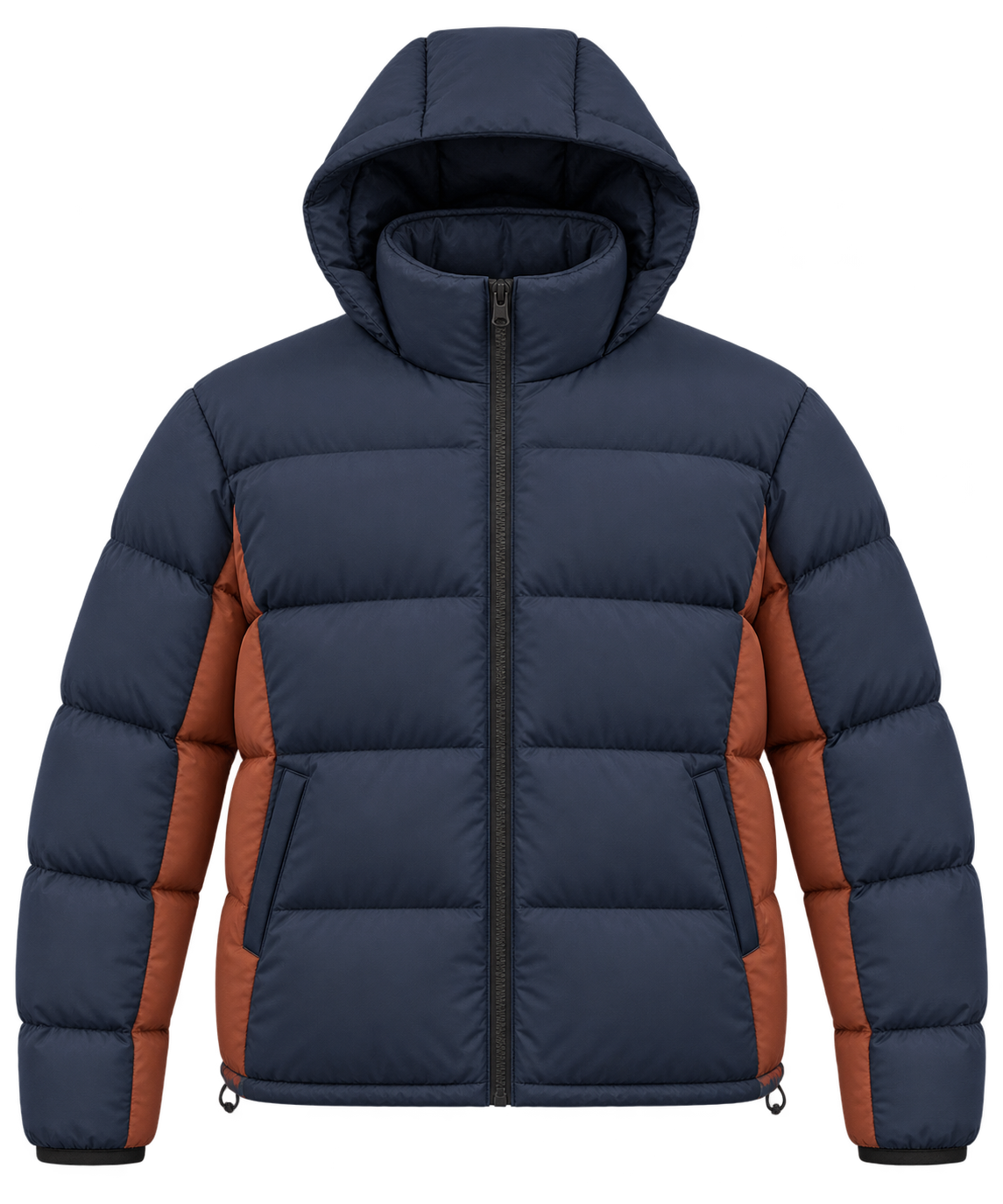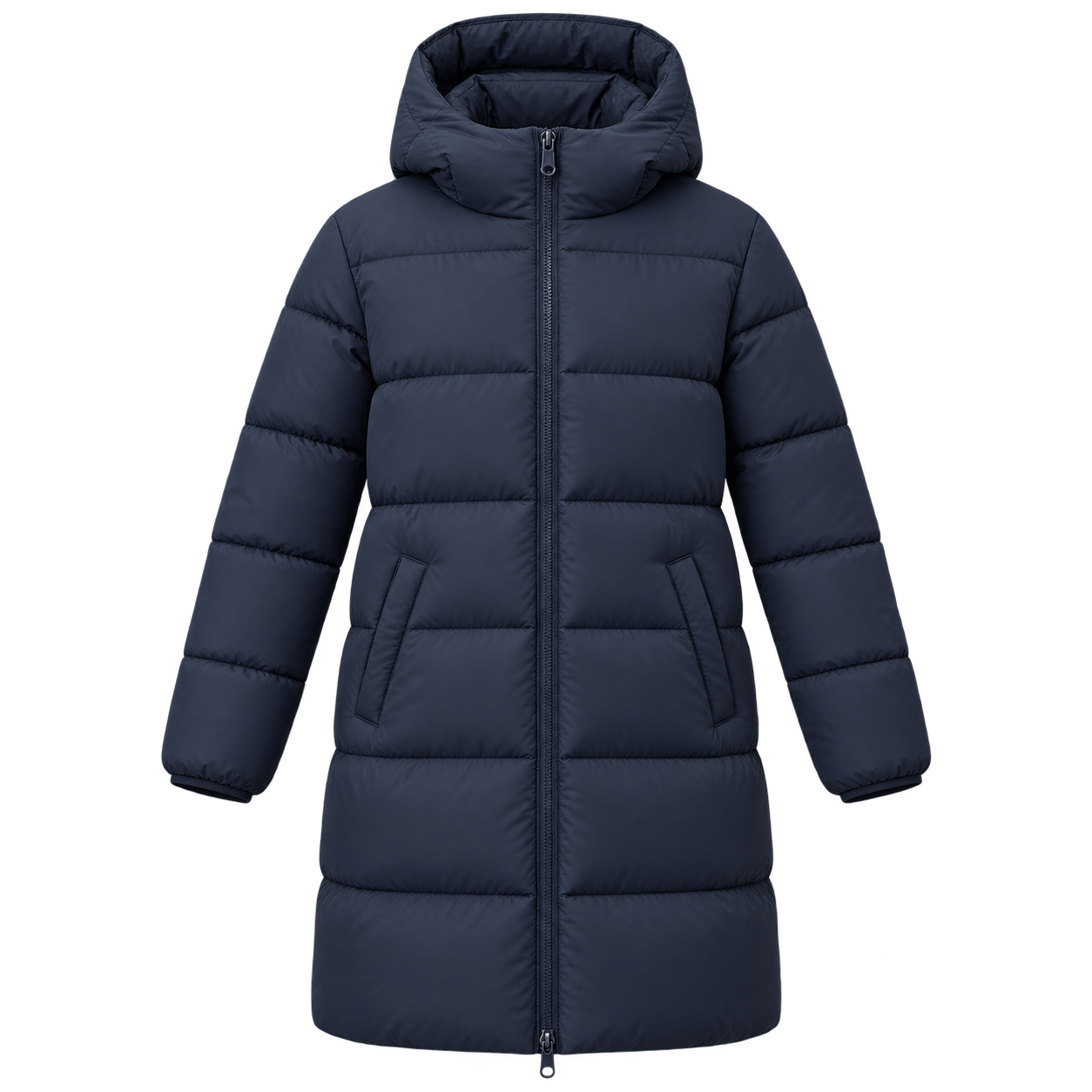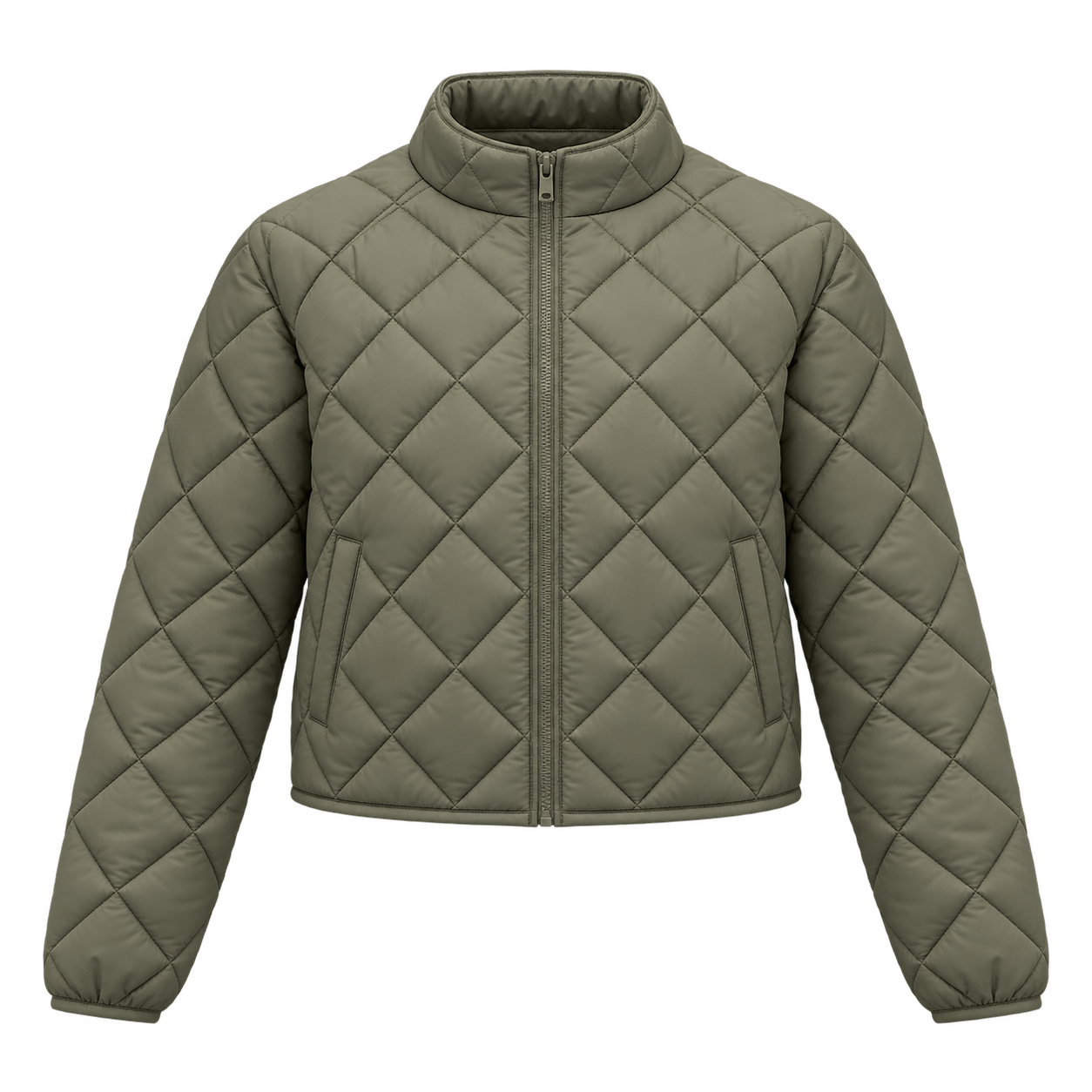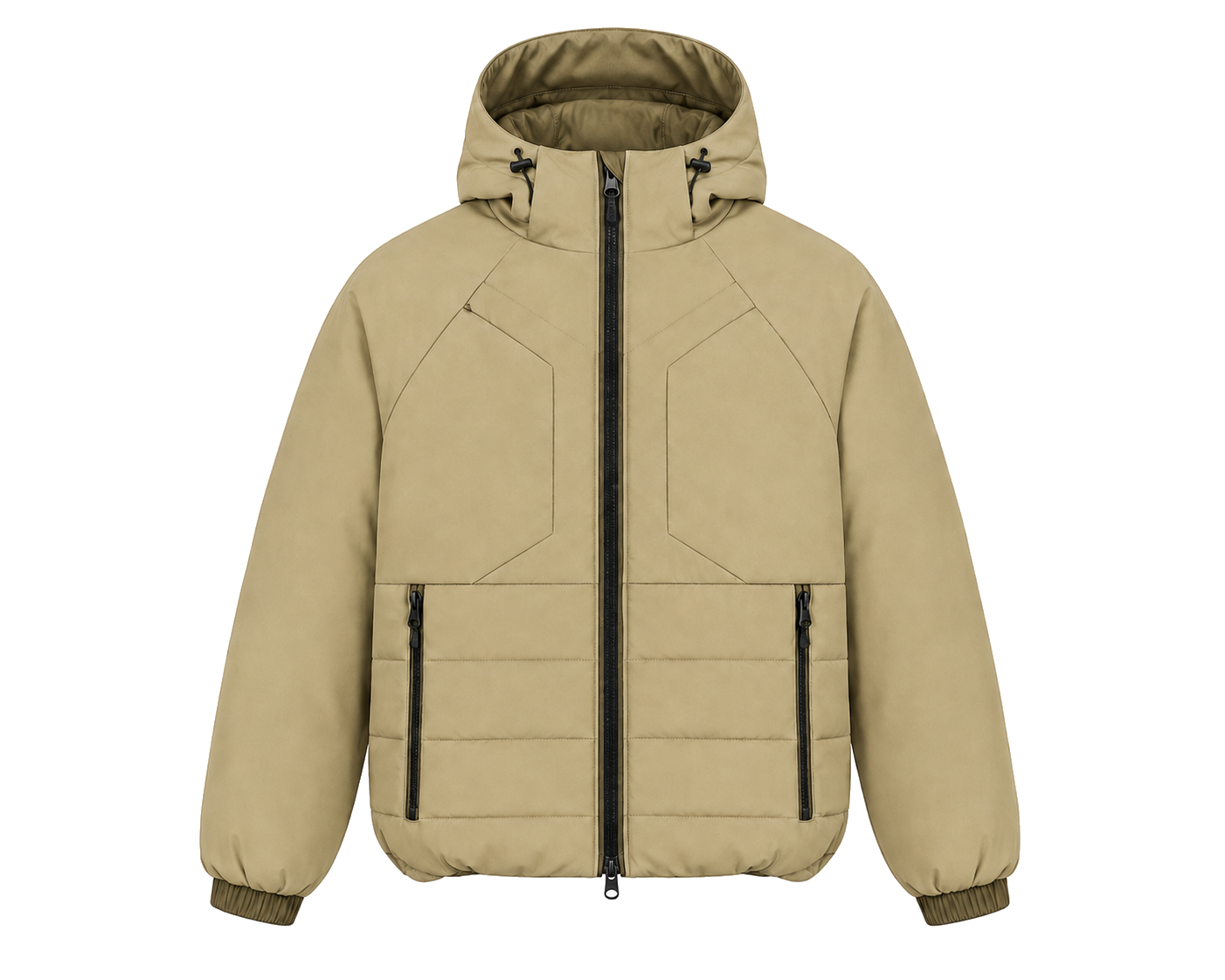




Sleeveless stand-collar body
Develop a new vest pattern with shoulder width, chest ease, body length and collar height recorded in the base size. Check layering and the zip-to-chin junction on the actual sample.
With your permission, we use Google Analytics for sanitized page-path measurement. Inquiry forms and WhatsApp work without analytics consent.
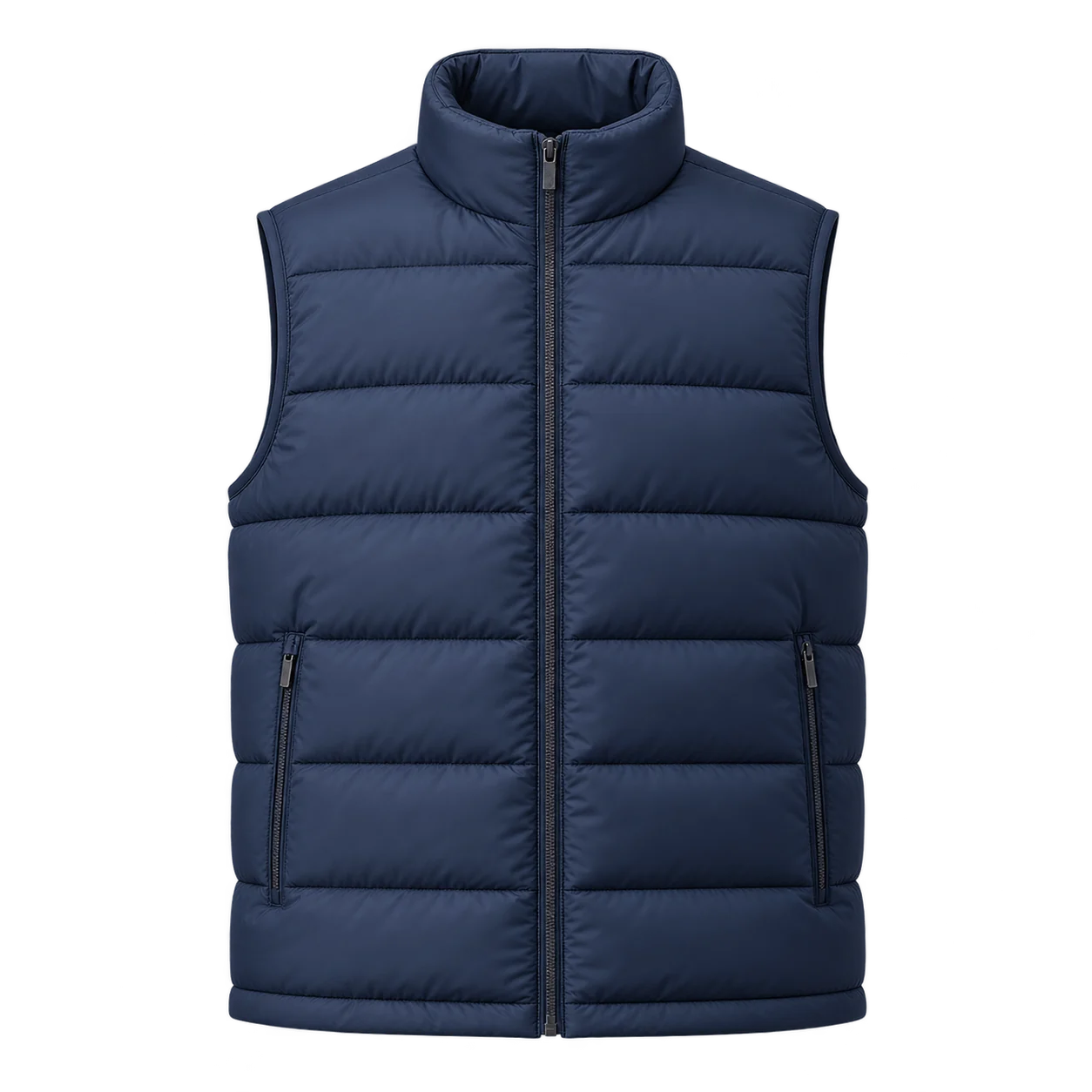
Stand-Collar Puffer Vest · front manufacturing reference
OEM STAND-COLLAR PUFFER VEST
Develop custom puffer vests with buyer-confirmed shell, lining, fill, armholes and quilting. Stand-collar OEM reference; MOQ 300 per style and color. Proposed development artwork; final materials and construction require sampling.
Send quantity, size range, shell and insulation direction, artwork, destination and requested delivery window.
PRODUCT-SPECIFIC DEVELOPMENT
Custom puffer vests can start from a new pattern, fill brief and quilting layout rather than a logo added to a stocked garment. This stand-collar horizontal-baffle padded vest is a proposed OEM/ODM development reference: a sleeveless hip-length body, full front zipper and two zipped hand pockets. The navy artwork illustrates one direction, not an existing sampled or approved product.
Develop shell, lining and filling together with the buyer's intended layering fit. Composition, weight, padding type, loft direction and finished thickness remain open until material and sample review. The word puffer does not confirm down content, a temperature rating or tested thermal performance. Channel spacing, filling containment and internal joining details need their own construction decision.
The sleeveless pattern creates specific armhole questions: edge treatment, lining attachment, chest ease and contact over the intended base layer. Review the collar with the zip open and closed, the shoulder line and hand-pocket access on the actual assembly. A sleeved jacket pattern cannot be approved as a vest by removing sleeve text from the brief.
CONSTRUCTION DOSSIER
Baffle or panel geometry, insulation target, closure details and fit are treated as repeatable production controls.
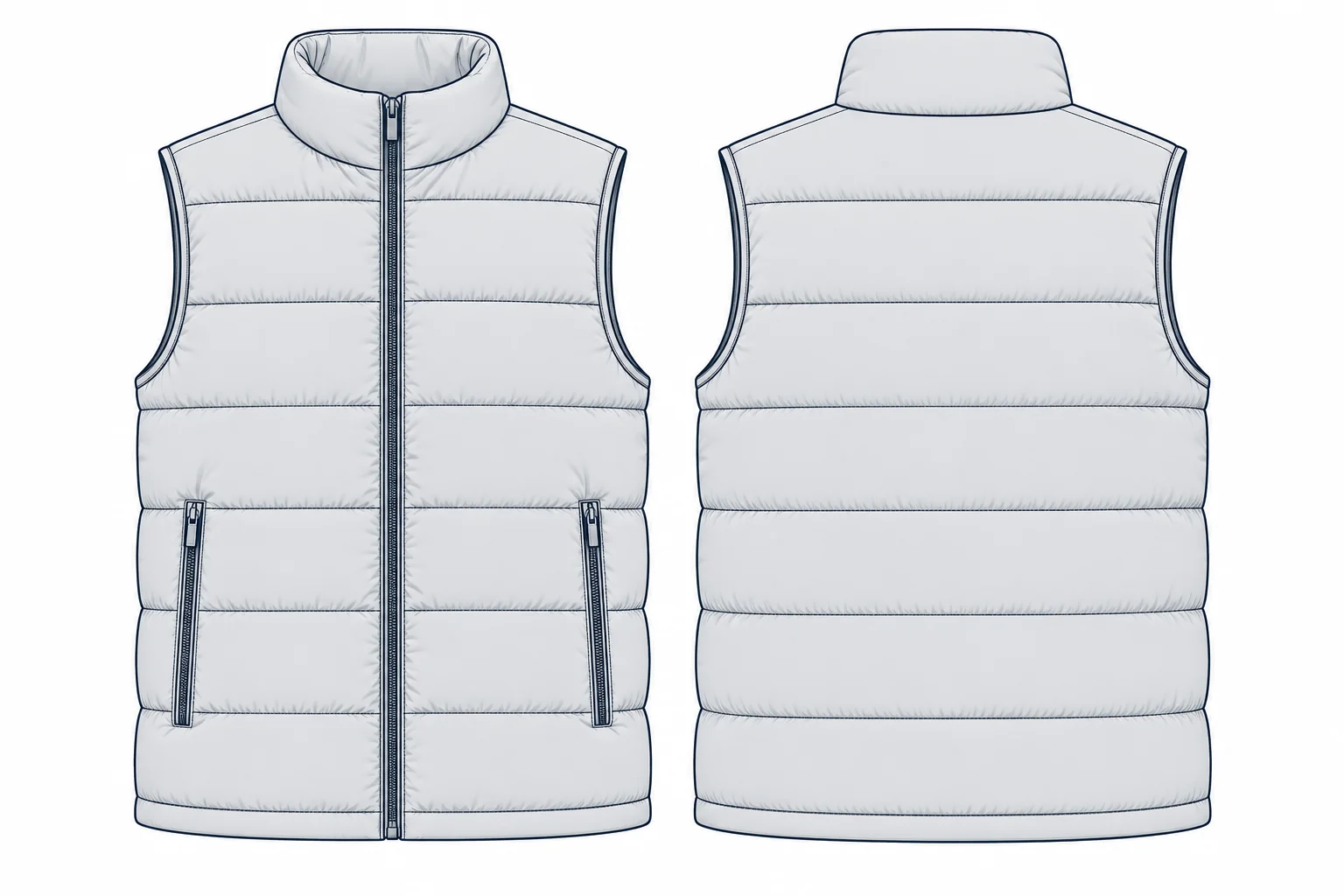
Develop a new vest pattern with shoulder width, chest ease, body length and collar height recorded in the base size. Check layering and the zip-to-chin junction on the actual sample.
Agree channel spacing and alignment across the zipper and side joins. Review how the chosen shell, lining and filling assemble; the drawing does not specify a fill weight or thermal result.
Select binding or facing, lining attachment and seam finishing for the chosen materials. Review edge comfort, shape and filling containment over the intended base layer before approval.
Confirm zipper reference, tape, puller, top/bottom finishing and any internal guard. Review alignment, operation and contact on the filled garment; trim performance remains subject to agreed evidence.
Agree opening position, usable depth, pocket-bag material and reinforcement. Check access with the vest worn and confirm that the pockets do not distort the proposed channels.
Confirm finished length and opening, internal closure and side-seam junctions. Check the vest over the intended layer and keep any requested hem adjustment visible in the revised pattern.
FACTORY EVIDENCE
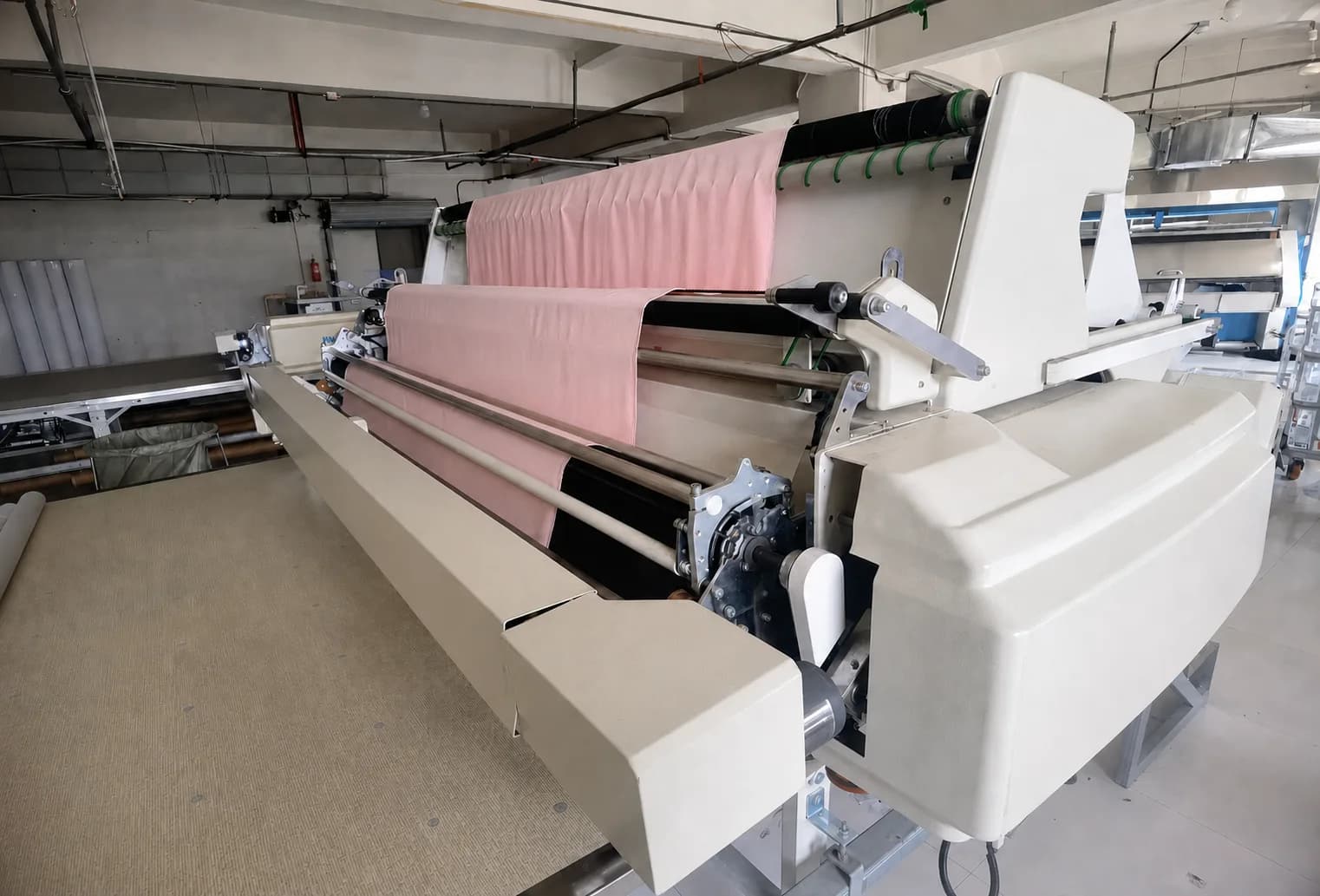
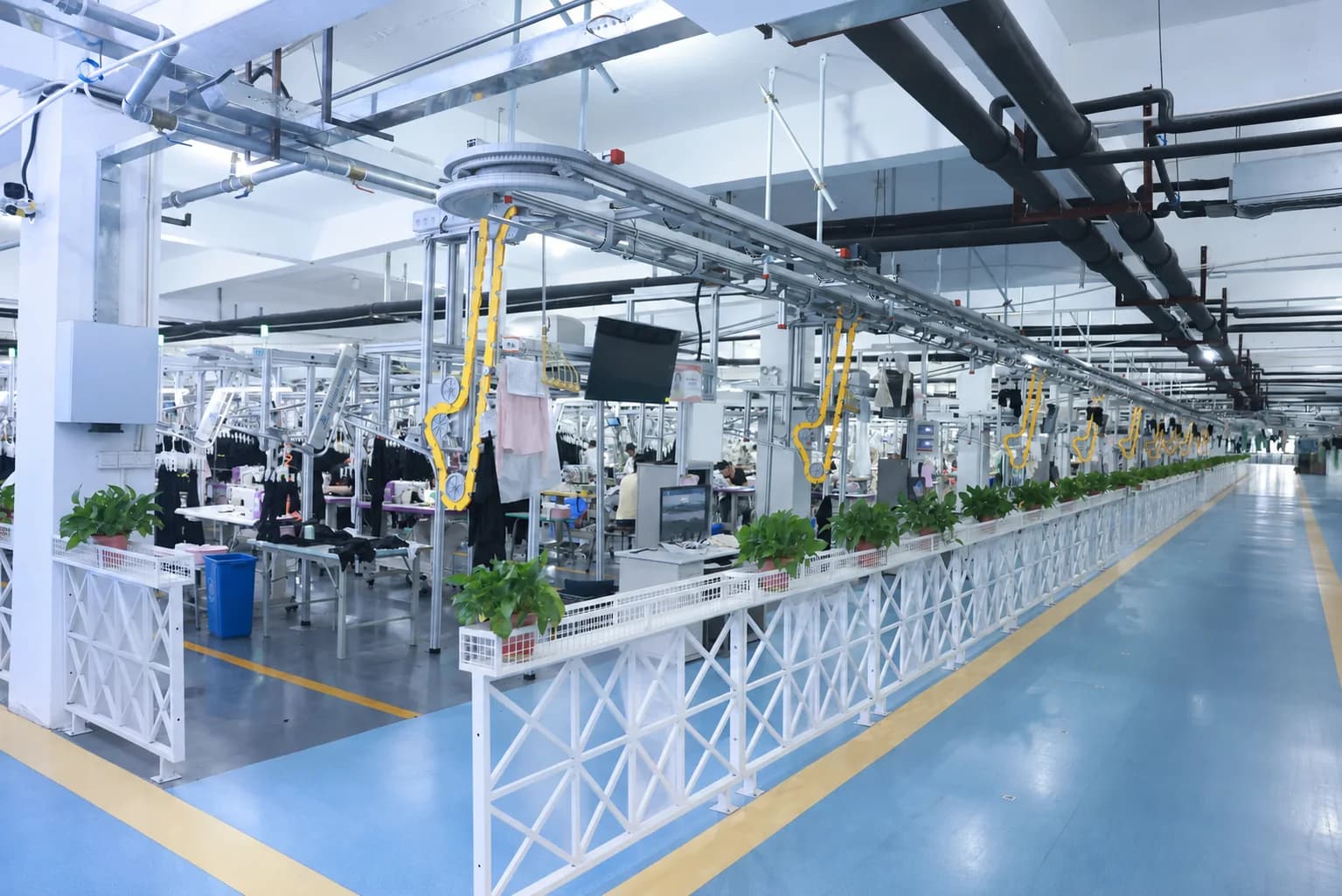
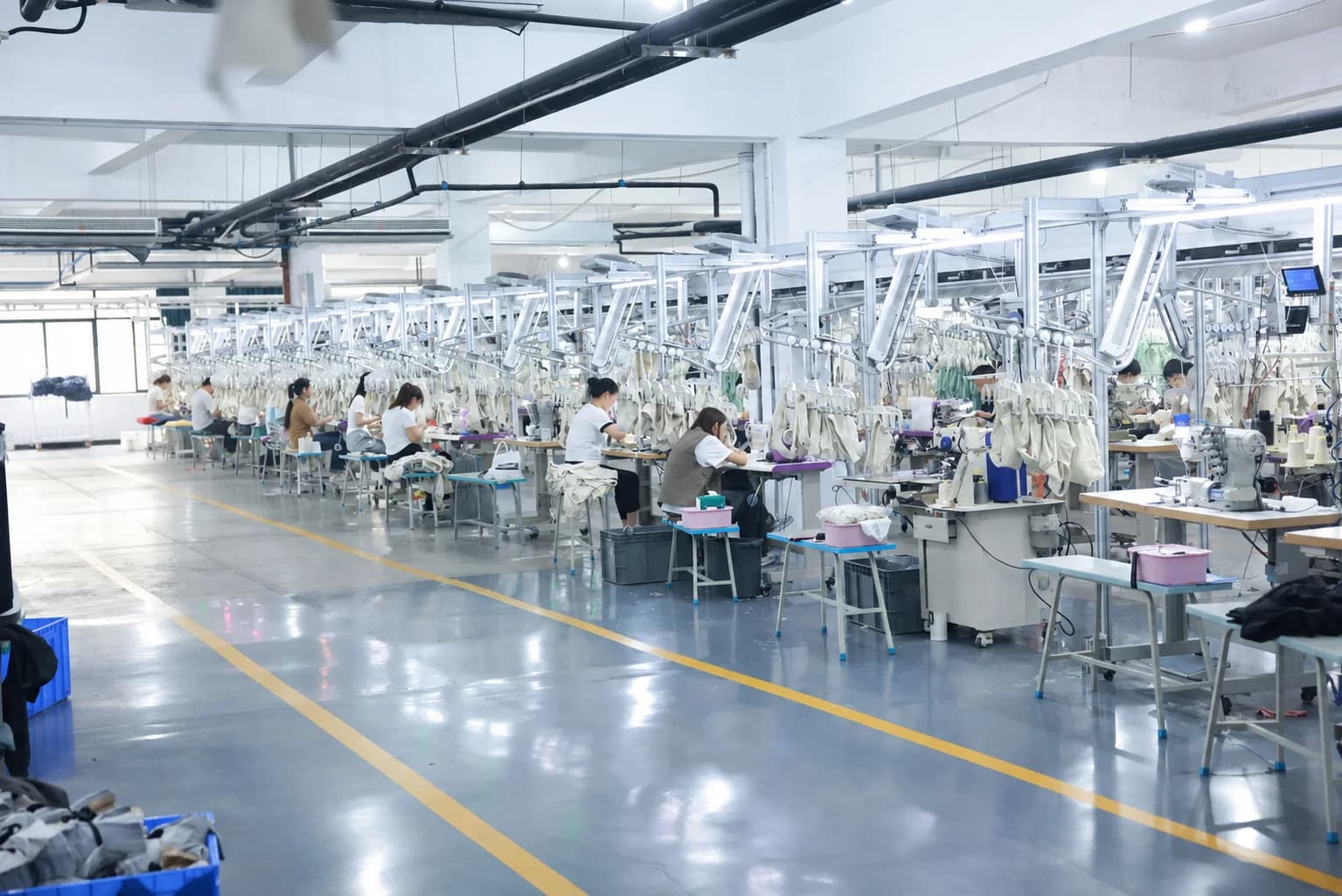
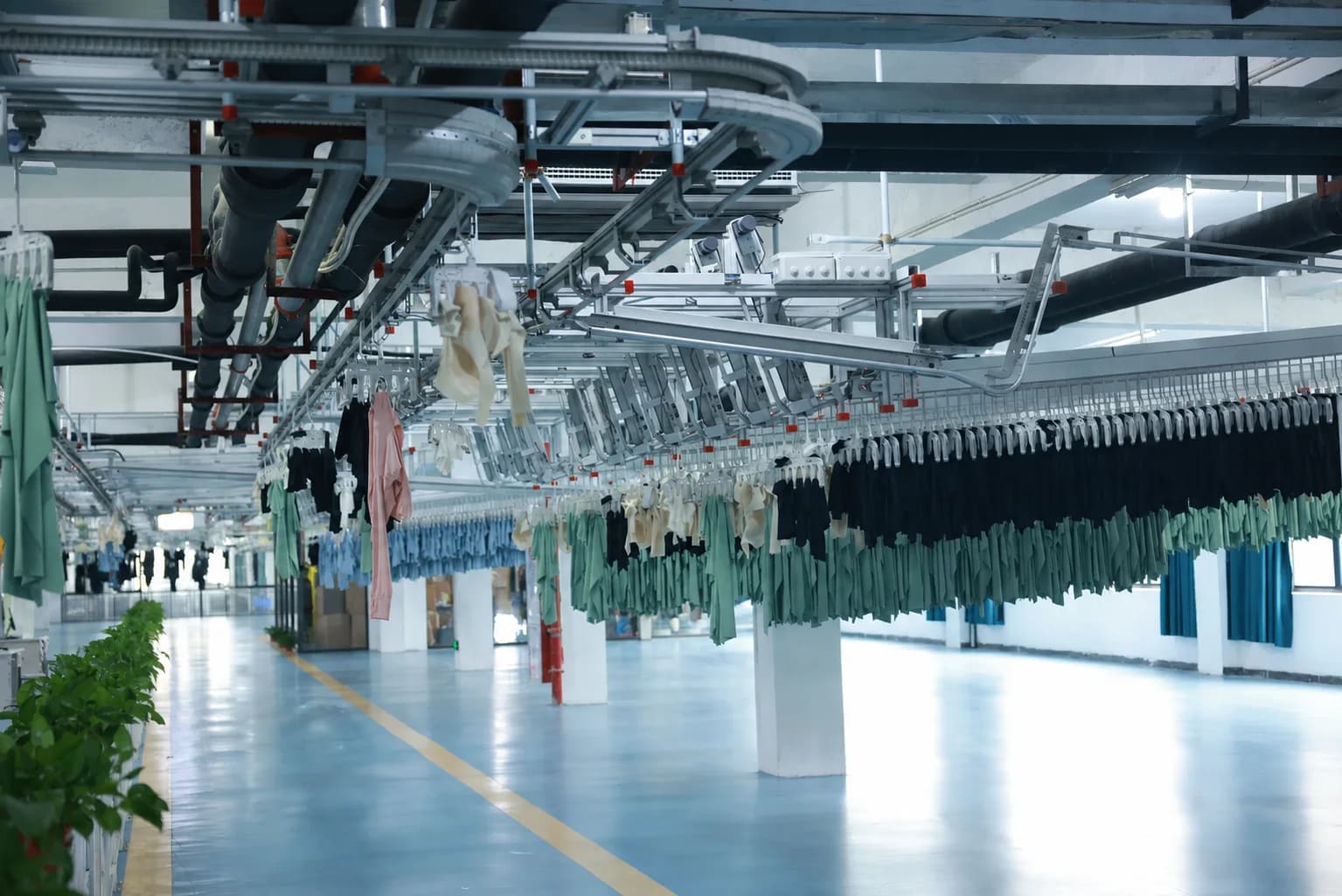
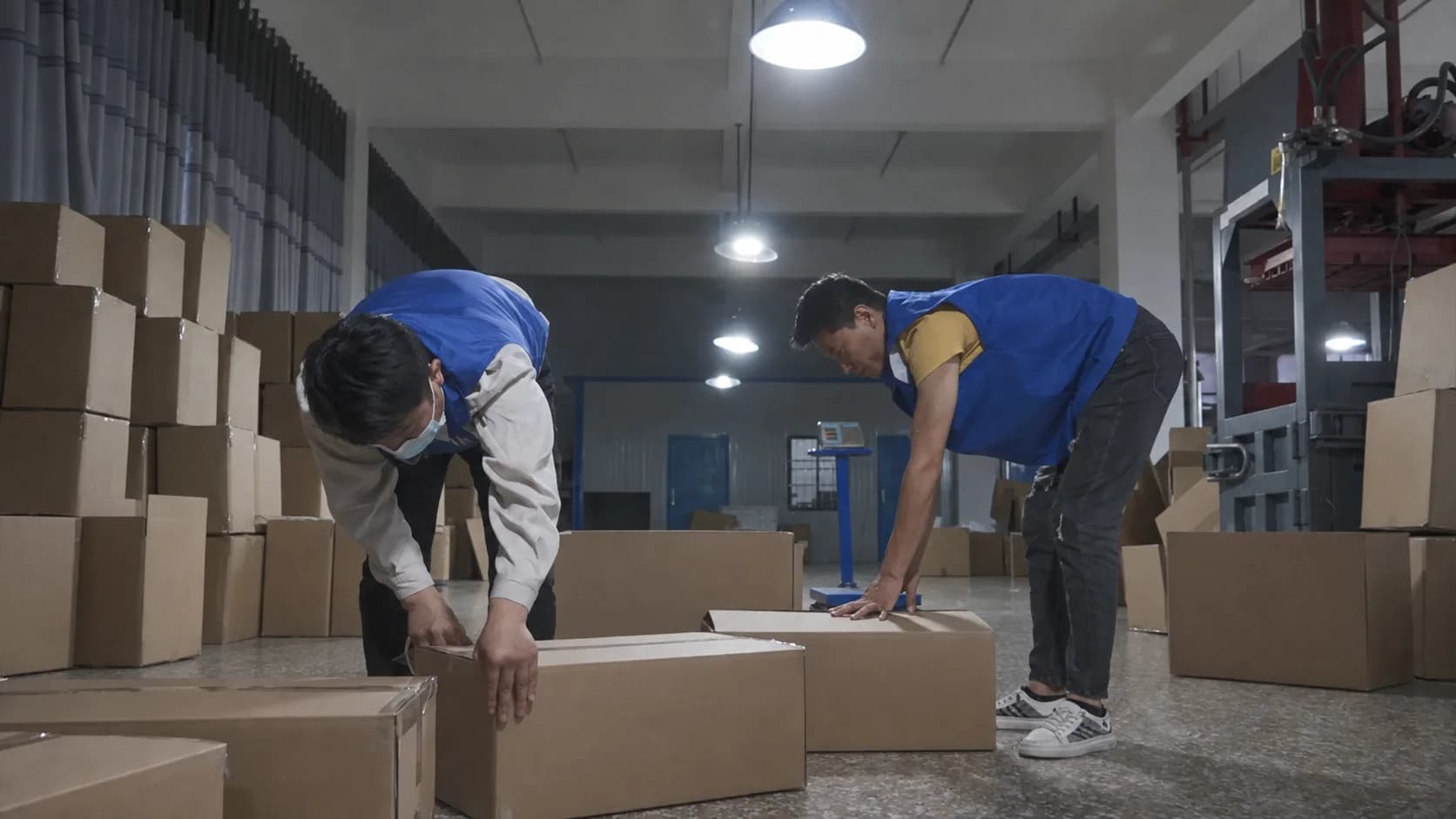
Real factory views connect the buyer brief to fabric preparation, cutting, sewing, handling and packing. The photographs are shared operational evidence; the specification above remains unique to this product.
MATERIAL DIRECTION
This development illustration brings together proposed shell, lining, padding and finishing directions for the vest. Select the actual material references and construction through sampling; fiber, weight, filling type and performance are not confirmed by the image.
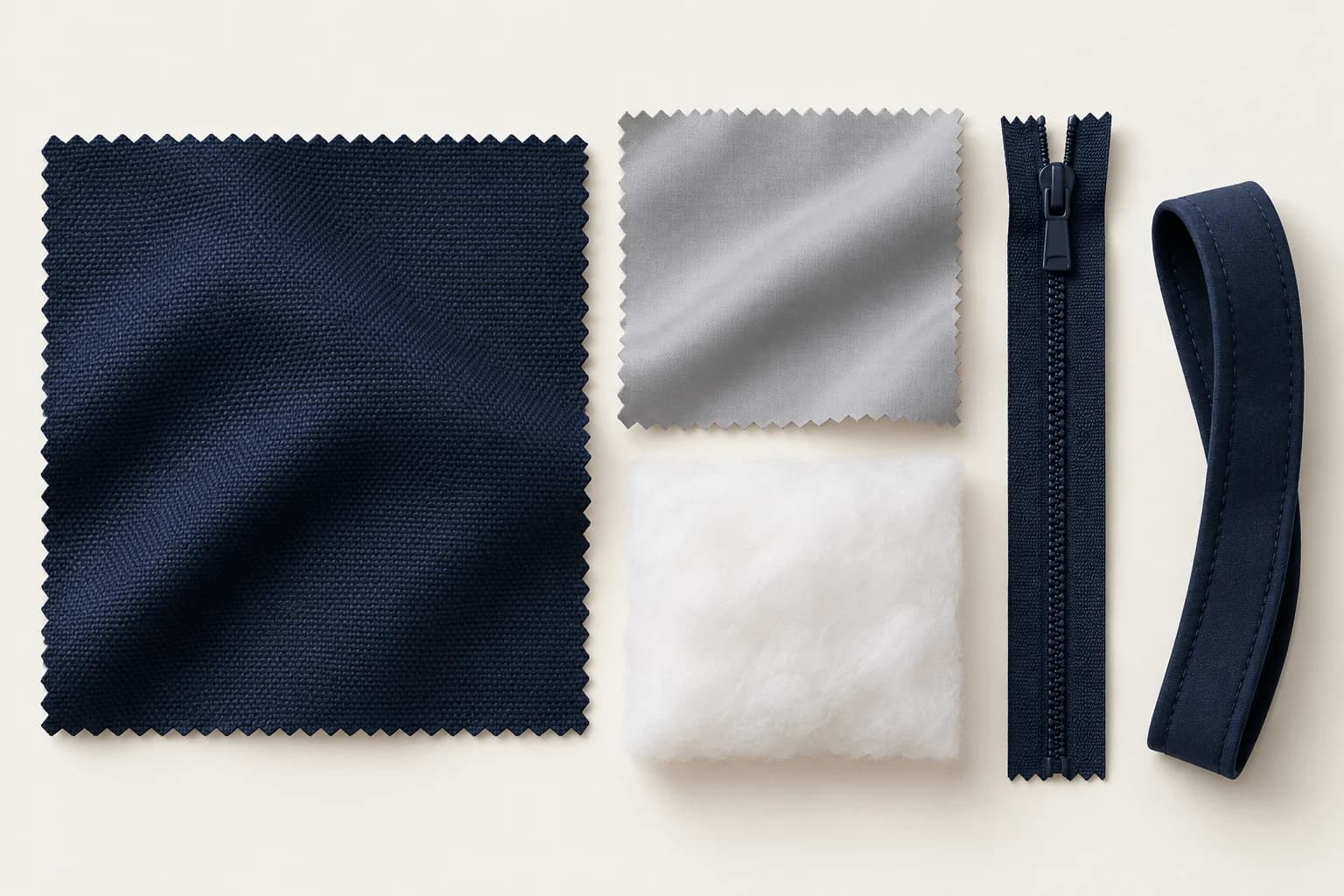
The navy cloth illustrates an outer-shell direction for the proposed quilted body. Review hand feel, drape, color, composition, weight, finish and compatibility with the chosen channel construction on identified materials.
The light gray swatch and white layer illustrate lining and padding options. Agree the actual lining, filling type, weight, thickness and internal joining during development; the visual does not identify down content or establish warmth, loft or containment performance.
The zipper and folded navy strip locate finishing components in the material discussion. Select zipper tape, pocketing and binding or facing for the actual body materials, then approve component references and edge construction on the sample.
CUSTOMIZATION MATRIX
Each item becomes a recorded approval point so sampling decisions move cleanly into bulk production.
Yes. Review the buyer drawing, shoulder/armhole shape, collar, channels and filling plan together. Confirm a revised development sample before size or bulk approval; exact-style production history is not asserted.
Provide shell, lining and filling references or identify what needs sourcing. Separate approved specifications from proposed choices and agree any assessment request before quotation.
Share artwork size, position and proposed application. Review the method on the chosen shell and padded construction without assuming a tested decoration or trim supplier.
Approve body, lining, zipper, pocket and edge-material references together. Keep substitutions and revised shade/finish choices identifiable before using an earlier sample approval.
Changes to channels, fill, armholes or collar may alter pattern, internal assembly and cost. Record the revision and review whether new material/provider evidence is needed.
Begin with a buyer brief and a sample plan. Confirm material availability, garment complexity, quantity and schedule before a firm production commitment.
Review chest ease, shoulder width, armhole shape and hem opening over the intended base layer. Check the collar and front zip in open and closed positions; final fit is buyer-approved.
Agree the target wearer, base size, full range and grading. Keep body-reference measurements separate from finished garment measurements and approve tolerances before bulk.
Usually 7–10 days after materials, measurements, artwork, trims and construction are confirmed. New pattern/material development or additional checks can require more time.
STYLE-SPECIFIC WORKFLOW
Development illustrations show proposed design and material choices. Shared factory photographs provide production context; fit, construction and material approvals are separate buyer decisions.
Confirm the sleeveless stand-collar body, horizontal baffles, faced armholes, size range and destination market.
This development illustration brings together proposed shell, lining, padding and finishing directions for the vest. Select the actual material references and construction through sampling; fiber, weight, filling type and performance are not confirmed by the image.
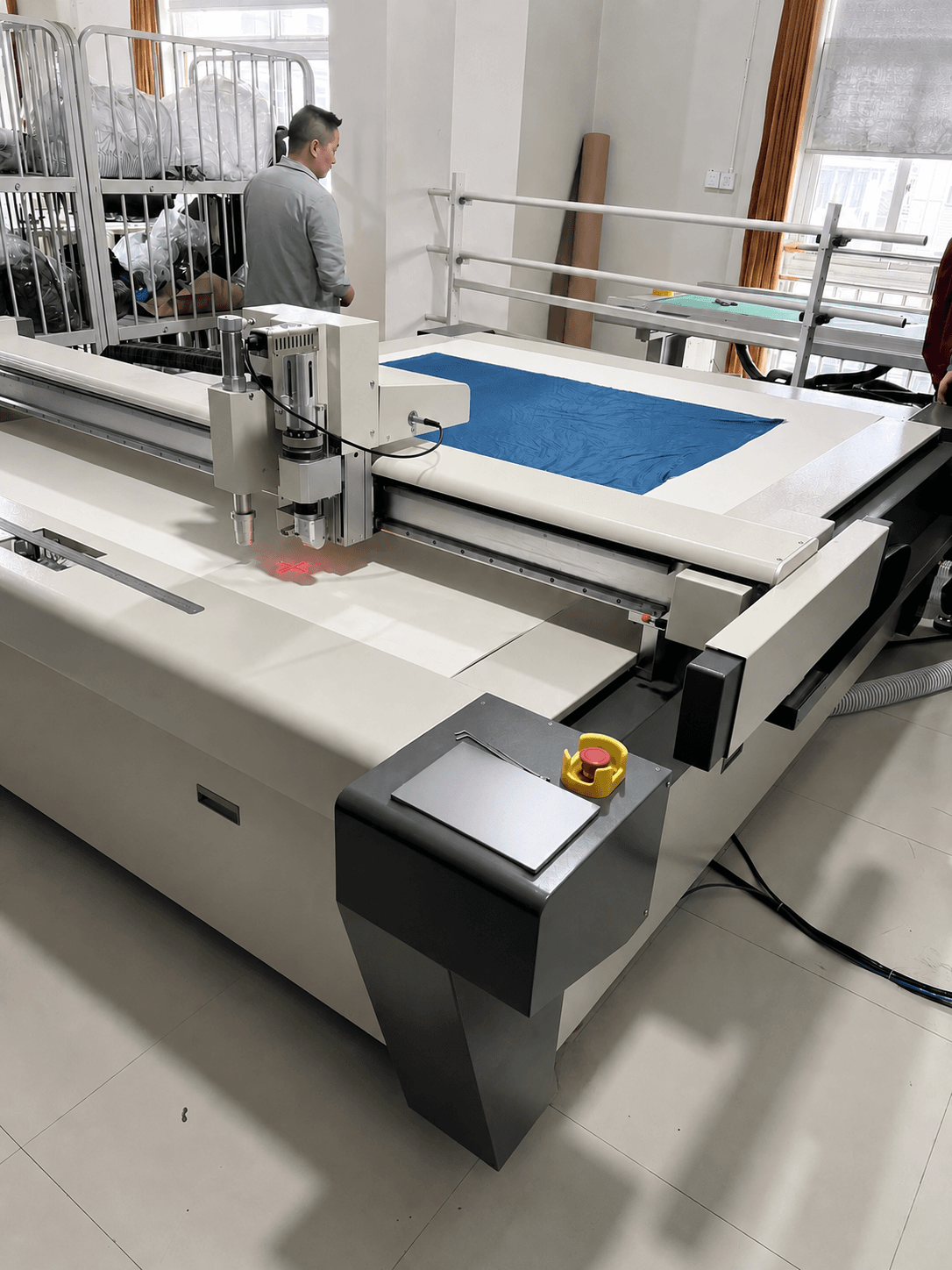
Translate the approved stand-collar puffer vest construction into repeatable pattern pieces and cutting markers.
Assemble a development sample for fit, sleeveless stand-collar body and functional review.
This shared factory photograph shows garments on an overhead handling line. It provides production-flow context; confirm fit and size separately on an identified development sample before bulk release.
Keep the latest drawing, material/fill references, sample comments and packing instructions together. A packaging change after approval needs an identifiable review.
PRODUCT QUALITY PLAN
Inspection focuses on panel symmetry, insulation balance, seam appearance, zipper operation, measurements and packing condition.
Horizontal bafflesAgree channel spacing and alignment across the zipper and side joins. Review how the chosen shell, lining and filling assemble; the drawing does not specify a fill weight or thermal result.
Faced armholesSelect binding or facing, lining attachment and seam finishing for the chosen materials. Review edge comfort, shape and filling containment over the intended base layer before approval.
Full front zipperConfirm zipper reference, tape, puller, top/bottom finishing and any internal guard. Review alignment, operation and contact on the filled garment; trim performance remains subject to agreed evidence.
Two zipped hand pocketsAgree opening position, usable depth, pocket-bag material and reinforcement. Check access with the vest worn and confirm that the pockets do not distort the proposed channels.
Straight hip-length hemConfirm finished length and opening, internal closure and side-seam junctions. Check the vest over the intended layer and keep any requested hem adjustment visible in the revised pattern.
BUYER QUESTIONS
Develop custom puffer vests with buyer-confirmed shell, lining, fill, armholes and quilting. Stand-collar OEM reference; MOQ 300 per style and color. Proposed development artwork; final materials and construction require sampling.
Yes. Review the buyer drawing, shoulder/armhole shape, collar, channels and filling plan together. Confirm a revised development sample before size or bulk approval; exact-style production history is not asserted.
The navy cloth illustrates an outer-shell direction for the proposed quilted body. Review hand feel, drape, color, composition, weight, finish and compatibility with the chosen channel construction on identified materials. The light gray swatch and white layer illustrate lining and padding options. Agree the actual lining, filling type, weight, thickness and internal joining during development; the visual does not identify down content or establish warmth, loft or containment performance.
Review chest ease, shoulder width, armhole shape and hem opening over the intended base layer. Check the collar and front zip in open and closed positions; final fit is buyer-approved. Agree the target wearer, base size, full range and grading. Keep body-reference measurements separate from finished garment measurements and approve tolerances before bulk.
MOQ is 300 pieces per style and color. Physical sampling usually takes 7–10 days after materials, measurements and construction are clear; new sourcing or pattern work can take longer. Bulk is usually planned around 30–45 days after sample approval, order confirmation and material readiness. Send a sketch or reference, shell/lining/fill direction, channel layout, size range, color/size quantities, branding, required checks, packing and target delivery for a feasibility and sampling review.
FACTORY RFQ
Send quantity, size range, shell and insulation direction, artwork, destination and requested delivery window. Our factory team will review the brief for sampling and bulk production.