





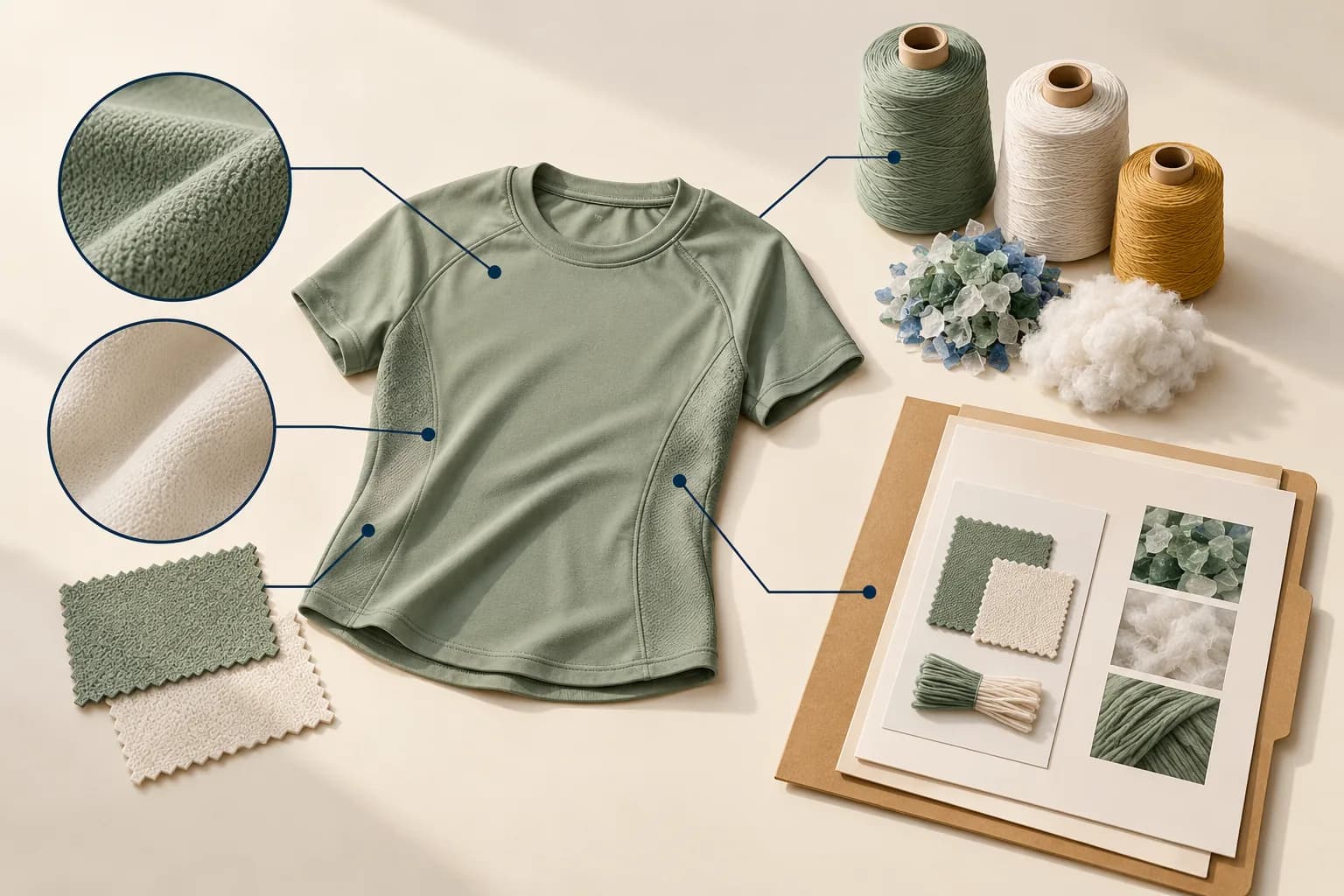
When comparing recycled clothing manufacturers, ask whether the evidence covers the garment you intend to buy. A supplier's presentation, a fabric swatch and an order certificate answer different questions. Before approving a bulk program, connect the claimed material to a named component, an identified supply chain and the actual purchase order.
This guide is for apparel brands and sourcing teams developing private label clothing. It focuses on a common procurement problem: the shell is described as recycled, but the quotation, component list and supporting documents do not agree. The aim is a usable buying decision, including when to pause a claim or request a different material.
01 · Decision record
Why recycled material evidence needs attention now
Textile Exchange's Materials Market Report 2026, published on September 22, reports that global fiber production reached 139 million tonnes in 2025. Its findings also show that most recycled polyester still comes from plastic bottles; textile-to-textile recycling remains a small share of global fiber production. A recycled input should therefore not automatically be described as recycled clothing waste.
On August 6, 2026, Textile Exchange also announced measures to strengthen assurance under its Materials Matter system. These developments make the origin and documentation of materials a timely sourcing discussion. They do not establish that an individual garment, factory or purchase order is certified. Buyers still need evidence for their own program.
Our practical recommendation is to settle the material claim before artwork approval. Otherwise, a late discovery about composition or document coverage can require new hangtags, revised product copy and another buyer approval round just as production is ready to proceed.
02 · Decision record
1. Define the claim at component level
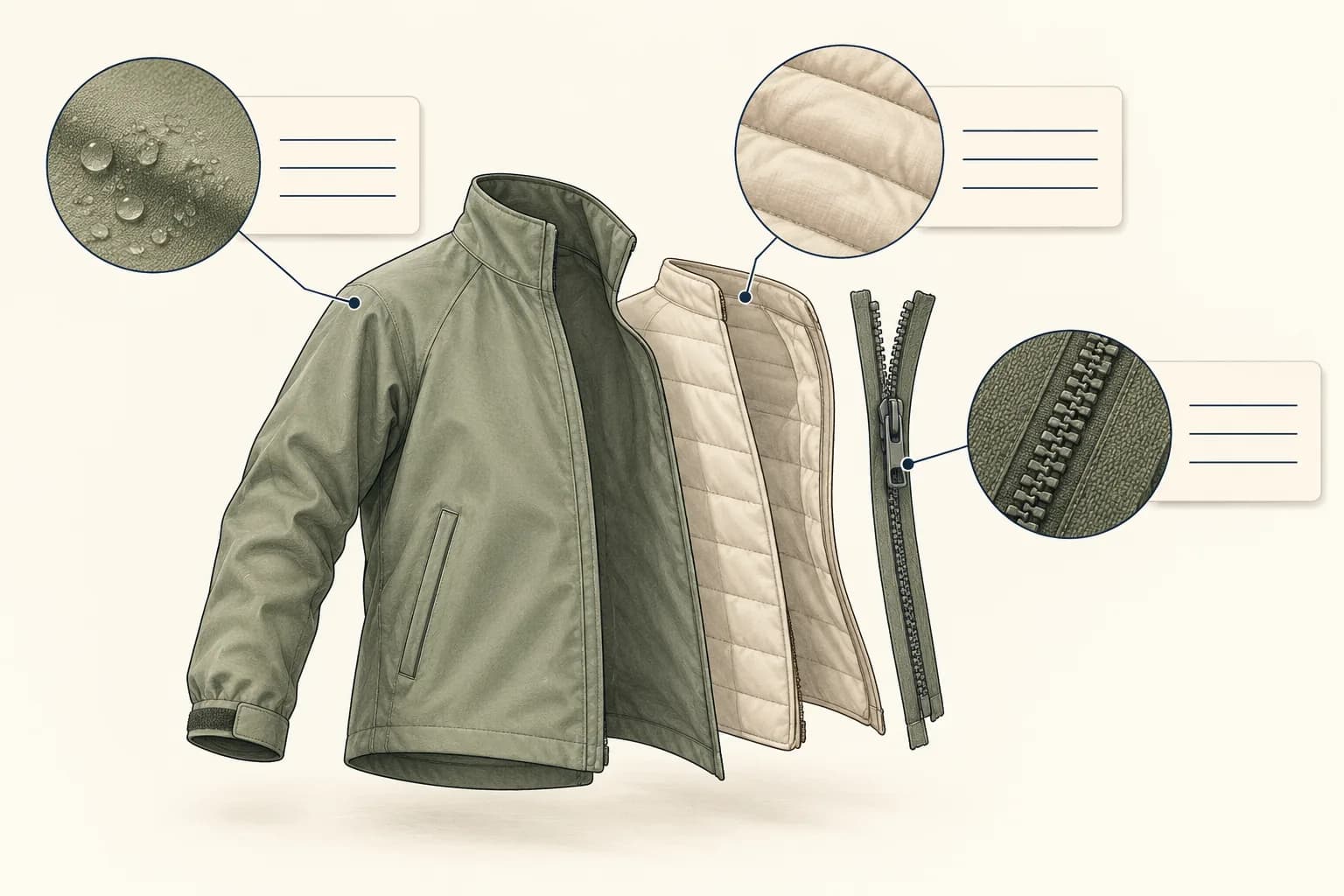
Start with a bill of materials rather than an adjective such as sustainable. List the main fabric, lining, mesh, rib, padding, binding and significant trims separately. For each component, state the proposed composition, recycled-content claim, source reference and evidence still required.
A jacket with a recycled shell may use a different lining, zipper tape and insulation. A team jersey may combine a main knit with a separate mesh panel. Do not copy a percentage from one component onto the whole garment without establishing what that percentage actually measures.
Ask whether the percentage refers to the whole fabric, one fiber within a blend, or another defined basis. Keep composition and recycled origin distinct. A fabric described as polyester and elastane still needs a separate explanation of which portion is claimed as recycled and how that claim is supported.
For team sportswear development, send the component list with the artwork. Printing, panel placement and required stretch can affect material selection, so a sourcing alternative should be reviewed against the garment brief as well as its documents.
03 · Decision record
2. Verify who and what the documents cover
Request the supplier's exact legal name and the identity of the organization named on each document. Establish how that organization relates to the seller, material producer and garment production stage. Similar trading names or a familiar logo are not enough to connect them.
Textile Exchange explains that its recycled standards use chain-of-custody requirements through the supply chain. Its guidance is a useful starting point for checking the relevant standard and verification process. Ask the applicable certification body about unclear coverage instead of accepting a cropped certificate image as the complete answer.
Record the document number, issuing body, validity information, covered activities and relevant product or material scope. Confirm these details through the issuer or the standard owner's verification resources where available. A current document can still cover a different activity or material from the one in your order.
Store the verification date and result with the supplier assessment. If information is unavailable, mark it unresolved. Do not turn a missing record into a positive finding merely because the supplier has used the same fabric description on previous quotations.
04 · Decision record
3. Connect supplier credentials to the purchase order
Supplier qualification is not the same as evidence for a specific delivery. Ask what order or shipment documentation will be supplied, who issues it, when it becomes available and which quantities and material references it will identify.
Where transaction documentation is required by the chosen standard or claim, agree the process before placing the order. Do not insist that every document must already exist at development stage, but do require a clear explanation of what can be checked now and what must follow later.
Use one simple reference chain: purchase order, style, color, component reference, material supplier and relevant lot or shipment identifier. These references do not all need to appear on one sheet. They do need to be reconcilable without guessing which fabric delivery the supplier meant.
For example, if two navy fabrics have similar names, the quotation should identify the selected one by a stable reference. Otherwise, an acceptable certificate and an acceptable sample may relate to different inputs. This is a hypothetical purchasing example, not a report of a Forthright customer order.
05 · Decision record
4. Compare quotations with the same evidence requirements
Give each shortlisted manufacturer the same material and documentation brief. Ask the supplier to separate confirmed facts, proposed options and items awaiting verification. This makes a price comparison more useful than comparing two offers that both say recycled polyester but include different components.
Clarify whether material development, testing, documentation coordination and buyer-specific labeling are included in the quotation or require separate agreement. Ask about minimum material quantities, color availability and what happens if the selected fabric cannot be sourced on schedule.
Do not assume that a positive answer for one color applies to every color. Availability may depend on the actual material program. Similarly, an existing sample in stock does not establish availability for the quantity and delivery window you require.
The broader clothing vendor evaluation guide can help organize supplier comparison. Keep this recycled-material evidence review as a distinct decision within that assessment, so a strong general supplier profile does not hide an unresolved material claim.
06 · Decision record
5. Approve physical suitability alongside documentation
Document coverage does not establish whether a fabric suits the intended garment. Review handfeel, weight, opacity, stretch where relevant, appearance after the agreed care process and compatibility with printing or embroidery. Select the checks for the actual design and intended market.
For a lightweight shell, ask the sampling team to review seam appearance, pocket visibility and how the material behaves around a zipper. For a training top, review the chosen fabric with its mesh panels, neck finish and decoration. Recycled origin alone does not predict these outcomes.
Keep the approved physical swatch and sample linked to the material reference used in the order. Record any tests with the tested material, method, date and agreed acceptance criteria. Avoid treating a report on a different fabric weight or finish as evidence for the current selection.
This is also the point to resolve commercial tradeoffs. If a documented material produces an unacceptable result for the design, review another construction or input before production approval. Do not preserve a marketing claim by quietly accepting an unsuitable garment.
07 · Decision record
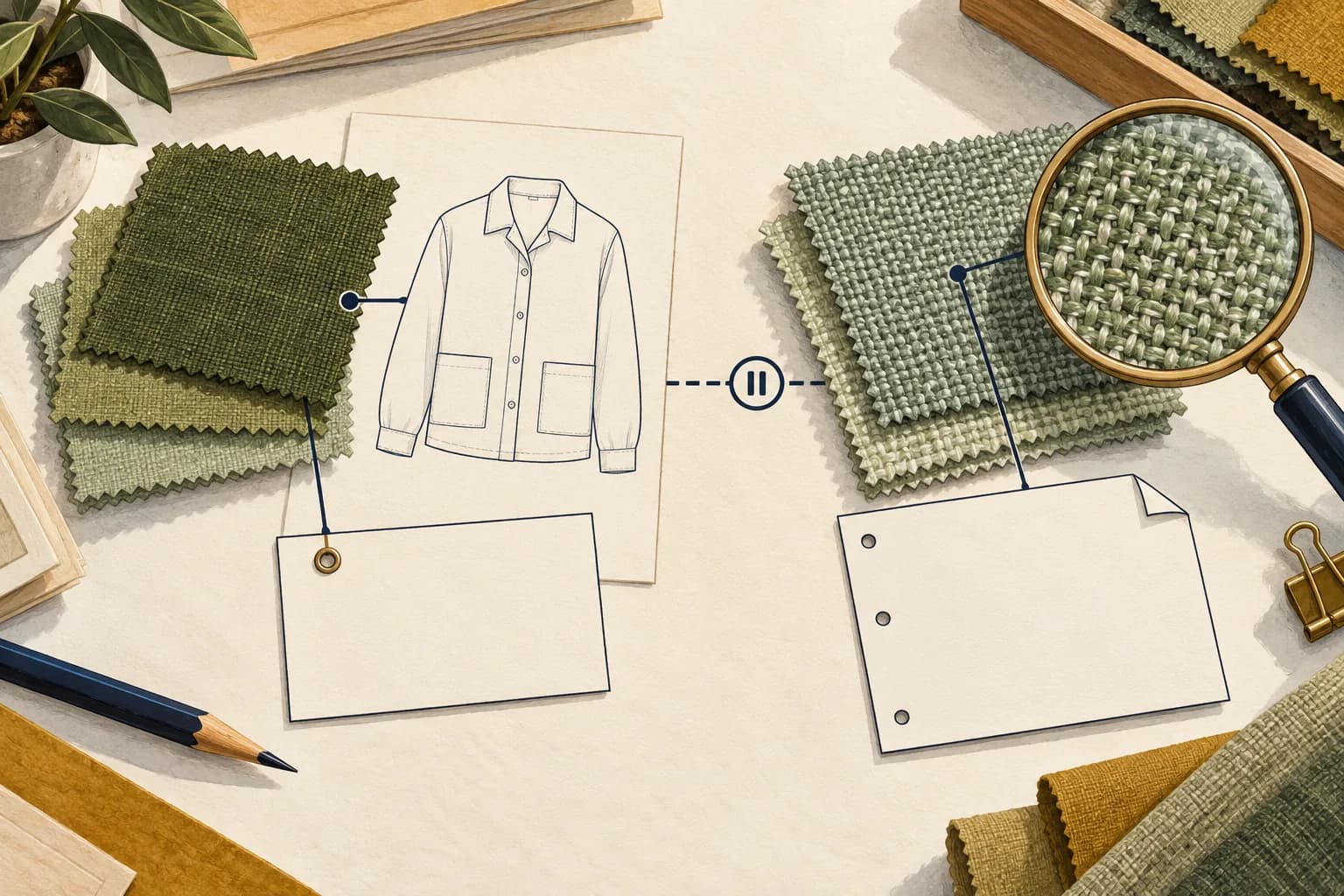
6. Make substitutions an explicit decision
Put a substitution rule into the buying brief. A change of fabric mill, component reference, finish or claimed recycled content should trigger review of the relevant sample and documents. The supplier should identify the affected quantities and timing before using the replacement.
Consider a proposed alternate shell with a similar appearance. Ask what changed, which evidence remains valid, which evidence must be replaced and whether approved labeling is still accurate. A visually close fabric is not automatically equivalent for composition, traceability or production behavior.
Keep a change log with the original reference, proposed replacement, reason, buyer decision and effective order scope. If the buyer approves the physical material but evidence for the claim is incomplete, record those as separate decisions. Approval of sewing quality does not close a documentation gap.
08 · Decision record
7. Check the shipment record before making the claim
Before release, reconcile the ordered quantity with the material and shipment records available under the agreed plan. Investigate differences in style references, quantities, supplier identities or component descriptions while the relevant team can still explain them.
Review the final artwork and product description against the confirmed evidence. A narrowly supported component claim should remain narrow. Avoid expanding recycled content into an unsupported statement about recyclability, textile-waste origin or overall environmental benefit.
Retain a concise evidence pack that another procurement colleague can understand. Include the approved component list, verification records, order references, accepted substitutions and outstanding items with named owners. Keep original documents alongside the summary so the summary can be checked.
If the buyer's destination market requires additional labeling or claim review, arrange that review with the appropriate specialist. This procurement checklist does not replace market-specific requirements or grant permission to use a certification mark.
09 · Decision record
Questions to send with a recycled apparel RFQ
Use the inquiry to resolve decisions, not just to request a catalog:
- Which garment components are proposed to contain recycled material, and on what percentage basis?
- Which material references and colors are available for the intended quantity?
- Which organizations and activities are covered by the proposed evidence?
- What can be verified before sampling, before production and before shipment?
- Which physical tests or sample checks are included in the development plan?
- Who must approve a material substitution or revised claim?
- What happens to artwork and delivery timing if evidence remains incomplete?
Forthright can discuss recycled polyester options subject to material availability and the documentation required for the particular program. This article does not claim that every Forthright product or order carries recycled-content certification. The standard MOQ is 300 pieces per style and color. Samples take 7–10 days after brief confirmation; bulk production takes 30–45 days after approval, with the actual material and evidence schedule confirmed during inquiry.
10 · Decision record
FAQ for apparel procurement teams
Does a supplier certificate prove that my whole garment is recycled?
No. Verify the document's scope and connect the actual order to the relevant components and records. The shell, lining, mesh and trims may have different compositions. A supplier credential alone does not establish a whole-garment percentage.
Should recycled clothing manufacturers provide finished-order documents before sampling?
Some records depend on the later transaction or shipment. Ask which evidence exists now, what will be issued later and how it will identify your order. Agree responsibility and timing before relying on that future evidence.
Can an approved fabric be replaced without another review?
Only under the change procedure agreed for the program. Review the replacement's identity, suitability and evidence, then record the buyer's decision. A similar color or handle does not prove equivalent recycled-content coverage.
11 · Decision record
Send a component-specific brief
Contact Forthright about your apparel program with the style reference, quantities by color and size, target material composition, intended component claim and required supporting documents. A precise brief lets the team discuss feasible inputs and unresolved evidence before you approve branded packaging.